

Stakeholders in the environmental sector have lauded the Lagos State Government in its commitment in the management of waste, noting that there is need for orientation and sensitisation for behavioural change among individuals and communities, along with engagement of private sector players as well as professionals in order to bolster the trajectory of waste management in the state.
These were the crux of the discourse during a panel discussion session at the Annual Lecture and Awards of the Property & Environment Writers Association of Nigeria (PEWAN) held in Lagos on Wednesday, September 3, 2025.
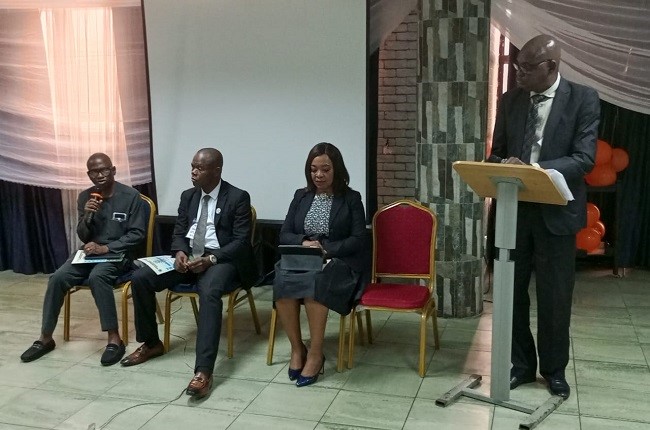
The forum had as themes: “The Place of Waste Management in Relation to the Lagos State Government’s THEMES+ Agenda”, with the sub-theme: “Air Quality Management in A Megacity Like Lagos, Challenges and Policy Framework.” The panel discussion session however focused on “Waste Management and Environmental Sustainability in Lagos.”
Urban planner and Editor-in-Chief of EnviroNews, Michael Simire, moderated the panel session which included as panelists: Mr. Ayo Adejumo, Past Chairman of Lagos State Chapter of Nigerian Institute of Town Planners (NITP); Sir Godwin Alenkhe, National President, Estate Rent and Commission Agents Association of Nigeria, (ERCAAN); and Victoria Uwadoka, Public Affairs and Sustainability Lead at Nestle Nigeria Plc.
Kicking of the session, Simire submitted: “Lagos, as Africa’s largest megacity, faces enormous challenges in managing its waste. With a population of over 20 million people generating thousands of tons of waste daily, the question of how we collect, recycle, reuse, and dispose of this waste has become central to the city’s environmental and public health future.
“Yet, within this challenge lies an opportunity – to rethink how we manage resources, to innovate with circular economy models, and to build a cleaner, greener, and more sustainable Lagos for generations to come.”
Facing Adejumo, Simire demanded: “How would you assess the current state of waste management in Lagos? What do you see as the biggest challenges – policy, infrastructure, finance, or public behaviour?”
Noting that Lagos State when compared to other states in the Federation has been doing so much as regards waste management, Adejumo stated that the state government doing all these through the Lagos Waste Management Authority (LAWMA), Lagos Environmental protection Agency (LASEPA) and other Agencies can still do more.
He opined that the biggest challenge of waste management in Lagos is about the people, adding that if there is education and sensitisation there can be the changes required to address the problem of waste management in the state.
According to him, there is the low and the high in all these because when the government puts in place policies, we the human beings would want to make the policies to suit ourselves and that is why there has not been the best of results to show for the policies put in place for waste management.
“So, it is a problem with our people. Once we can re-orientate ourselves then the issues related to the generation of and the management of waste will be effectively addressed,” he added.
Turning to Uwadoka, Simire asked: “What role should government regulation and enforcement play in driving better waste management practices, and how do you think Lagos can balance private sector participation and public interest in waste services?”
While highlighting that awareness is one of the challenges that needs to be balanced vis-a-vis the availability of infrastructure, Uwadoka explained that it is not just the generator of waste but also the people that are responsible for the collection of the waste as well.
“I live in an Estate and I got all my neighbours to start segregating their waste within their home. I have a separate bin for my plastics and a separate bin for bio-waste. At the end when LAWMA comes in they pick up the plastics and bio-waste and put the same in their truck,” she said.
She stated that there is a need to engage with the waste collectors in the form of training and retraining who are very important for the people to be doing the right thing.
She avowed that we also have the right policies and right objectives, but we just need the will to implement it.
“It is a journey. We have built a system that has brought us to where we are, so what the government needs to do is to keep working on the talk and education,” she said.
Speaking on private sector participation and public interest in waste management, Uwadoka disclosed that they now have an alliance of Food and Beverages in the industry that will make them manage the plastics from the factory to the end users.
“We have this alliance that enables us to work together to resolve the challenges that we have in this environment whether in collection, in management, information, education and awareness.
“We want Lagos Waste Management Authority (LAWMA), Lagos Environmental Protection Agency (LASEPA) and the Ministry of Environment and Water Resources to help us to drive the process that we are working on. Only the Food and Beverages Alliance cannot do it,” she stressed.
According to her, there are the communities that have to be reached, “so we have to find a creative way of reaching the communities to create awareness, identify these areas that need interventions, so we need every stakeholder in leveraging the ecosystem that we have both in the private and public sector”.
To Alenkhe, the moderator said: “Many Lagosians still dispose of waste indiscriminately. What innovative strategies can help shift public attitudes and habits? Also, how can communities be more involved in managing their own waste sustainably?”
Reacting, he raised a germane puzzle that the problem of waste management in Lagos is something that the solution is before us.
Alenkhe highlighted that when Lagos was a cleaner Lagos, safety and environmental bins were in place, but today what we have in Lagos is geared towards revenue generation because these agencies have been given some kind of target.
“LAWMA was an agency to which when people dumped their refuse, before you know it, it was taken away. Because it has been turned into a revenue generation thing, it has now become very difficult to control the refuse that people are generating. The reason is that the Public, Private Partnership which could have been the solution is not even helping matters in Lagos State. The politicians are controlling what could have been an efficient Public, Private, Partnership as each day the professionals are taken out of the environmental issues in Lagos State.
“I am a real estate person. The law that established and regulates the industry, that is, Lagos State Real Estate Regulatory Authority (LASRERA) has ignored the input of the real estate person to the effect that we manage houses in Lagos. If the responsibility is given to us as managers of houses in Lagos State, we will monitor and remit what is due to the government and it will work.
“As estate managers and caretakers, it is our responsibility to collect what is accrued as charges to LAWMA, but the law that recognises the regulation of my profession does not give me the authority to now act. So, we as professionals have no other means than to safeguard and to protect the industry as allied with the law that governs finance,” the national president of ERCAAN emphasised.
Closing the session, Simire remarked: “I believe we can all agree on one thing: waste is not just a challenge, but also an opportunity.
“From the contributions of our distinguished panelists, we have learned that effective waste management in Lagos requires more than just infrastructure – it demands strong policies, innovation, community participation, and above all, a change in mindset.
“We have heard about the need for government leadership, private sector innovation, and citizen responsibility. We have also seen that turning waste into wealth through recycling, composting, and energy recovery is not only possible, but necessary for a sustainable future.
“Let us remember that every plastic bottle, every food scrap, every bag of waste improperly disposed of, has consequences – for our health, for our environment, and for the generations to come. But with collective effort, Lagos can transform its waste crisis into a model of environmental sustainability for Africa and beyond.”