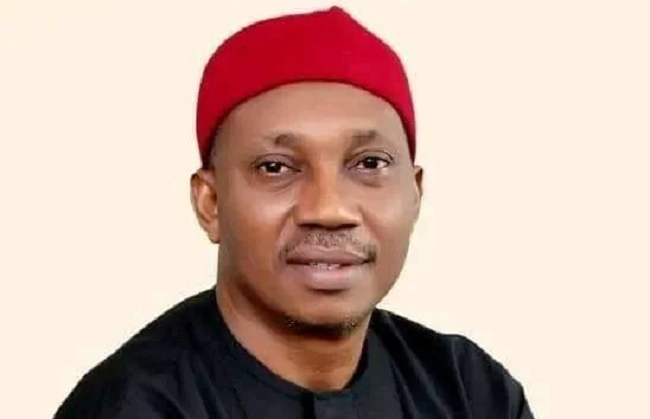
The Nigerian Upstream Petroleum Regulatory Commission (NUPRC) says the nation’s crude oil and condensates reserves dropped to 37.01 billion barrels as of January 1, 2026, down from 37.28 billion barrels in 2025.
In a statement on Wednesday, April 1, 2026, Oritsemeyiwa Eyesan, chief executive officer (CEO) of NUPRC, said total gas reserves rose to 215.19 trillion cubic feet (tcf), from 210.54 tcf.
“Total Oil and Condensate reserves of 37.01 billion Barrels and Total Gas reserves of 215.19 trillion Cubic Feet as the official National Petroleum Reserves Position as of 1st January 2026,” she said.
Eyesan said the commission, in keeping with its mandate, is dedicated to improving upstream sector performance, enhancing the growth of oil and gas reserves.
She added that the NUPRC is working to maintain stable production for shared prosperity by putting the Petroleum Industry Act (PIA) 2021 into action and executing the commission’s key strategic pillars.
In light of this, Eyesan outlined the country’s reserves of oil, condensate, associated gas, and non-associated gas as of January 1.
She said 2P crude oil reserves are estimated at 31.09 billion barrels, while condensate reserves stand at 5.92 billion barrels, bringing the combined total to 37.01 billion barrels.
“2P Associated Gas (AG) and Non-Associated Gas (NAG) reserves stand at 100.21 trillion Cubic Feet (TCF) and 114.98 TCF, respectively, resulting in total Gas reserves of 215.19 TCF,” Eyesan said.
“The Reserves Life Index is 59 years and 85 years for Oil and Gas, respectively.
“The reason for the slight change in 1.1.2026 oil and condensate reserves by 0.74% is attributable to production in 2025 and reserves update due to field performance and technical evaluation based on subsurface studies.
“The reason for the increase in 1.1.2026 AG and NAG reserves by 2.21 percent is largely because reserves update is based on discoveries and the result of robust reservoir studies.”
Therefore, she declared the total “Oil and Condensate reserves of 37.01 billion Barrels and Total Gas reserves of 215.19 trillion Cubic Feet as the official National Petroleum Reserves Position as of 1st January 2026”.
Women who consume lower amounts of ultra-processed foods have higher odds of conceiving, according to new research from McMaster University. The link persists even after accounting for age, weight, lifestyle and other health factors.
The study analysed data from over 2,500 women who participated in the National Health and Nutrition Examination Survey (NHANES) – a U.S. survey that combines interviews, 24-hour dietary recalls and laboratory tests to capture detailed information on diet, demographics, health status and biomarkers.
Researchers found distinct differences in eating patterns of women who reported infertility, defined as a lack of conception after one year of trying, and those who did not.
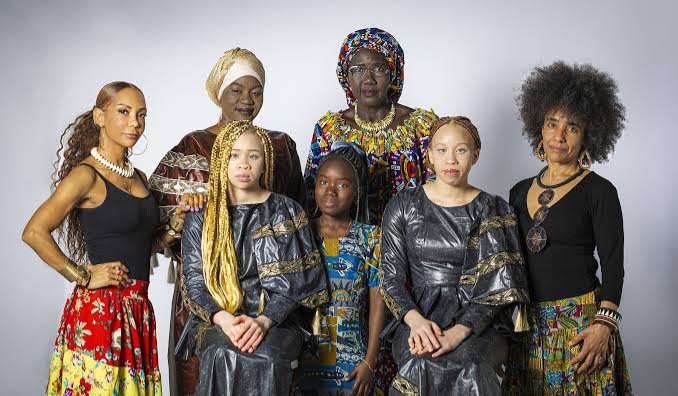
Women of African descent
Women reporting infertility consumed more ultra-processed foods, making up about 31 per cent of their daily intake, and scored lower on adherence to the Mediterranean diet, a healthy eating pattern rich in fruits and vegetables, whole grains and healthy fats.
The findings suggest that what we eat – and the degree to which it is processed – may influence reproductive health in a manner well beyond calories or weight.
“Most of what we hear about ultra-processed foods focuses on calories and obesity. But our findings suggest something potentially more complex – there seems to be another mechanism at play which may reflect pathways beyond calories or weight, including chemical exposures that have been hypothesized in prior literature,” explains Anthea Christoforou, assistant professor in the Department of Kinesiology and senior author of the paper.
Even if nutrient intake looks fine, eating more ultra-processed foods means more exposure to additives and chemicals that go beyond calories, she adds.
“Ultra-processed foods often carry chemicals like phthalates, BPA and acrylamides, which can leach from packaging or even from the plastic machinery used during processing. These compounds are known to disrupt hormones, and that may be part of why we’re seeing a link,” says Angelina Baric, a co-author and graduate student in the Department of Kinesiology.
The Mediterranean diet showed a positive association with fertility, but this benefit disappeared once obesity was factored in, suggesting its effect may come from helping maintain a healthy weight and metabolism.
The findings, published on March 19, 2026, in Nutrition and Health, underscore the need for dietary guidance targeting women of reproductive age. While the effect may look modest on an individual level, in fully adjusted models higher ultra-processed food intake was associated with a roughly 60 per cent lower odds of fertility.
Because this was a cross-sectional study, the findings reflect associations rather than cause and effect. Still, associations of this size could have meaningful implications at a population level, given how commonly ultra-processed foods are consumed.
“Very few studies have asked a fundamentally female-specific question: how does what women eat influence their reproductive health? Fertility is a huge outcome, and this is the first time anyone has examined these dietary patterns and infertility at this scale,” says Christoforou.
“It suggests diet may be an important and measurable factor associated with women’s ability to conceive. It’s one thing to say ultra-processed foods contribute to weight gain or cardiometabolic disease. But if they’re also affecting hormone pathways, that’s a much bigger issue – and it’s something people aren’t as aware of,” she says.
This latest study builds on previous research from the team, which linked ultra-processed foods to poor health outcomes.
“Processing affects foods in ways that aren’t reflected in nutrients alone – from chemical exposures during manufacturing to ingredients that displace whole, protective foods,” says Baric.
“It’s not about perfection – it’s about noticing how food is processed, choosing more foods in their natural states and picking ingredients you recognise. Even that simple shift can lower exposure to things we still don’t fully understand.”
For over 10 years, residents of Ifelodun Community, in Oke-Odo, under the Ona-Ara Local Government Area of Oyo State, have lived in near isolation, cut off from neighbouring communities, basic services, and emergency care because of an abandoned bridge project they were initially forced to construct themselves.
What began as a community-driven effort to survive has become a painful symbol of government neglect, unfulfilled political promises, and systemic failure at the grassroots level.
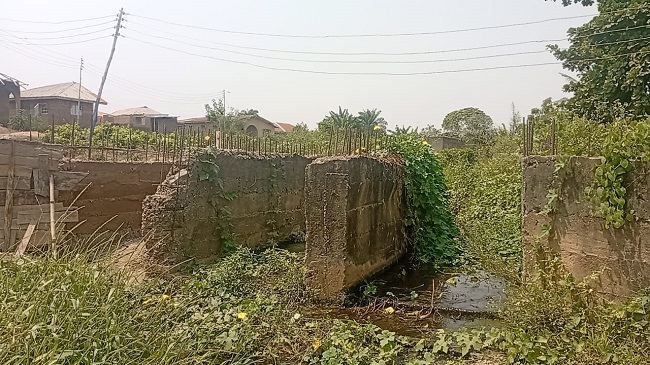
The abandoned bridge project
A Bridge Built by the People, Not the Government
According to the chairman of the community, Mr. Mutiu Owotutu, the bridge project started more than a decade ago out of sheer necessity.
“We started this bridge over 10 years ago, building it little by little with our own resources. When we could no longer continue due to a lack of funds, we called for help. We wrote letters to the local government and went from office to office, but nothing came out of it,” he told this reporter in an interview during a visit to the community.
Without intervention from authorities, residents pooled their personal funds to construct the bridge. Over time, they have spent approximately ₦20 million, an enormous sum for a low-income community.
Yet despite three separate construction efforts, flooding has repeatedly destroyed the structure, compounding the community’s woes.
“The first bridge was swept away by rain. The second one, too. This is our third attempt,” Owotutu said.
Engineers sent by the government reportedly inspected the bridge and commended the quality of the work, noting that only proper covering and drainage were needed to make it functional.
Rainfall halts movements, and pregnant women risk complications
The consequences of the unfinished bridge are most severe during the rainy season. The canal overflows, completely surrounding the community and making movement in and out of it almost impossible.
“Whenever it rains, we cannot go out or come in. The river surrounds us completely,” the chairman explained.
One incident highlights the danger starkly. It was gathered that a pregnant woman went into labour at night and required urgent medical attention. With the community inaccessible, she could not be taken to a hospital.
“Thankfully, we had midwives among us who helped deliver the baby. If not, we might have lost the mother and child,” Owotutu said.
Residents say such emergencies are common. They expressed fear that sometimes, the outcome may be unfortunate.
Blocked access to education, trade, and health
The bridge crisis has crippled access to education. Children from Ifelodun cannot attend schools outside the community when it rains, and students from neighbouring areas are unable to reach schools in their localities.
The impact extends beyond Ona-Ara Local Government, spiraling towards Oluyole LGA, and affecting multiple settlements.
Healthcare access is dire. According to residents, there is no primary healthcare centre within the community.
“We have to leave the community to give birth or treat ourselves. Because the place is not accessible, government officials avoid us,” said Mrs. Dasola Amoo, a landlady.
Traders are unable to bring goods into the area. Tenants refuse to rent apartments, and houses are being abandoned.
“People are leaving. Homes are empty. Families are displaced. Even our children who go to school outside don’t want to come back,” Mrs. Amoo added.
₦15 Million Away from Relief
Community leaders estimate that about ₦15 million is required to complete the bridge, properly cover it, reinforce the sides, construct drainage, and fill the access points.
There are frustrations in getting help, according to Mr. Adegbite Kazeem, the Vice Chairman of the community.
“We have written letters to every local government chairman who has emerged. It has been more than a decade. We are running around because we need urgent help.”
Due to inaccessibility, residents now park their vehicles outside the community and trek in. When rain threatens, people call one another simply to confirm who is safe and who is stranded.
Ballot boxes manage to get to the community, but not the development
Residents accuse politicians of exploiting their suffering during election cycles.
“Every four years, they come to campaign here and promise to fix the bridge. After elections, we never hear from them again,” the Vice Chairman said.
Ironically, electoral officers still manage to access the community during elections.
“We fulfil our civic duties. If this bridge is fixed, our polling unit, which is currently far away, can even be moved closer,” Mrs. Amoo noted.
A Developing Community in Decline
An elderly community leader and resident described the long-term impact as devastating.
“This place was developing before. Now, people are running away. We don’t know what will happen in the coming rainy season.”
The elder made a direct appeal to Governor Seyi Makinde, urging state intervention before another year of destruction.
There Is No Money
The community’s Project Coordinator revealed that inspections had been carried out multiple times.
“When it rains, flooding covers everywhere. Nobody dares to pass. People here don’t have the money to relocate. They need immediate help.”
Despite repeated engagements, the local government reportedly responds with the same explanation: there is no money.
Survival Should Not Be a Privilege
The situation in Ifelodun–Oke-Odo raises urgent questions about governance, equity, and the right to basic infrastructure. Over 700 houses, seven communities, and four zones are affected by the lack of a functional bridge.
As another rainy season approaches, the people of Ifelodun are left with fear, frustration, and a single plea: that their lives matter enough for actions and not promises.
Engineer wades in
A civil engineer who has been involved in assessing the structure, Alawode Kazeem, noted that most of the heavy structural work had already been done.
“What is left is to cover the bridge and fill it properly. The three abutments and the wing walls have been completed. From this point, if we have about ₦8 million, the work can be finished,” he said.
Kazeem, who also owns a house in the Ifelodun–Oke-Odo community, maintained that the bridge’s foundation is solid and only requires finishing. His position appears to downplay the idea that funding constraints had stalled interventions.
For the residents, the ₦8 million to ₦15 million needed to fix the problem should not be an issue and only raises questions about priorities in an area where over 700 houses across seven communities remain cut off whenever it rains.
Like Ifelodun–Oke-Odo, like Osun Irewole
Another community within Ona-Ara Local Government, Osun Irewole, a few kilometres away from Ifelodun–Oke-Odo, is dealing with its own version of the crisis, this time driven by erosion and unchecked flooding.
Standing beside a damaged pathway, Taiwo Babatunji spoke with visible frustration over the havoc caused by flooding in the area.
“A flood has swept away houses here. People have been displaced. When it floods, we cannot cross to the other side,” he said.
According to him, residents have repeatedly resorted to self-help, but to no avail.
“Men, women, young and old, we carry cutlasses and hoes to create paths ourselves. We have written to the Ona-Ara Local Government, to the Oyo State Government, and even to the Federal Government, but nothing has happened.”
He recalled a visit by some government officials a few months ago.
“They came to inspect and told us they would return. Since then, we have not seen them,” he said with a hopeless gesture.
For many residents, the rainy season now brings anxiety rather than relief.
“Sometimes, we pray that rain should not fall. Look at that school. Before, it had many students, but now parents don’t want to bring their children here,” Babatunji added.
The community has contributed money several times to buy materials for temporary fixes. Each effort, they said, ended the same way.
“After fixing it in our little way, the flood sweeps everything away. We are tired.”
Fears Over Road Expansion
Residents are also worried about the impact of the ongoing Akran Road construction project, which stretches from Olorunsogo to Akran.
The Chairman of Osun-Irewole community, Alhaji Mudashiru Rahman, believes the expansion could worsen flooding in their community.
“The road is being expanded to four lanes, with drainage, and that canal that is more than six feet deep. Whenever it rains, all that water will come here. The flooding will multiply,” he said.
He explained that they had met with the local government chairman. “He told us there is little he can do for now. But nothing has been done.”
Rahman noted that while a previous administration built a security post in the area, their main concern, which is the canal and erosion, remains unresolved.
Community Efforts Washed Away
Residents say they have exhausted both their strength and finances.
Owolabi Fatai, one of the landlords, described how they repaired the damaged sections of the road by pooling their money among themselves.
“From that point down to here, we fixed it ourselves. But we cannot continue because we don’t have funds.”
For Mrs. Odutolu Bukola, daily life during rainfall is unbearable.
“Whenever it rains, water enters our homes. We cannot go out until the rain stops. The whole place becomes inaccessible.”
In one instance, the community reportedly raised funds to purchase 2,800 blocks to reinforce a failing canal.
“I supervised the work myself. Two hours after we finished, rain fell, and flood carried everything away,” the chief imam of the community, Alhaji Animashaun, recounted.
It was gathered that the residents later invited local government representatives and engineers handling the nearby road construction to assess the damage. Meetings were held, but nothing changed.
Residents also pointed to a community well that once served as their primary water source, which erosion has now made unsafe to access.
“We cannot even fetch water from our own well anymore. We now go to another community to fetch or buy water. That is how we survive.”
A Long Wait
Across both communities, frustrations echo: letters have been written, inspections conducted, and promises made, but silence persists.
What stands out is not only the flooding, but the pattern: residents build, floods destroy, officials visit, and nothing happens.
As the rainy season draws nearer, families are left to weigh their options: stay and hope, or abandon homes they built with years of savings.
For many here, the issue is simple: they are not asking for luxury. They are asking for access to roads, schools, hospitals, water, and safety.
And as one elderly resident quietly put it during the visit: “We are human beings too.”
LG’s Financial Autonomy Raises Fresh Questions
Not long ago, there was a major development in Nigeria’s local government system. After a Supreme Court ruling granted financial autonomy to local councils, allocations from the Federation Account Allocation Committee are expected to go directly to local governments starting in 2025.
The decision was welcomed in many quarters. It was seen as a way to reduce state interference and make councils more accountable for how money meant for grassroots development is spent.
In practical terms, it means councils like Ona-Ara Local Government in Oyo State now receive their allocations directly.
Data published by TheCableIndex shows that Oyo State’s local government areas received a total net allocation of ₦18.34 billion for November 2025. Ona-Ara Local Government ranked seventh-highest recipient, with ₦636.53 million allocated that month.
Funds like these are meant to cover basic responsibilities at the local level, such as road maintenance, primary healthcare, basic education, sanitation, infrastructure, and community development projects.
But in communities like Ifelodun–Oke-Odo and others within Ona-Ara, residents say they cannot feel the impact.
For them, the issue is no longer just about promises. With direct allocations now in place, they believe there should be clearer results on the ground.
“When they say there is no money, we don’t understand,” one resident said quietly during this investigation. “If they are receiving allocations directly now, what is happening to them?”
It is a question that lingers across flooded roads, unfinished bridges, and eroded pathways, a question residents say deserves an answer, especially as another rainy season approaches.
Official Reaction
When contacted, the Chairman of the Ona-Ara local government, Kolapo Temitope Glorious, dismissed claims of neglect and suggested the process was simply ongoing.
“There is no problem. If they have written letters, it is not their turn yet. They have to wait. We received about 30 letters concerning bridges. We completed seven bridges last year, and another 10 have been included in the 2026 budget. I don’t know whether the said community is among them.”
The response reflects a structured approach to project selection, according to the council. However, it offers little immediate relief to residents who say they have been waiting for more than a decade.
For the people of Ifelodun-Oke-Odo, the issue is not whether other bridges have been completed elsewhere. It is whether their long-standing appeal, backed by repeated letters, inspections, and personal financial contributions, will move from a file on a desk to actual construction on the ground.
As rainfall patterns grow heavier and more unpredictable, “waiting for their turn” remains a phrase that residents say they can hardly afford.
A new wild horse reserve was recently established in the north of the Czech Republic, in an area known as the Bohemian Paradise. The animals were provided by the large “European Serengeti” ungulate reserve located near Prague.
“This new reserve is the seventeenth reserve for large herbivores that we have helped to establish. For now, it is a small reserve, but it is expected to continue to expand in the future,” said Dalibor Dostal, director of the European Wildlife conservation organisation.
As in previous projects, wild horses in the new reserve will also be removing invasive species of grass and other plants, thereby making room for rarer types of vegetation.
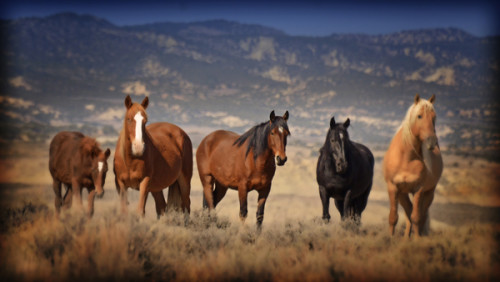
Horses in the wild. Photo credit: equitrekking.com
“Plans originally called for the reserve to be established this autumn. “However, the reserve’s operators had already managed to get everything ready over the winter, so we moved the transfer of the wild horses up,” added Dostal.
“We provide large ungulates free of charge to newly established reserves, as part of our efforts to support the improvement of nature conservation in Central Europe,” added Dostal.
Large ungulates help to restore biodiversity. For example, in the Milovice nature reserve, populations of rare species of flowers and butterflies have increased by hundreds or even thousands of per cent as a result. At the same time, they help to protect the climate and sequester carbon in the soil.
Scientific studies have calculated that grazing ecosystems involving large ungulates sequester 50 per cent more carbon than all the forests on the planet. This is where wild ungulates differ significantly from farm animals, their intensive farming, on the other hand, releases greenhouse gases into the atmosphere. Wild ungulates also help to retain water in the landscape and restore the soil. They significantly reduce the number of wildfires and lower the tick population.
The European Serengeti reserve, from where the wild horses came, covers an area of 350 hectares. This is the second reserve this year that European Wildlife has helped to establish; the first was created in January close to the Blanice River in the Šumava Protected Landscape Area.
Civil Society Organisations (CSOs) and Bille Kingdom in Degema LGA of Rivers State have called for government’s urgent intervention to end the suspected underwater gas eruption in the community.
The groups, under the aegis of the Environmental Rights Action and Social Action, made the call during their advocacy visit to the Port Harcourt Zonal Head of the National Oil Spill Detection and Response Agency (NOSDRA), in Port Harcourt, on Tuesday, March 31, 2026.
The Programme Manager of Environmental Rights Action, Mr. Kentebe Ebiaridor, said that the visit was to seek clarity on the response efforts of the regulators to the development in the community.
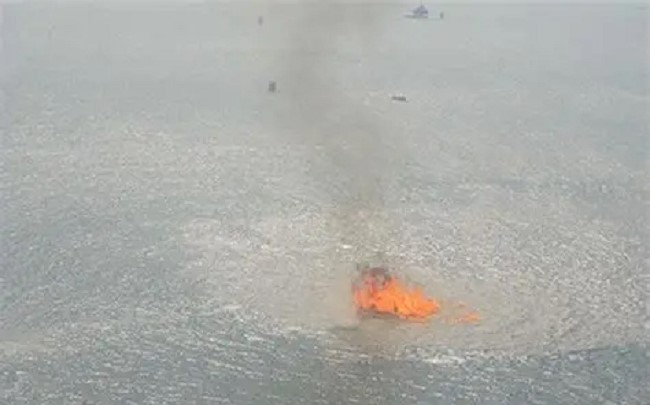
underwater gas fire
Ebiaridor expressed concern over what he described as “inadequate response from regulatory agencies and the government concerning the incident”.
He said that discussions with some officials revealed that there was still no clear timeline for action to address the situation.
According to him, in the absence of clear ownership of the facility linked to the incident, companies operating within Oil Mining Lease 18 should be held accountable.
The Nigerian Upstream Petroleum Regulatory Commission had in a statement issued on March 20 by its Chief Executive, Oritsemeyiwa Eyesan, said that the commission had commenced an investigation into a gas bubbling incident in Bille Community.
Eyesan said that the commission expressed concern over the development and assured residents of its ongoing efforts to address the situation.
Also, the Resource Justice Manager of Social Action, Dr Prince Edegbuo, warned that the situation could escalate into a public health emergency, if urgent steps were not taken.
Edegbuo called on relevant authorities to release the results of the tests reportedly conducted in the area, stressing that residents had the right to know the condition of their environment.
He also said that CSOs were prepared to intensify advocacy on the matter, urging the development of emergency response measures, including possible evacuation plans.
A legal practitioner and community stakeholder, Mr. Commission had on March 20 said that residents had continued to witness unusual signs on the waterways in the area.
Deinbo said the signs included boiling and bubbling from the ground and river, sometimes within residential areas, as well as fire outbreaks, which the residents had always managed to contain.
He appealed to relevant authorities to come to their aid and find a lasting solution to the problem.
In a response, the Port Harcourt Zonal Head of NOSDRA, Mr. Bello Augustin, assured the community that he would relate its concerns to the appropriate quarters.
Augustin also commended the CSOs for their advocacy and concerns to community development in the state.
The Federal Government on Tuesday, March 31, 2026, said that it would begin enforcement on Polluter Pays Principle (PPP) in the Beverages and Packaging Sector to encourage circular economy and protect the environment for sustainability.
Prof. Innocent Barikor, Director-General, National Environmental Standards and Regulations Enforcement Agency (NESREA), gave the information at a stakeholders workshop held in Lagos State.
The event had the theme “Stakeholders Engagement and Sensitisation Workshop on Extended Producer Responsibility (EPR) Programme for The Packaging Sector”.
Dr Innocent Barikor, Director-General, NESREA
The event, attended by industry players, regulators and policy makers, is to educate and evaluate policies and challenges toward the move from voluntary compliance to mandatory compliance enforcement.
EPR fosters a circular economy that compels producers to take responsibility of waste from their products from beginning to the end of its life cycle.
It encourages the recycling of waste to wealth that creates value chain and reduces environment pollution.
Speaking at the event, Barikor described the compliance enforcement as a departure from the voluntary compliance approach to a mandatory one to be instituted before the end of 2026.
He said that the event came at a pivotal moment in Nigeria’s journey toward environmental sustainability.
According to Barikor, the challenge of waste management, particularly plastic waste, has evolved into a pressing national priority demanding our collective action.
“Under the mandate of NESREA, we are charged amongst others, with the responsibility of protection of the Nigerian environment toward the overall global drive on sustainable development.
“Central to our strategy is the ‘Polluter Pays Principle’ which is a key tool under the Sustainable Development Goals”.
“In this regard, we believe that the outcome of a product’s environmental impact should not rest solely on the government or the end-consumer, but should be shared by the producers who introduce these products into the marketplace.
“The EPR programme is, thus, the cornerstone on which we rely for our circular economy transition from the old to the new in line with international best practices.
“From the year 2025 into 2026, we have evolved from a voluntary framework to a mandatory enforcement phase.”
According to Barikor, this means that producers, importers, and brand owners are now legally required to take responsibility for the entire lifecycle of their products; that is, from when the product is designed and produced, to its end-of-life.
“When disposed including collection and recycling activities. Management of the post-consumer products’ packaging is no longer just ‘good corporate action or social responsibility’ but a regulatory requirement for doing business in Nigeria.
“Today, we will therefore formally sensitise people on the National Guidelines for the implementation of EPR Programme in line with circular economy on Plastic Packaging.
“This document is not merely a set of rules, but a roadmap and masterplan that would guide you to compliance as enshrined in the emerging National Environmental (Plastic Waste Control) Regulations, 2026,” he said.
The NESREA boss urged producers to register with the authoritiy for a seamless tracking regulations.
He said that the guideline provided amongst others, clear targets with regards to specific annual targets for collection, recovery and recycling, definition of roles and responsibilities of Producers, Producer Responsibility Organisations (PROs).
He commended the interface of the Food Beverage Recycling Alliance (FBRA) and recyclers, as well as the interplay amongst these sector players and reporting standards in relation to standardisation formats.
Barikor stressed that the EPR programme was not a “tax” levied on industries.
“It is rather an invitation on them to innovate and reinvent.
“By embracing circular economy initiatives, Nigerian industries can reduce operational costs through resource recovery, create Green Jobs – in the collection and recycling value chains, enhance brand reputation by meeting the global demand for sustainable products.
“We, therefore, appreciate our development partners,
“WE thank especially the government and people of Japan, and the United Nations Environment Programme (UNEP) for their invaluable support to the agency through this project, accelerating a circular plastic economy to reduce plastic pollution and its impacts in African Region and its countries”.
“To our private sector partners, we are committed to working with you and supporting your transition, but will remain firm in our resolve to protecting our ecosystems through enforcement where the need arises.
“The sector Producer Responsibility Organisation (PRO), in this regard FBRA, by this sensitisation, is also urged to raise the bar of your coordination activities amongst sector subscribers in ensuring that they are equipped with the requisite knowledge on the EPR programme unto compliance.”
The National Emergency Management Agency (NEMA) has convened a high-level technical session to analyse the 2026 Seasonal Climate Prediction (SCP).
This is part of its renewed strategy to shift Nigeria’s disaster management from reactive response to proactive preparedness.
The meeting held in collaboration with the Emergency Coordination Forum (ECF), and also featured the presentation of the 2025 After-Action Review (AAR).
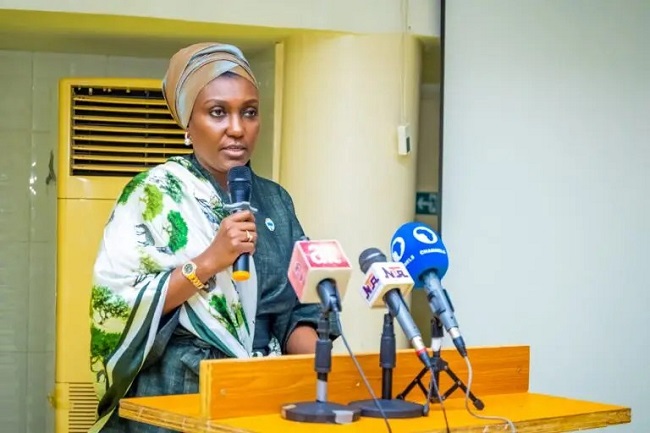
Director-General of NEMA, Mrs. Zubaida Umar
It described AAR as a roadmap designed to bridge the gap between scientific data and field-level implementation.
In her opening remarks, the Director-General of NEMA, Mrs. Zubaida Umar, drew attention to the 2026 rainfall and temperature projections released by the Nigerian Meteorological Agency (NiMet).
Umar said that the NiMet projections must serve as vital decision-making tools for all levels of government.
“The theme of this meeting is ‘strengthening multisectoral preparedness and early action for climate-related disasters in Nigeria’.
“It underscores the importance of timely, coordinated, and evidence-based action,” Umar said.
She said that recent years had exposed systemic gaps in coordination, particularly regarding flood variability which continues to threaten lives, infrastructure, and national development.
“Preparedness must be proactive, not reactive. The effectiveness of our collective response will depend on the actions we take following this meeting,” she said.
Providing a comparative analysis of past disasters, Mr. Dapo Akingboade, Assistant Director of Planning at NEMA, revealed a sharp decline in the impact of flooding in 2025 compared to the devastating 2024 season.
“According to data presented during the AAR, the number of persons affected dropped from over five million in 2024 to approximately 500,000 in 2025.
“Similarly, fatalities decreased from over 1,000 in 2024 to 241 in 2025.”
He said that, in 2025, 27 states were affected by flooding compared to 35 in 2024, while fatalities dropped from over 1,000 to 241.
Akingboade credited the progress to early dissemination of forecasts, community awareness campaigns, simulation exercises, and proactive coordination by agencies.
“Early warnings issued by NiMet and the Nigeria Hydrological Services Agency (NIHSA), coupled with improved coordination at NEMA’s operations centre, helped reduce casualties and losses,” he said.
He, however, said that challenges persisted in drainage maintenance, delayed evacuation from high-risk zones, and incomplete early warning system coverage in some rural areas.
He called for stronger state-level contingency planning, operationalisation of existing disaster-response frameworks, and inclusion of local languages and traditional leaders in awareness campaigns.
“Our progress in 2025 shows what is possible when forecasts are linked to action. We must now build on these lessons to strengthen preparedness in 2026,” he said.
NiMet’s Assistant Chief Meteorologist, Abubakar Sadiq, presented the 2026 SCP.
Sadiq said that the climate for the year would be influenced by a transition from a “weak La Niña” to a “neutral phase” in the Pacific sea surface temperatures.
He said that NiMet’s rainfall predictions had reached an accuracy level of 74 per cent, and the agency is working to make forecasts even more objective through automated scripts.
He also said that recent unusual weather in the FCT was due to “extra-tropical features” rather than standard seasonal patterns.
Representatives of various technical and humanitarian partners pledged their support for the 2026 cycle.
Mr. John Gbadegesin, representing the Director-General of the Nigeria Hydrological Services Agency (NIHSA), said that the 2026 Annual Flood Outlook (AFO) was scheduled for release on April 15.
He said that the agency had improved its forecasting accuracy, which has significantly reduced the socio-economic costs of flooding.
The Disaster Management Coordinator for the Nigerian Red Cross Society, Mr. Timothy Yohana, said that the organisation was ready to deploy its 800,000 volunteers across the country to support NEMA’s grassroots early warning efforts.
Brig.-Gen. Julius Ogbobe, Deputy Director of Search and Rescue at the Defence Headquarters, also reaffirmed the military’s commitment to harmonising rescue operations with NEMA to ensure a more efficient national response.
The Ministry of Environment has assured journalists of its unwavering support and partnership to enhance environmental reporting, particularly regarding the ongoing climate crisis.
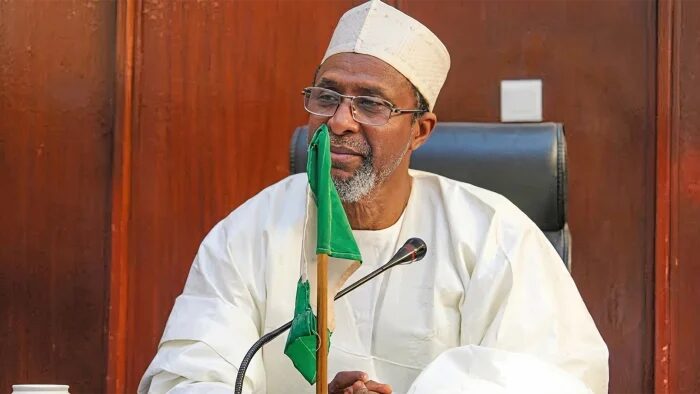
Malam Balarabe Lawal, the Minister of Environment, gave the assurance on Wednesday, April 1, 2026, in Abuja during a two-day training organised for environment reporters in collaboration with Lincoin Publication Limited.
The training theme is:”Engaging media outfits on reporting environmental sustainability in Nigeria”.
Malam Balarabe Lawal, the Minister of Environment
Lawal said that the ministry would ensure that journalists have better access to information for reports, facilitating evidence-based, data-driven journalism on climate change, pollution, and natural resource management.
“Let me begin by expressing my sincere appreciation to the organisers for convening this gathering of Nigeria’s finest journalists, broadcasters, digital content creators, and communication experts.
“Your presence here today represents not just a meeting of minds, but the strengthening of a strategic alliance for the survival and prosperity of the nation.
“The mass media, often regarded as the Fourth Estate of the realm, plays a critical role in information dissemination, especially within the environmental sector.”
The minister said that stories told today can shape behaviour, influence policy, and inspire hope.
“The tools of your profession, pens, microphones, cameras, and keyboards are powerful instruments for change.
“Together, Nigeria’s environmental future can be secured by protecting natural heritage, strengthening climate resilience, and advancing inclusive and sustainable development for present and future generations.
“In a time when environmental challenges are increasing in scale and complexity, this role has become even more vital.
“The environment is not an abstract concept. It is the air we breathe, the land that feeds us, the rivers that sustain communities, and the climate that shapes the future,” Lawal said.
He said the ministry regards the media as indispensable partners and key stakeholders in reporting environmental issues, including climate change, ecosystems, biodiversity, and natural resource management.
“The media serves as the mirror through which society understands itself, the megaphone that amplifies truth, and the bridge connecting policy to the people.
“Digital and social media platforms provide additional opportunities to engage a broad and youthful audience,” the minister reiterated.
Also speaking, Mr. Emmanuel Uwaegbu, Human Resources Manager, Lincoin Publication Limited, said that the training was a commitment to national development.
He explained that Lincoin Publication Limited is proud to be associated with the ministry and remains fully committed to strengthening this partnership.
“We look forward to continued collaboration and to contribute meaningfully to future initiatives that drive progress and innovation.
Dr Salihu Usman, the Permanent Secretary of the Ministry, said that the role media persons play in informing, educating, and shaping public discourse on environmental matters cannot be overstated.
Usman, who was represented by Dr Bahijjattu Abubakar, Director of Pollution control and Environmental Health in the ministry, commended the media for their unwavering support in showcasing the Ministry’s programmes, policies, and initiatives.
“Your efforts in highlighting critical environmental issues, sharing accurate information, and amplifying facts have significantly contributed to increased public awareness and engagement,” he said.
Civil Society Organisations (CSOs) are calling for loss and damage financing to be channelled through and strengthen national systems to ensure funds reach vulnerable communities quickly, fairly, and at scale.
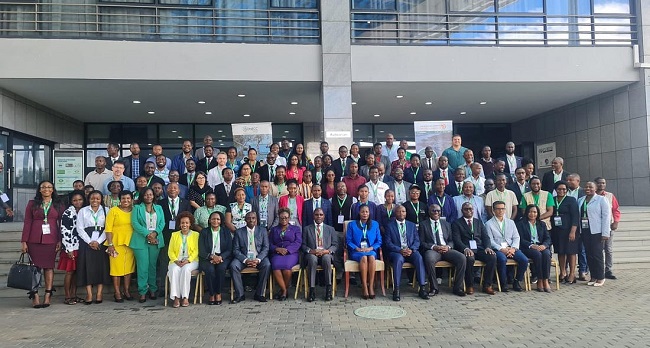
The call was made during the opening of the 5th African Regional Conference on Loss and Damage held in Lilongwe, Malawi.
Speaking at the conference, Concern Worldwide Country Director, Lucy Mwangi, emphasised that bypassing national systems risks undermining the effectiveness of climate finance interventions.
Participants of the 5th African Regional Conference on Loss and Damage
“Strengthening national systems is crucial in ensuring that funds reach those who need them most,” she said.
Mwangi noted that through the Zurich Climate Resilience Alliance, Concern Worldwide and its partners have observed that aligning global funding mechanisms with national and local systems improves delivery and accountability.
The alliance brings together governments, non-governmental organisations, academia, and the private sector to bridge the gap between global policy frameworks and community-level action.
According to Mwangi, stronger systems empower communities to take an active role in their own recovery and resilience rather than remaining passive beneficiaries.
“This combined role is essential. Without it, even well-designed funds risk failing to reach those who need them most,” she said.
She further highlighted that, in Malawi, loss and damage financing is increasingly being embedded within national and district disaster risk management systems.
Communities are actively involved in identifying risks, prioritising investments, and managing resources transparently.
One notable approach is the use of community disaster funds – locally managed pooled funds that place financial resources directly in the hands of affected populations.
“This enables rapid, decentralised disbursement, ensuring that finance reaches where loss and damage are actually experienced,” Mwangi explained.
CSOs also stressed the critical role NGOs play as intermediaries, linking communities, governments, and global financing systems to ensure effective and accountable last-mile delivery.
Mwangi has since called on stakeholders to ensure that climate finance is predictable, adequate, accessible, and timely, while also being channelled through systems capable of delivering impact at scale.
Meanwhile, findings by Development Transformation published in September 2025 indicate that climate-related budget allocations across ten countries, including Malawi, range between just 0.1 percent and 2.8 percent of national budgets – highlighting the urgent need for increased investment.
As climate shocks intensify across the region, CSOs warn that without robust and inclusive systems, loss and damage financing risks falling short of its intended impact.
Livestock diseases continue to pose a significant threat to farmers’ livelihoods, food security and public health in Kenya. Diseases such as Foot-and-Mouth, Peste des Petits Ruminants (PPR), and parasitic infections reduce productivity, limit market access, and in some cases spread from animals to humans, causing zoonotic outbreaks.
Yet many small-scale livestock producers and pastoralist farmers lack access to affordable and reliable disease testing (diagnostic) tools needed to detect these diseases early, limiting their ability to respond effectively.
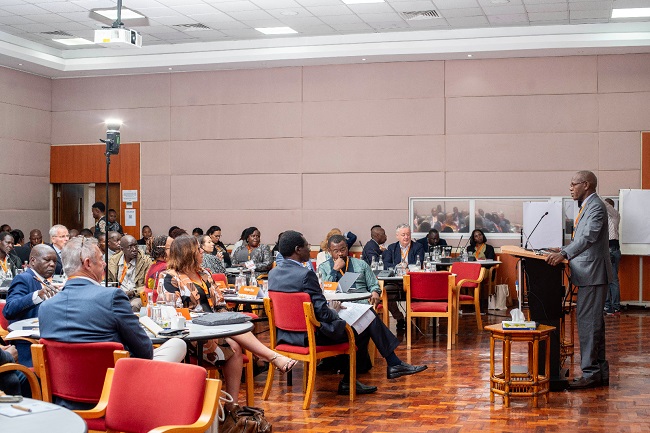
Participants at the high-level workshop on improving livestock disease detection, in Nairobi
In response to this challenge, a high-level workshop on improving livestock disease detection has convened in Nairobi, bringing together government officials, veterinarians, researchers, development partners, private sector actors and farmer representatives. The meeting was focused on practical solutions to make disease detection more accessible, affordable, and effective for livestock keepers across Kenya.
“If we are to strengthen animal health systems, then we must pay close attention to one of the most important pillars of veterinary service delivery: diagnostic capacity. Strong veterinary diagnostics are central to early disease detection, outbreak response, surveillance, food safety, and trade assurance. Without timely and reliable diagnostics, our ability to prevent and control disease is significantly weakened.
“I therefore wish to commend the ongoing efforts to strengthen Kenya’s veterinary laboratory network, improve disease reporting systems, and expand the use of innovation and technology in animal health service delivery,” said Jonathan Mueke, the Principal Secretary in the State Department for Livestock Development.
Dr. Allan Azegele, the Director of Veterinary Services, added: “Early and accurate disease detection is critical not only for protecting livestock productivity, but also for safeguarding human health and ensuring food security. By strengthening diagnostics, we can respond faster to outbreaks, reduce misuse of drugs, and guide targeted vaccination campaigns.”
The workshop has been co-organised by the Directorate of Veterinary Services (DVS) and the Transforming Animal Health Solutions and Services for Low- and Middle-Income Countries (TAHSSL) platform, operated by GALVmed, the International Livestock Research Institute (ILRI), and Clinglobal.
Its timing is said to be significant as Kenya steps up efforts to control livestock diseases and align with regional and global priorities, including the eradication of PPR by 2030 and the strengthening of One Health approaches that link animal and human health systems.
“We are committed to partnering with governments, research institutions, and the private sector to ensure that small-scale producers have access to the tools they need to manage animal diseases effectively,” said GALVmed’s Head of Research and Development, Dr Karelle De Luca.
Discussions have focused on closing the gap between laboratory capacity and the realities faced by farmers, particularly in smallholder and pastoralist systems. Through plenary sessions and roundtable discussions, participants are identifying priority diagnostic needs, explored innovative delivery models, and co-developed a roadmap to make reliable disease testing a routine part of Kenya’s livestock health programmes.
The workshop has also underscored the importance of partnerships. Stakeholders agree that stronger collaboration between government, research institutions, the private sector, and communities is essential to build an effective disease detection and surveillance system.
“Diagnostics are the eyes of the surveillance system. By aligning efforts from county-level disease reporters to national laboratories, we can build a system that controls disease, supports trade, and safeguards public health,” said Musa Mulongo, the Programme Coordinator for the Transforming Animal Health Solutions and Services (TAHSSL)
Mueke further noted: “The transformation we seek in the animal industry sector cannot be achieved by government alone. It will require strong partnerships, sustained investment, scientific innovation, and collective commitment. I therefore urge all stakeholders present today to continue supporting the animal health sector through collaboration, innovation, and strategic investment.”
Following the workshop, a report and a roadmap outlining key actions, partnerships, and investment opportunities will be produced. By improving access to reliable disease testing, these efforts aim to keep animals healthy, strengthen farmer livelihoods, and better protect Kenya against future outbreaks that could affect both animals and humans.