Home Blog

Darma, new minister, pledges to tackle housing deficit with innovation

0

President Bola Tinubu on Friday, April 24, 2026, administered the oath of office to Dr Muttaqha Darma as the new Minister of Housing and Urban Development.

Darma, from Katsina State, was sworn in at a brief ceremony at the State House, Abuja, following his confirmation by the Senate.

He replaced Mr. Ahmed Dangiwa, who recently resigned.

Dr Muttaqha Darma
President Bola Tinubu has sworn in Dr Muttaqha Darma as the housing minister

This is contained in a statement issued by Presidential Spokesperson, Mr Bayo Onanuga, on Friday in Abuja.

Tinubu congratulated Darma on his appointment and described the period as a challenging time for national development.

“You have a very rich and interesting background. As a leader, we need competent hands like yours.

“There is no doubt that you have rendered valuable services in all the assignments you have embarked upon. You are a fitting peg in the right position.”

Tinubu urged the new minister to remain ready to serve in any capacity required for national progress.

Darma is a scholar, administrator and development expert.

He holds a Doctor of Business Administration degree from University of Liverpool and a PhD in Industrial Engineering from Atlantic International University.

He earned a Bachelor’s degree in Mechanical Engineering from Bayero University Kano and a Master’s degree in Manufacturing Engineering from University of Benin.

He is a member of the Nigerian Society of Engineers and the Nigerian Institute of Management.

Darma served as Executive Secretary of the Petroleum Technology Development Fund from 2008 to 2012.

He also held positions as Commissioner for Works, Housing and Transport, and Commissioner for Rural and Social Development in Katsina State.

Before his appointment, he was President of the Umaru Musa Yar’Adua Human Development Centre.

Meanwhile, Darma, has pledged to address Nigeria’s housing deficit through innovation, strategic planning and effective service delivery.

Darma spoke on Friday shortly after taking the oath of office before President Bola Tinubu at the State House, Abuja.

He said public office came with responsibility and accountability to oneself, the people and God.

“I know I have been given responsibility, and I must deliver to the best of my ability.”

Darma assured Nigerians that positive changes would be seen in the housing sector in no distant time.

He acknowledged that the sector faced enormous challenges, especially the country’s huge housing shortfall.

According to him, Nigeria currently needs about 20 million housing units to provide accommodation for millions of citizens without homes.

He said meeting such demand would require substantial funding, long-term planning and practical reforms.

The minister, however, expressed confidence that strategic focus and creativity would help bridge the gap.

“We will bring a lot of innovation and creativity to ensure that we do well and many unhoused people will be housed,” he said.

Darma said he would first study the ministry’s operational realities before outlining detailed interventions.

He noted that private real estate developers were thriving, while many government housing assets remained unattractive or underutilised.

According to him, this suggested the need to review existing government housing models and identify gaps.

“There must be something we are not seeing and why we are having those challenges.”

He pledged to work toward making public housing more effective, accessible and sustainable.

Darma succeeds Ahmed Dangiwa, whose exit followed a minor Federal Executive Council (FEC) reshuffle announced by the Presidency on Tuesday.

By Muhyideen Jimoh

AU, EU unveil €100m initiatives to boost Africa’s health security, others

0

The African Union and the European Commission have unveiled new health initiatives worth over €100 million to strengthen health security, digital systems and local manufacturing across Africa.

Dr Tolbert Geewleh Nyenswah, Director for Pandemic Prevention, Preparedness and Response at the Africa CDC, disclosed this on Thursday, April 23, 2026, during the agency’s weekly high-level regional press briefing.

Nyenswah said the initiatives, implemented under the EU’s Global Gateway strategy, would support pandemic preparedness and response, strengthen National Public Health Institutes, and expand digital health systems for primary healthcare delivery.

Tolbert Geewleh Nyenswah
Dr Tolbert Geewleh Nyenswah, Director for Pandemic Prevention, Preparedness and Response at the Africa CDC

He said that the programme would also promote a One Health approach, integrating human, animal and environmental health systems to improve detection and response to disease threats.

According to him, the partnership marks a significant step towards building resilient and self-reliant health systems driven by African priorities.

Nyenswah said that the initiative would advance digital transformation across the continent, enabling countries to leverage data and emerging technologies to improve surveillance, service delivery and health outcomes.

The director further said that Africa CDC was strengthening collaboration on innovation following engagements with Abiy Ahmed Ali, the African Union’s champion on artificial intelligence and digital transformation.

He said discussions highlighted the importance of artificial intelligence and digital tools in improving access to care and accelerating responses to public health emergencies.

On financing, Nyenswah emphasised the need for increased domestic investment and efficient resource utilisation, noting that declining external assistance requires countries to take greater ownership of their health systems.

He called for a shift from fragmented, donor-driven interventions to coordinated, country-led approaches that deliver measurable impact for communities.

He said the new initiatives aligned with Africa CDC’s broader agenda to advance health security and sovereignty, including local manufacturing, institutionalisation of pandemic preparedness frameworks and sustainable financing.

By Abujah Racheal

Middle East crisis disrupts international natural gas markets, delays global LNG supply wave

0

The global natural gas market outlook has been significantly altered by the conflict in the Middle East, according to the International Energy Agency’s latest quarterly gas market report, with a major supply shock disrupting market fundamentals and pushing back an expected wave of new LNG supply.

The disruption to shipping through the Strait of Hormuz since the start of March has created unprecedented uncertainty, removing close to 20% of global LNG supply from the market and triggering sharp price increases across key importing regions. During a period of intense volatility in March, natural gas prices in Asia and Europe rose to their highest levels since January 2023, contributing to a contraction in natural gas demand in key LNG importing markets.

IEA
The global natural gas market outlook has been altered by the conflict in the Middle East

The crisis has reversed a trend of market rebalancing observed during the 2025/26 heating season, when strong growth in LNG supply – supported by new liquefaction capacity, particularly in North America – helped ease prices. Global LNG trade increased by 12% year-on-year in the October-to-February period, while benchmark prices in Europe and Asia declined by around 25% over the same five-month period.

Despite this, cold weather events, including major winter storms in North America, Europe and East Asia, led to strong spikes in gas demand, underlining the continued importance of gas supply flexibility for energy security, including in systems with rising shares of weather-dependent renewable generation.

Market conditions shifted abruptly in March as the Middle East conflict resulted in the de facto closure of the Strait of Hormuz to LNG cargoes. Global LNG production declined by 8% year-on-year, with a sharp drop in exports from Qatar and the United Arab Emirates only partially offset by higher output from other regions. As the disruptions began to spread through global supply chains, LNG deliveries also fell, with a more pronounced decline observed in April.

Natural gas demand has weakened in key importing markets in response to higher prices, milder weather and policy measures aimed at reducing gas consumption. In Europe, natural gas demand declined by around 4% year-on-year in March, largely driven by stronger renewable electricity generation. Several Asian countries are implementing fuel-switching and demand-side measures to limit gas use amid the supply crisis.

Beyond the immediate disruption, the crisis is expected to have implications for the medium-term outlook. Damage to LNG liquefaction infrastructure in Qatar is set to reduce projected supply growth and delay the impact of the anticipated global LNG expansion wave by at least two years.

The combined effect of short-term supply losses and slower capacity growth could result in a cumulative loss of around 120 billion cubic metres of LNG supply between 2026 and 2030. While new liquefaction projects in other regions are expected to offset these losses over time, the impact will prolong tight markets through 2026 and 2027.

The report highlights the importance of strengthening global gas supply security through continued adequate investment across the LNG value chain and enhanced international cooperation between producers and consumers. It also notes the advantages that a diversified portfolio of long-term contracts can bring for gas importers in terms of mitigating price volatility in periods of disruption.

Seventh Assessment Report: IPCC authors meet for Second Lead Author Meeting of Working Group I

Experts and author teams of the Intergovernmental Panel on Climate Change (IPCC) are meeting this week at the Universidad Católica in Santiago, Chile, to advance the first draft of the Working Group I contribution to the Seventh Assessment Report (AR7). The Working Group I report covers the physical science related to climate change.

The meeting, scheduled from April 21 to 24, 2026, is the second time the authors will be meeting in person following the first meeting held jointly with Working Group II and III in Paris in December 2025, where they began their work. The authors will meet two more times during the report preparation process to develop and refine the draft in line with IPCC’s principles and procedures.

Robert Vautard
IPCC Working Group I Co‑Chair, Robert Vautard

“This is an important milestone in the preparation of the Working Group I contribution to the Seventh Assessment Report,” said IPCC Working Group I Co‑Chair, Robert Vautard.

“Building on their initial discussions in Paris, authors are now advancing the detailed scientific assessment needed to develop a robust First Order Draft of our report. These scientific exchanges are at the heart of the IPCC assessment process,” he added.

The Expert Review of the First Order Draft of the Working Group I report is scheduled from 10 August to 2 October 2026. In addition, as with all other IPCC reports, the Working Group I report will undergo two further formal review stages, including a joint review by governments and experts, before the final government review and approval by IPCC member governments at the Panel’s plenary session prior to public release.

“The multi‑stage review process ensures that the report is comprehensive, balanced and policy‑relevant without being policy‑prescriptive. This is how the IPCC builds trust in its assessments,” said IPCC Working Group I Co‑Chair Xiaoye Zhang.

The author teams of the Working Group I contribution to AR7 include 193 Coordinating Lead Authors, Lead Authors and Review Editors from 62 countries – 40% new to the IPCC process. 43% of these experts are women, and 46% come from developing countries and economies in transition including three from Chile. 

The hidden environmental cost of a global energy shock on Africa

0

A major global energy disruption linked to tensions in the Middle East is exposing a less visible but deeply consequential crisis for Africa: the environmental fallout of rising fuel costs.

As oil and gas prices surge globally – driven in part by instability around the Strait of Hormuz, a critical artery for global energy trade – many African countries are experiencing ripple effects that extend far beyond economics.

While much of the global focus has centered on inflation and slowing growth, experts warn that the environmental consequences – particularly in low-income, energy-constrained economies – are being overlooked.

Peter Mwesiga
Peter Mwesiga

A Shift Back to Biomass

According to Kampala-based climate and energy consultant, Peter Mwesiga, the environmental impacts of energy shocks are often indirect but deeply structural.

“When modern fuels become unaffordable, households revert to charcoal and firewood,” Mwesiga explains.

“That accelerates deforestation, land degradation, and black carbon emissions.”

He draws parallels with the COVID-19 pandemic, when economic strain pushed many households away from cleaner fuels like liquefied petroleum gas (LPG), reversing gains in clean energy adoption.

The consequences extend beyond the environment.

Increased reliance on biomass fuels worsens indoor air pollution, posing significant public health risks while contributing to climate change.

Policy Trade-offs and Delayed Transitions

Energy crises also reshape government priorities.

Faced with fiscal pressure, many African governments prioritize short-term fuel stabilization over long-term climate investments.

“This delays renewable energy expansion and locks countries into more carbon-intensive systems,” Mwesiga says.

In contrast, higher fuel prices in parts of Europe have accelerated the transition to cleaner technologies, including electric vehicles – highlighting a widening gap in how different regions respond to the same shock.

Africa’s Uneven Environmental Outcome

Across Africa, the environmental impact is mixed but largely negative at the household level.

Higher fuel prices may temporarily reduce vehicle use and emissions. However, in cities with limited public transport, this often results in reduced mobility rather than sustained environmental gains.

More critically, rising LPG prices are reversing progress in clean cooking.

Evidence from countries such as Ghana and Kenya shows that LPG demand is highly sensitive to price increases, pushing households back toward biomass fuels.

The result: increased pressure on forests, higher emissions at the household level, and growing reliance on inefficient energy systems.

Malawi’s Reality

In Malawi, the effects are already visible.

Fewer than 20 percent of the population has access to electricity, and even those connected face persistent outages.

In March 2026, the Malawi Energy Regulatory Authority (MERA) raised LPG prices by nearly 20 percent, citing rising global costs and supply chain pressures.

For many households, LPG is now unaffordable.

The fallback has been predictable: increased reliance on charcoal and firewood. This shift is accelerating deforestation and weakening the country’s resilience to climate shocks such as droughts and floods.

A Structural Environmental Risk

Beyond Africa, the crisis itself is contributing to global emissions through disrupted energy systems and, in some cases, damage to oil infrastructure.

While such emissions may be temporary, the longer-term risk lies in how countries respond.

A prolonged return to fossil fuels could delay global climate action and entrench carbon-intensive systems.

A Narrow Window of Opportunity

Despite the risks, the crisis presents an opportunity.

Mwesiga argues that African countries could use this moment to accelerate investments in renewable energy, decentralised systems like solar mini-grids, and electrified cooking solutions.

However, he cautions that such outcomes are not automatic.

“Without deliberate policy, financing, and planning, governments may default to short-term fossil fuel solutions,” he says.

“The real opportunity is to use this crisis to drive structural transformation.”

By Happy Njalam’mano, AfricaBrief

Seplat Energy wins governance, brand awards as shares top ₦10,000

0

Seplat Energy Plc, Nigeria’s leading indigenous energy producer listed in Lagos and London, has secured a series of independent regulatory, market, and industry recognitions that underscore growing investor confidence in its governance standards, financial discipline, and growth execution.

On April 14, 2026, Seplat became the first company on the Nigerian Exchange to cross the ₦10,000-per-share level, with the stock rising to about ₦10,450, a move analysts say reflects strong institutional demand and confidence in the company’s expanded asset base and earnings outlook.

Separately, the company won the Platinum Award at the ICAN–NGX Regulation Limited Corporate Reporting Awards on April 21, ranking first overall among leading listed companies.

Roger Brown
Chief Executive Officer, Seplat Energy Plc, Roger Brown

The award assesses firms on financial reporting quality, corporate governance, and sustainability disclosures, with an emphasis on transparency, compliance with international standards, and the integration of environmental, social, and governance factors.

Market participants view such recognition as a signal of reduced reporting and governance risk, particularly important for companies accessing both domestic and international capital markets.

Seplat also entered the Top 10 Most Valuable Brands in Nigeria for the first time, ranking ninth in the 2026 Brand Finance Nigeria 25 Report.

Brand Finance said Seplat recorded the fastest brand value growth among the ranked companies, with brand value rising 97% to ₦194.5 billion, driven by higher production, improved cash generation and consolidation of offshore assets.

“Standout growth from Seplat Energy shows that the market continues to reward operational discipline and strong strategic positioning,” Brand Finance Nigeria Managing Director, Babatunde Odumeru, said in the report.

In addition, Seplat won the Energy Company CSR Excellence Award at the Energy Times Awards 2026 and was named Outstanding Energy Company of the Year 2025 at the Industry Newspaper Awards, reflecting its community investment and sustainability initiatives.

Chief Executive Officer, Roger Brown, said earlier this year that the company’s expansion into offshore operations, alongside strong onshore output, had strengthened cash flow and lowered its cost of debt.

Seplat has said it remains on track to deliver a planned $1 billion cumulative return of capital to shareholders by 2030, as it seeks to balance growth, shareholder returns and Nigeria’s energy transition objectives.

Seplat Energy is listed on the Premium Board of the Nigerian Exchange and the Main Market of the London Stock Exchange.

Sterling Bank, others to embark on nationwide cleanup to tackle plastic pollution

Sterling Bank says it is partnering with Sterling One Foundation and other stakeholders for a nationwide environmental campaign aimed at tackling plastic pollution and improving sanitation across Nigeria.

The initiative, tagged “The Great Nigeria Cleanup,” is being driven by Sterling Bank and will begin on April 25, 2026, according to a statement issued on Friday, April 24, in Lagos.

The campaign will span the six geopolitical zones, mobilising citizens and communities to address plastic waste through coordinated, community-led clean-up efforts.

Olapeju Ibekwe
Olapeju Ibekwe, Chief Executive Officer (CEO), Sterling One Foundation

Participating states include Lagos, Abuja, Ogun, Osun, Cross River, Delta, Bayelsa, Ebonyi, Abia, Enugu, Imo, Sokoto, Kano, Benue, Plateau, Kogi and Katsina.

The organisers said the initiative aligns with global sustainability efforts under the United Nations Decade of Action, while promoting collective responsibility in addressing environmental challenges nationwide.

The Chief Operating Officer of Sterling Bank, Mr. Temitayo Adegoke, said the campaign reflected the bank’s commitment to environmental sustainability and collaborative impact.

He noted that the initiative was designed to encourage citizens to take responsibility for their immediate environment and foster a culture of environmental stewardship.

Also, the Chief Executive Officer of Sterling One Foundation, Mrs. Olapeju Ibekwe, said the campaign goes beyond sanitation to promote shared responsibility, public health and community wellbeing.

She said the initiative would empower citizens to take ownership of their environment while contributing to broader sustainable development goals.

The organisers added that the campaign is in response to growing concerns over waste management and urban pollution, noting that it would bring together government agencies, private sector organisations and communities to drive long-term environmental change.

They urged Nigerians to actively participate in the exercise to support efforts toward a cleaner and healthier environment.

Sterling Bank operates as a national commercial bank under Sterling Financial Holdings Group, while Sterling One Foundation focuses on social impact programmes across health, education, climate action and food security.

By Grace Alegba

PETAN urges firms to leverage OTC for global expansion

0

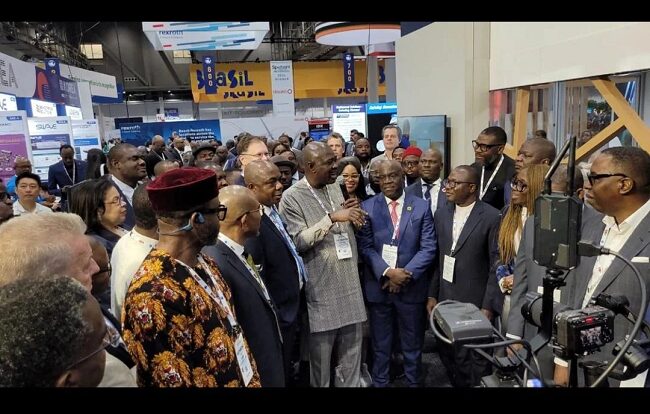
Petroleum Technology Association of Nigeria (PETAN) has urged indigenous oil and gas companies to leverage the forthcoming 2026 Offshore Technology Conference (OTC) in U.S. to deepen global engagement and attract investment.

PETAN said its participation at the global event would be driven by a deliberate strategy to position Nigerian firms as competitive players within the international energy value chain.

This was made known in a statement issued on Friday, April 24, 2026, in Lagos by the association’s Publicity Secretary, Dr Joan Faluyi.

PETAN
PETAN members and officials at an engagement

Faluyi said PETAN would anchor its activities at the Nigerian Pavilion, with the theme: “Africa’s Energy Transformation: Scaling Investment, Technology, and Local Capacity for Sustainable Growth”.

She noted that the conference, scheduled for May 4 to May 7 in Houston, Texas, remained a leading platform for offshore energy dialogue, partnerships and innovation.

According to her, PETAN’s participation goes beyond routine attendance and reflects a focused effort to strengthen Nigeria’s visibility and influence in global energy discussions.

“At OTC 2026, PETAN is returning with stronger alignment and a clearer objective, to ensure Nigerian companies are not just present, but actively engaged and recognised as credible global partners,” she said.

Faluyi explained that the association had consistently showcased the capabilities of indigenous oil and gas service providers at previous editions of the conference, reinforcing their capacity to compete internationally.

She added that the Nigerian Pavilion would serve as a strategic hub for investment discussions, technical exhibitions and direct engagement with global stakeholders.

The association is also scheduled to participate in key engagements, including the African Energy Forum, the NCDMB–OEM Investment Forum and the PETAN Golf Tournament slated for May 7 at Quail Valley Golf Course, Texas.

Faluyi described OTC as a critical gateway for Nigerian companies seeking international opportunities, noting that visibility and engagement at the event often translate into commercial partnerships.

“In an increasingly competitive energy landscape, securing a seat at the global table is essential. Through sustained participation, PETAN continues to assert Nigeria’s place in that conversation,” she said.

Also speaking, PETAN Chairman, Mr. Wole Ogunsanya, said the association’s focus was to ensure that indigenous capacity is fully integrated into global energy decision-making processes.

“We have seen firsthand how global energy decisions are shaped at OTC. This year, we are returning to ensure indigenous Nigerian capacity is not just present but recognised, engaged and heard.

“We are taking our businesses to the table where real partnerships are formed,” he said.

Faluyi added that under Ogunsanya’s leadership, PETAN was prioritising strategic positioning to ensure Nigerian companies are not only visible but considered credible partners in major international energy projects.

By Yunus Yusuf

Weak tobacco tax regime profits industry, not citizens – CISLAC

0

The Civil Society Advocacy Centre (CISLAC) has decried Nigeria’s newly approved 2026 tobacco tax policy warning  that the measure favours industry profits at the expense of citizens’ well-being.

The Executive Director, CISLAC, Auwal Rafsanjani, disclosed the organisation’s position on the policy in a statement on Friday, April 24, 2026, in Abuja.

Under the Federal Government’s 2026 Fiscal Policy Measures and Tariff Amendments, which took effect on April 1, a three-year excise duty regime for tobacco products will run until 2028.

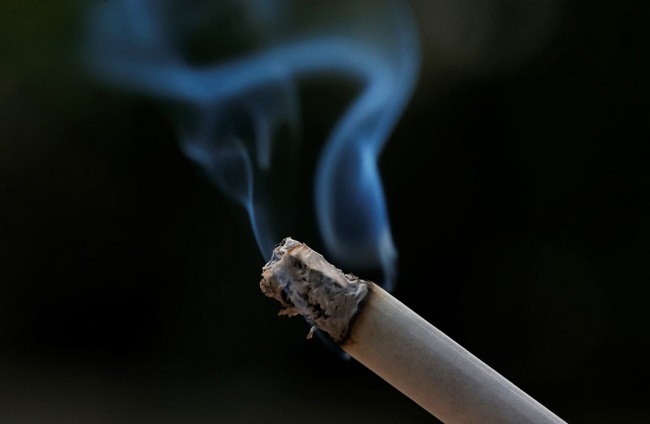
Tobacco smoking
Tobacco smoking

While the policy retains a 30 per cent ad-valorem tax introduced in the previous cycle, it offers only marginal increases of N1 annually on the specific excise component.

CISLAC described the policy as a setback for public health, arguing that it fails to reduce tobacco consumption or align with Nigeria’s obligations under the World Health Organisation Framework Convention on Tobacco Control (WHO FCTC).

Rafsanjani said at the heart of the concern is the widening gap between tax increases and inflation.

“In 2024, a cigarette stick was taxed at N5.20. By 2026, the increment rises by just N0.80, about 13 percent, while inflation has climbed above 15 per cent.

“This effectively makes tobacco products more affordable not less, undermining the core purpose of health taxes.

“Comparisons with regional standards further highlight the shortfall. The ECOWAS benchmark recommends a specific excise tax equivalent to about N538 per pack of cigarettes.

“Nigeria’s projected rates, even at their peak in 2028, would only reach around N160 per pack – less than 30 percent of the regional target,” Rafsanjani said.

He argued that the policy disproportionately benefits tobacco companies by preserving high profit margins while limiting government revenue and exposing more Nigerians – particularly young people – to the risks of addiction.

He further said that for low-income households, the continued affordability of tobacco could deepen cycles of poverty and worsen health outcomes.

The CISLAC boss said this policy was in contrast to the government’s broader fiscal stance, noting a contradiction between aggressive reforms in other sectors – such as fuel subsidy removal.

He said it is a departure from the current administration’s campaign promises to deploy health taxes as a tool for funding universal healthcare and discouraging harmful behaviours.

Rafsanjani therefore urged the government to overhaul the tax regime, align it with ECOWAS directives, and adopt a stronger, inflation-adjusted excise system that significantly raises tobacco prices over time.

He also called for greater transparency and insulation of public health policies from industry influence.

By Perpetua Onuegbu

NNPC refutes allegations of refinery scrap, equipment sale

0

The Nigerian National Petroleum Company Limited (NNPC Ltd.) has described as false and misleading reports suggesting it is selling scrap materials, equipment, or components from its refineries to individuals and private companies.

Mr. Andy Odeh, Chief Corporate Communications Officer, NNPC Ltd., in a statement on Friday, April 24, 2026, said it had not issued any request for bids, tenders, expressions of interest or approvals for the sale of scrap materials and refinery components.

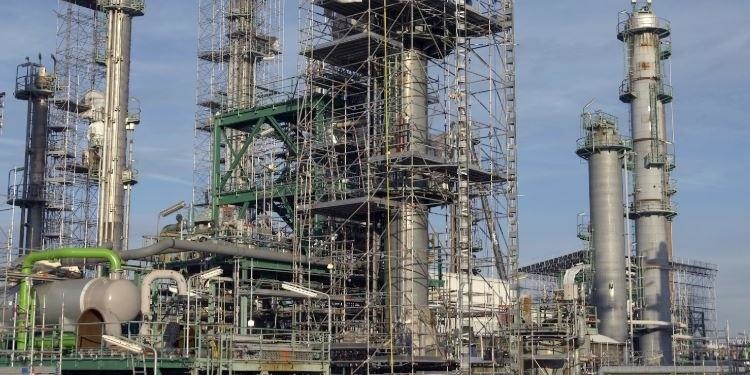
Port Harcourt Refinery

“The Company wishes to categorically state that this information is untrue.

“NNPC Limited has not issued any request for bids, tenders, expressions of interest, or approvals for the sale of scrap materials, refinery components, or any items from the warehouses or inventories of any of its refineries.

“NNPC Limited has also received reports that certain individuals are falsely presenting themselves as representatives or agents of the company, claiming to facilitate the sale of so-called ‘scrap metals’ or refinery equipment.

“These individuals are not authorised by NNPC Limited and are attempting to mislead members of the public,” he said.

Odeh, therefore, advised the public, corporate organisations, and industry stakeholders to disregard any such claims or solicitations and to exercise caution in dealing with anyone making such representations.

He said for the avoidance of doubt, NNPC Limited was not conducting, nor had it authorised, any sale of scrap metals, equipment, or refinery components from any of its facilities.

The NNPC imagemaker said any legitimate disposal of assets by the company would only be conducted through established and transparent processes, publicly communicated through its official channels and in accordance with applicable regulations.

“Members of the public who encounter individuals or entities making such claims are encouraged to report them to the appropriate law enforcement authorities.

“NNPC Limited remains committed to transparency, accountability, and the responsible management of national energy assets,” he said.

By Emmanuella Anokam