Home Blog

Kano unveils eight-point plan to drive social protection reforms

The Director-General of the Kano Social Protection Agency (KASPA), Dr Fatima Abubakar, has unveiled an eight-point strategic plan aimed at strengthening and expanding Social Protection (SP) programmes in the state.

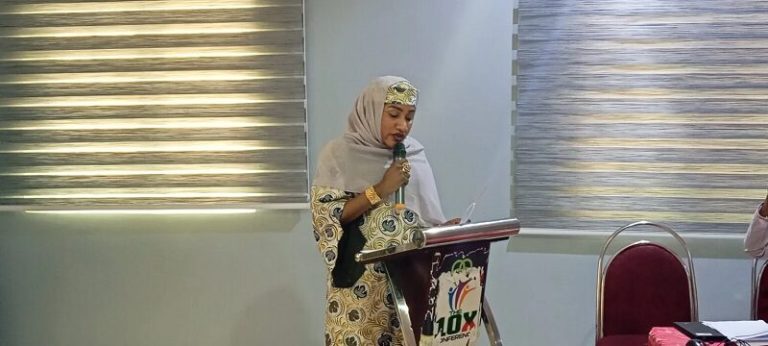
Presenting the points at a two-day first quarter joint SP Technical Working Group (TWG) meeting in Kaduna, organised by UNICEF Kano Field Office for participants from Kano, katsina and Jigawa states, Abubakar said the plan aimed to improve the welfare of vulnerable citizens.

Abubakar explained that the initiative forms part of a joint action plan agreed upon by stakeholders to drive priority social protection reforms within the next six to 12 months.
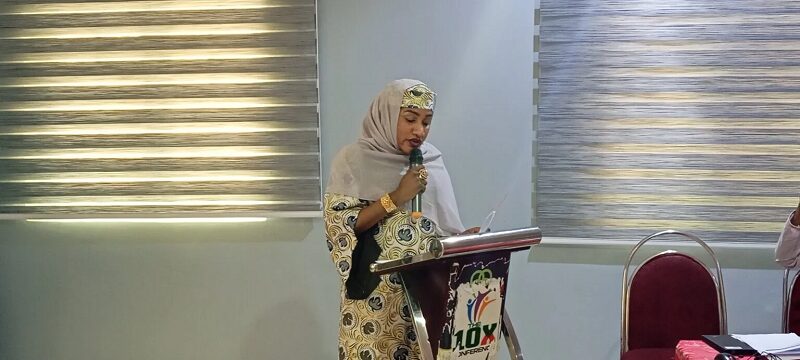
Dr Fatima Abubakar
Director-General of the Kano Social Protection Agency (KASPA), Dr Fatima Abubakar

She said the plan outlines clear roles and responsibilities for participating agencies and provides mechanisms for sustained coordination across states.

According to her, the first priority action focuses on strengthening institutional coordination through the establishment of an inter-state coordination framework.

She added that quarterly TWG meetings would be held while unified reporting templates would be developed to enhance collaboration among state social protection agencies.

The Director-General said the second priority targets improved financing for social protection programmes.

This, she noted, would involve introducing dedicated budget lines, mobilising Islamic social finance instruments such as Zakat and Waqf, and exploring Public Private Partnerships (PPP) and donor support through ministries responsible for finance, budget and planning.

Abubakar also highlighted plans to scale up the Universal Child Benefit (UCB) programme through pilot expansion in selected local government areas.

She explained that the initiative would strengthen targeting systems and integrate child-sensitive indicators in collaboration with partners including UNICEF and the National Social Investment Programme.

According to her, another key component of the reform agenda involves strengthening social registries and data systems.

She said the plan includes updating and harmonising social registers, deploying digital data systems and improving the accuracy of beneficiary targeting through collaboration with ICT units and the National Social Register Office.

To ensure transparency and effectiveness, Abubakar stated that monitoring, evaluation and accountability mechanisms would also be strengthened.

Abubakar said key performance indicators would be developed, periodic performance reviews conducted, and feedback and grievance redress systems improved with the support of civil society organisations.

“The reform framework also incorporates climate-responsive and child-sensitive approaches,” she said.

According to her, SP policies will be aligned with climate adaptation strategies while interventions aimed at improving child welfare will be expanded in partnership with ministries of environment and development partners.

She further emphasised the importance of stakeholder engagement and public awareness, noting that advocacy campaigns, community leader engagement and improved communication strategies would be implemented in collaboration with civil society groups and media organisations.

Abubakar added that the final pillar of the reform plan focuses on capacity building and institutional strengthening through the training of SP personnel, peer learning visits and the development of operational guidelines to support programme implementation.

She said the joint action plan would be supported through regular coordination mechanisms, including shared reporting platforms, joint financing task teams, technical support platforms and knowledge-sharing initiatives among participating states.

According to the KASPA director, the initiative is expected to strengthen collaboration, improve programme delivery and ensure that social protection interventions reach the most vulnerable populations across the region.

By Abbas Bamalli
Expert seeks grassroots support to strengthen Nigeria’s health system

0

The Technical Director/CEO of Datametrics Associates Limited, Dr Abiodun Feyikemi Ipadeola, has called on Nigerians to support public hospitals and encourage healthcare workers and families through simple acts of appreciation and community service.

Ipadeola is a public health researcher and data/impact evaluation expert.

She made the call while speaking to newsmen on Monday, April 6, 2026, in Abuja ahead of the commemoration of the 2026 World Health Day, with the theme, “Healthy Beginnings, Hopeful Futures.”

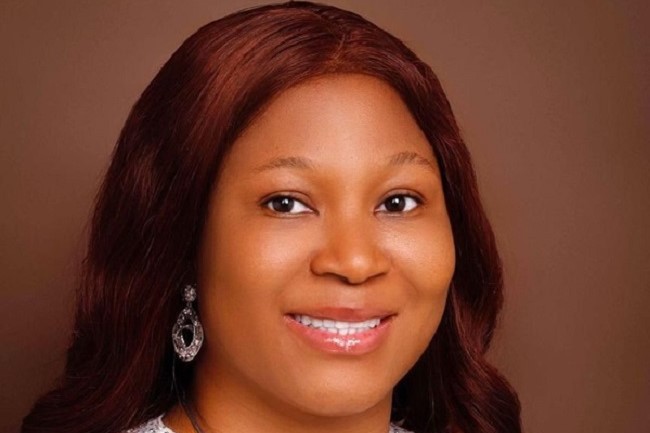
Abiodun Feyikemi Ipadeola
Dr. Abiodun Feyikemi Ipadeola

She commended midwives and nurses who provide vital care in ensuring safe deliveries and quality patient care.

According to her, they can be motivated through public recognition of their efforts and support to patients receiving care from them.

“Midwives should be encouraged to ensure safe delivery, and nurses should be supported to take proper care of patients. We can all be impactful in our own little ways,” she said.

She said that improving Nigeria’s healthcare system should not be left solely to the government, noting that citizens can contribute by meeting basic needs in hospitals and showing gratitude to health workers.

“We can only help each other to ensure that our infrastructure is doing well.

“Sometimes, it is as simple as saying “thank you’’ to a health worker, appreciating them for attending to you, offering them water once in a while,” she said.

According to her, such small gestures can boost morale among healthcare providers and improve service delivery, especially in public health facilities facing resource constraints.

Ipadeola said that her advocacy was inspired by personal reflection.

She said that she recently marked her 40th birthday by returning to the government hospital where she was born.

“The visit was driven by a deep sense of gratitude to the healthcare workers who ensured my safe birth.

“I am who I am today because a midwife took care of my mother and ensured that my birth was stress-free. That made me realise the need to give back.

“During my visit, I supported mothers who delivered at the hospital on my birthday with a cash gift, a gesture that brought relief to all the families that benefited from the donation,” she said.

She said that hospital staff confirmed that some parents were able to settle their delivery bills, with a few moved to tears by the unexpected support.

“I did not know such support could go a long way until we saw their reactions. It showed that even small efforts can make a big difference.”

Ipadeola said that such interventions may not address systemic challenges in the health sector.

She, however, said that they played a critical role in easing patients’ financial burden, boosting morale among healthcare workers, and promoting a culture of shared responsibility in strengthening public health facilities.

She described the initiative as a reminder that everyone has a role to play in strengthening the health system and putting smiles on the faces of mothers in unexpected ways.

The technical director urged Nigerians to adopt a culture of giving back.

“You can imagine going to the hospital to give birth and returning home not just with your baby, but also with unexpected support.

“The whole world is a mission field, and everyone can make an impact, no matter how small. If we all do our part, we can ensure that other unborn children benefit from better care,” she said.

Ipadeola called for sustained citizen engagement in the health sector, stressing that collective responsibility would help improve infrastructure, boost healthcare worker morale, and enhance outcomes for mothers and children nationwide.

By Abujah Racheal

Nature essential to our economy, our stability, our humanity – IUCN President

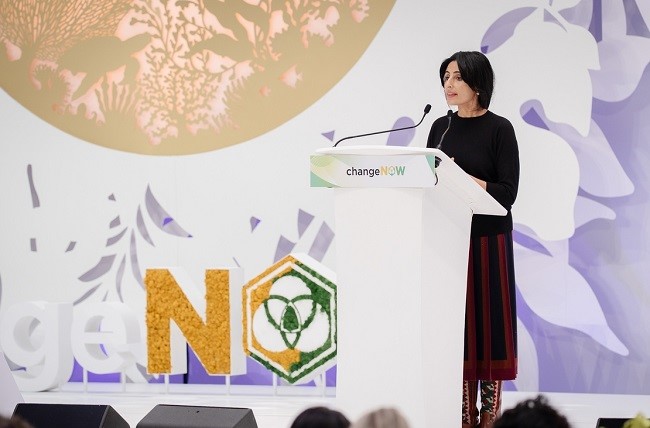
Razan Al Mubarak, President of the International Union for Conservation of Nature (IUCN), delivered a keynote address at the opening of the ChangeNOW Summit in Paris on March 30, 2026, calling for stronger global cooperation and the integration of nature at the heart of economic and political decision-making.

Speaking to an audience of global leaders from business, finance, science, and civil society, she emphasised the urgency of addressing interconnected environmental crises, including climate change, biodiversity loss, and ecosystem degradation, as these challenges continue to accelerate amid global uncertainty and geopolitical challenges.

Razan Al Mubarak
Razan Al Mubarak, President of the International Union for Conservation of Nature (IUCN)

In her address, President Al Mubarak stressed that nature underpins all economic systems, urging leaders to rethink how it is valued.

Al Mubarak said: “It is especially in moments like this that we see clearly that nature, energy, society, and finance are not separate conversations. They are deeply interconnected.

“Yet too often, they are not aligned in our attention, not aligned in our investment, and not aligned in our actions.

“The reality is that nature cannot be separated from human systems. It is affected by all that we do. At the same time, energy sources, markets, financial systems, supply chains, economies are human constructs. The result of our choices and our creativity and, perhaps sometimes, the lack of our creativity.

“And the results of our choices are visible in the loss of ecosystems and the pressures we place on the natural world. And because of that, they can be changed. They can be reinvented into systems that better serve both nature and people.

“It is time to recognise that nature is essential to our economy, to our stability, and to our humanity.”

She underscored that environmental challenges require inclusive, cross-sector solutions and that platforms such as the ChangeNOW Summit demonstrate what effective cooperation can look like in practice.

“We do not gather because all is well. We come together because we believe things can, and must, be better. And because we are willing to work together to create something different, something of greater collective power,” she said.

Her remarks aligned with the summit’s overarching focus on planetary boundaries – the environmental limits for a stable earth. She noted that while science provided clarity on these limits, showing us that we have crossed seven of the nine identified boundaries, we all share the responsibility for action, with multilateral cooperation and coordination across governments, countries, businesses, science and communities.

Reflecting on recent outcomes from the IUCN World Conservation Congress, President Al Mubarak pointed to the Union’s newly adopted 20-year vision and programme of work, as well as global commitments to halt and reverse biodiversity loss by 2030. She said focus must now shift from commitments to implementation.

Representing more than 1,400 Member organisations and over 18,000 experts, IUCN continues to play a leading role in translating science into practical conservation action worldwide.

President Al Mubarak’s intervention formed part of a high-level opening session, highlighting the importance of collaboration across business, Indigenous leadership, and policy. Her address sets the tone for three days of discussions focused on advancing solutions within planetary boundaries, including ocean protection, regenerative agriculture, water security, and nature-based approaches to economic resilience.

Tinubu approves N3.3trn plan to clear power sector debt

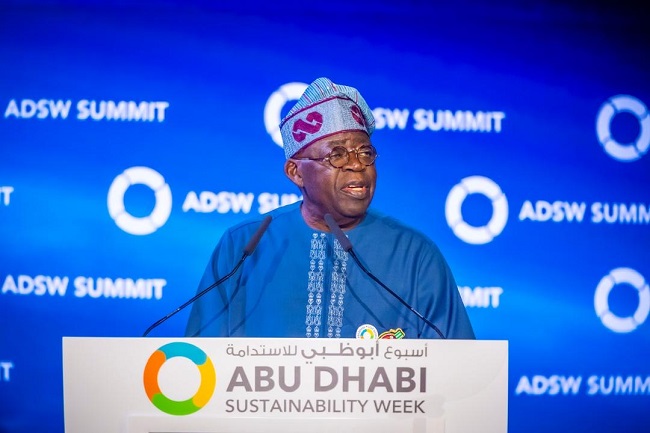
President Bola Tinubu has approved a N3.3 trillion payment plan to settle outstanding debts under the Presidential Power Sector Financial Reforms Programme.

The repayment plan followed a final review of legacy debts that have plagued Nigeria’s power sector for more than a decade.

This is contained in a statement issued by Presidential Spokesperson, Mr. Bayo Onanuga, on Sunday, April 5, 2026.

President Bola Tinubu

The debts accumulated between February 2015 and March 2025 across the power value chain.

Following verification, N3.3 trillion was agreed as full and final settlement to ensure a fair, transparent and credible resolution of the liabilities.

The Presidency said implementation of the plan has commenced, with 15 power generation companies signing settlement agreements totalling N2.3 trillion so far.

The Federal Government has already raised N501 billion to support the initial phase of the payments under the programme.

Out of the amount raised, N223 billion has been disbursed to beneficiaries, while further payments are currently underway.

The Presidency said the intervention would improve liquidity across the power value chain and support more stable electricity generation nationwide.

It added that with improved funding, power plants would sustain operations, leading to enhanced reliability of electricity supply to homes and businesses.

Onanuga noted that the reforms would also boost investor confidence, attract new investments, and create jobs across the sector.

Special Adviser to the President on Energy, Olu Arowolo-Verheijen, said the programme was critical to restoring confidence in the power sector.

“This programme is not just about settling legacy debts; it is about restoring confidence across the power sector and ensuring the system works more reliably.”

She explained that the initiative would ensure gas suppliers are paid and enable power plants to operate efficiently and sustainably.

Arowolo-Verheijen said the reforms form part of broader efforts, including improved metering and service-based tariffs linked to electricity supply quality.

“It is part of wider reforms, including better metering and tariffs tied to service delivery, to improve efficiency and accountability.”

She added that the government was prioritising power supply to industries, businesses, and small enterprises to drive economic growth and job creation.

According to her, the overall objective is to deliver more reliable power to households and strengthen support for businesses nationwide.

“The goal is simple: more reliable power for homes, stronger support for businesses, and a system that works better for all Nigerians,” she said.

Tinubu commended stakeholders for their support in resolving longstanding issues in the sector and advancing ongoing reforms.

He also confirmed that the next phase of the programme, known as Series II, will commence within the current quarter.

By Muhyideen Jimoh

From potential to production – Nigeria’s moment of alignment

0

Nigeria may be closer to industrialisation today than ever before – not because of ambition, but because of alignment.

Along the Lekki corridor, something rare is happening: a refinery, a deep seaport, a free trade zone, expanding infrastructure, energy capacity, and now early signals of steel production are coming together in one place.

Dangote Refinery gate

This is not just development. It is a moment.

But history warns us. Abuja, Ajaokuta, and ALSCON did not fail because they were wrong – they failed because they were not aligned.

Infrastructure alone does not produce industrialisation. Concrete is not industry. Industrialisation requires discipline.

If Lekki must succeed, six things are critical:

  1. Stable and competitive power
  2. Policy consistency beyond political cycles
  3. Efficient, integrated transport systems
  4. Strong industrial linkages (not isolated projects)
  5. Environmental discipline
  6. And most importantly – a coordinating authority to align everything

Nigeria has built before.

The real question now is: can we organise?

Because nations do not industrialise by accident. They industrialise by design – and by discipline.

By Gbenga Onabanjo, goforte1@gmail.com

Unsung heroes: One woman’s goal to clean up Nigeria’s beaches, empower women and youth

0

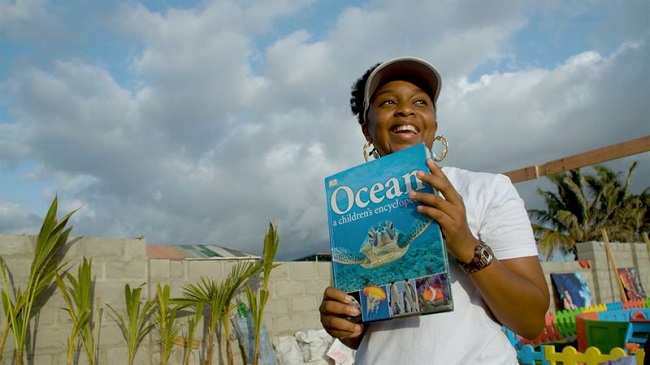
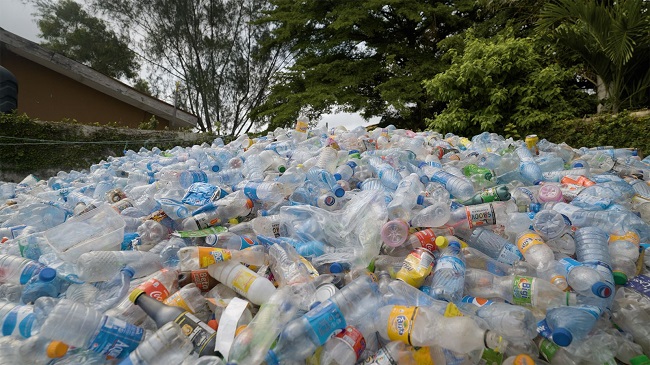
Doyinsola Ogunye founded multiple organisations in Lagos – including the Mental and Environmental Development Initiative for Children (MEDIC) and the Recycling Scheme for Women and Youth Empowerment (Reswaye) – in an attempt to tackle the waste problem while also engaging and empowering women and youth.

“I spend most of my free time on the beach,” Ogunye said. “I was opportune to have parents who allowed me to go out and put my legs in the sand and get injured or just play and just be kids. But right now, a lot of children don’t even go out.”

Ogunye’s work with children not only helps rein in the problem of plastic pollution on beaches, but also connects them to the nature around them.

Doyinsola Ogunye
Doyinsola Ogunye, the founder of multiple environmental awareness organisations in Lagos, Nigeria

“We need to expose children to nature because they are a part of nature,” Ogunye said.

Ogunye’s work with MEDIC is just one way of fostering that connection to the environment. 

Children who are enrolled with the initiative help pick up plastic from the local beaches and learn invaluable information on how to lessen their impact on the environment. They learn how to recycle and upcycle waste, how to plant trees and about aquatic biodiversity.

Doyinsola Ogunye
Doyinsola Ogunye teaches children about the importance of clearing waste from local beaches in Nigeria

In addition to her work with the young, Ogunye also strives to empower women through sustainable practices. Through Reswaye, more than 4,000 women have registered across 41 communities to make money by recycling and living sustainably.

Seeing how common it was that people would burn or dump their trash on the beach, Ogunye decided to show them another way. 

“We thought, ‘why don’t we educate them and orientate them and also let them know that you’re able to make money with recycling… you’re able to pay school fees for your children… you’re able to afford a proper meal and also start other businesses that you’re passionate about’.”

Doyinsola Ogunye
Doyinsola Ogunye encourages locals to earn money through recycling

Reswaye purchases plastic from these women and children, giving them another source of income. The plastic is then sent to recycling plants where it is sorted, compressed and repurposed into bottles, hangers, toys and more.

Taking sustainability one step further, Reswaye also connects with the community. Anyone who would like to can donate their collected plastics, and, instead of taking the proceeds for themselves, they can give it to a woman or family in the community that they know might be struggling.

“Some people and some organisations will support us with their recyclables and say, ‘I don’t have funds for these recyclables but I need you to support this pregnant woman, for example.

“Or, ‘I’m going to be giving you all my plastic so that when it is sold we’re able to support this community’, and so on and so forth,” Ogunye explained.

The work that Ogunye does focuses on the future of the planet, but also on the current status of vulnerable people and communities. She wants to ensure that people have the right – and knowledge – to live sustainable lives.

“There are a lot of ‘no’s’ when it comes to the great outdoors: parents don’t want the children to go to the beach; they don’t want the children to swim in the water,” Ogunye said.

“It limits people in their mindset… We need to move away from that and come out and adventure.”


By Natalia Gonzalez Blanco Serrano, Daily Maverick

Nigeria targets 2050 for self-sufficiency in palm oil

The National Palm Produce Association of Nigeria (NPPAN) says the country will be self-sufficient and meet its global market share of oil palm by 2050.

This, it said in Abuja on Saturday, April 4, 2026, was possible through the effective efforts towards the implementation of National Oil Palm Development Strategy.

Mr. Alphonsus Inyang, National President of NPPAN, said this during an interview on the sidelines of National Oil Palm Development Strategy validation meeting.

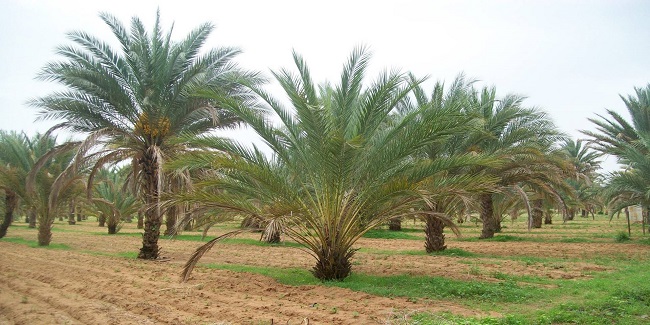
Oil palm plantation
Oil palm plantation

Inyang said that, with the guideline, the country’s current production capacity of 1.4metric tonnes to 1.5metric tonnes annually, would increase to nine metric tonnes or 10 metric tonnes between now and 2050.

Inyang, also the Vice Chairman of the Technical Working Group for the development of the National Oil Palm Development Strategy, emphasised that the feat would be achieved by empowering smallholder farmers to enhance production.

Inyang further explained that the country intended to extend oil palm production to Taraba, Niger and Kogi states under the framework.

He said that leveraging some northern states among other intervention was part of the ways to achieved 2050 self sufficiency and global market targets.

“Taraba with with 69,000 square kilometers land is well placed to cultivate oil palm trees than the whole southern part of the country

“Taraba State has a longer sunshine than southern Nigeria; it also has water in some parts.

“So those are the things we are going to leverage. Niger State too has areas that can produce oil palm, Kogi also,” he said.

Inyang said the strategy was designed to reposition the country as a major player in the industry at the global level.

Inyang explained that the framework would encapsulate the establishment of a National Oil Palm Council (NOPC), an Oil Palm Development Fund and a National Smallholders Development Fund.

According to him, Nigerian Institute for Oil Palm Research (NIFOR) will be transitioned into a Nigerian Oil Palm Board to oversee research, development and innovation in the sector.

Inyang frowned at the rating of the country as number five oil palm producing country globally.

“We are number one palm oil producing country in Africa, number one importer, exporter and number one consumer.

“We produce more, we import more, we consume more and we export more than any other country in Africa,” he said.

He attributed poor investment and growth in the sector over the years to the absence of a clear governance architecture and structure

Inyang said that the gap led to a fragmented system without central regulatory authority to guide investors

“Governance architecture and governance structure are key to drive the sector.

“The strategy will have a structured governance architecture similar to what is obtainable in Malaysia and Indonesia, the leading oil palm-producing countries.

“There will be a structured governance architecture that will be formed by the strategy with the oil palm development fund to manage 25 per cent of tariffs that are being collected for palm oil among other funds. that will be generated.

“With the development of the framework government has created an enabling environment to support growth in the sector.

“Therefore, private sector players and investors should take advantage of the new policy framework,” he said.

Dr Fatai Afolabi, Managing Consultant, Foremost Development Services, said the  mission was to build a sustainable palm oil production for the country and  ensuring self sufficiency, competitiveness and inclusive production.

“Its mission is leveraging a hybrid development model-integrating large-scale estates and smallholders through sustainable practices, research and efficient supply chains,” he said.

By Felicia Imohimi

Use marble to produce electricity, engineer advises Oyo

An electrical engineer, Mr. Toyese Oyerinde, has advised the Oyo State Government to exploit the huge deposits of marble in Igbeti, Olorunsogo Local Government Area, to generate electricity.

In an interview in Ibadan, the state capital, on Saturday, April 4, 2026, Oyerinde said that President Bola Tinubu has significantly provided electricity for Nigerians by removing power generation from the exclusive list.

He said that the amendment of the Electricity Regulatory Act by the President has allowed states to also generate, distribute and transmit electricity.

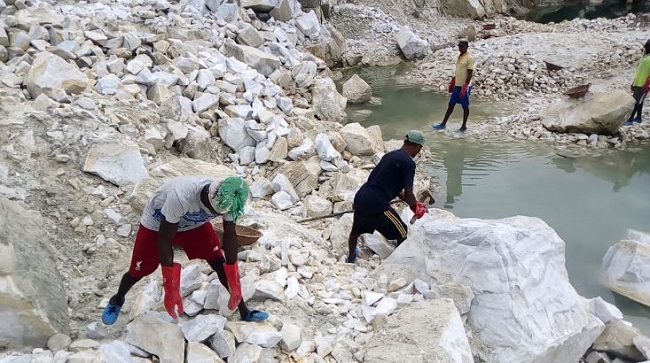
Marble
Marble mining in Nigeria

According to him, if the over 25km land stretch of marble deposit in Igbeti town is subjected to further scrutiny, it can be used to generate electricity not only for Oyo State, but also for Nigeria.

“You see, what is called marble is just the exposure of the limestone to the atmospheric pressure and all you need to do is to break the components of the marble and remove the limestone.

“Then, combine the limestone with coal, the gas generated could be piped to the gas turbine to produce electricity.

“Also, the limestone that was broken down in the process could be used to manufacture cement and it would be of high quality,” Oyerinde said.

Equally, the electrical engineer expressed sadness that waste generation had become a menace in the state rather than being a blessing.

Oyerinde said that it was a well known fact that waste could be converted to generate power.

“Oyo State is next to Kano when it comes to availability of manmade dams, but they are not thinking of utilising those facilities located in Alabata in Ibadan, Okeogun and Eruwa.

“For instance, the dam at Alabata in Akinyele Local Government area of Oyo State has two million generating capacity.

“The old Western Region government of Awolowo saw the need to put a power generating system in place and built one Arstol turbine at the State Secretariat to provide electricity for Bodija and Secretariat, but the project has remained abandoned till date.

“Even if the current government has done something, it has no effect yet.

“I would have expected that Gov. Makinde would generate power and ask the Ibadan Electricity Distribution Company (IBEDC) to remove the entire Old and New Bodija, which are now commercial centres, from its power distribution.

“Today, it is sad that the state government has sold most of those lands with water around them to real estate agents,” he said.

Also Nigeria’s former envoy to the Philippines, Dr Yemi Faronbi, suggested that the country could adopt multiple approaches in solving the epileptic power problem.

Faronbi argued that Philippine was able to resolve its electricity problem within four years through multiple generation approaches.

He further said that a combination of hydroelectricity, coal, gas, solar, windfarm and so on might be the permanent solution to Nigeria’s power problem.

“Many countries such as United States of America, South Africa and others still generate electricity from coal. Why can’t Nigeria?

“From what I know, Nigeria has one of the best in terms of quality and huge deposit of coal in the world because the one available in Kogi does not really smoke compared with that in Enugu.

“In addition, considering solar as a means of electricity generation is one of the easiest for Nigeria given the country’s location two to three degree from the equator.

“We have the capacity to retain about 85 per cent of our solar energy unlike Germany that has only 20 per cent retention rate.

“This means that we can begin to have solar power at least in the rural and local government areas, housing estates and so on.

“Moreover, given the kind of topography we have in northern Nigeria, we have windfarms, which could also be suitable to generate electricity.

“About six, seven years ago, Germany was generating electricity from windfarm and electricity being generated from it became so surplus that they had to start paying people to be using it.

“So, Nigeria does not have to solely rely on gas and thermal means of electricity production.

“Each of solar, windfarm, petroleum, gas, hydro means of electricity generation and so on would have areas where they could be best produced and not just relying on only one,” the elder stateman said.

Faronbi stressed the need for the government to carefully look at the capacity to transmit what is generated that is, to evacuate from the generating centre to the distributing centre.

He said that transmission of electricity should also be privatised just like generation and distribution stages for there to be stable electricity in the country.

“Our generating capacity is higher than our transmitting capacity because the old transmitting cables have not been replaced.

“It took Philippine only four years to solve their electricity problem, if we are serious, it should not take us more than that,” a broadcaster said.

By Olawale Akinremi

Expert urges shift to value-driven petroleum strategy

0

An energy economist, Prof. Wumi Iledare, has urged a strategic shift, warning Nigeria’s vast hydrocarbon reserves may yield little value without stronger production and investment growth.

Iledare, a Professor Emeritus of Petroleum Economics at Louisiana State University, disclosed this in an interview on Friday, April 3, 2026, in Lagos.

The Chief Executive of the Nigerian Upstream Petroleum Regulatory Commission, Mrs. Oritsemeyiwa Eyesan, said reserves fell to 37.01 billion barrels as of Jan. 1, 2026.

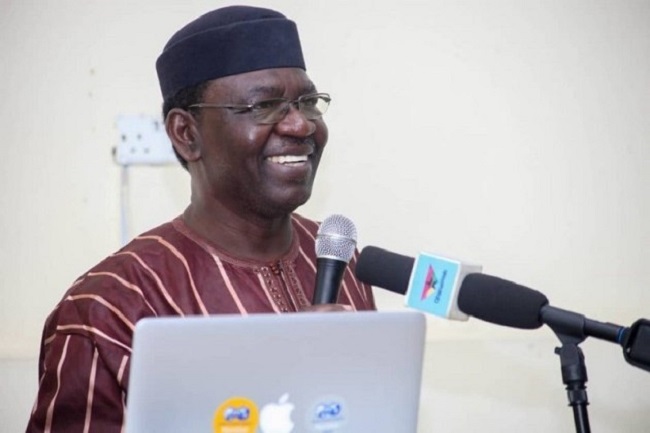
Prof. Wumi Iledare
Prof. Wumi Iledare

Iledare said Nigeria’s reported reserves remain substantial, but warned that underlying structural challenges could limit their economic value without corresponding production growth.

He said reserve growth without production expansion delivered little benefit, stressing that sustainability depends on commercially recoverable and financeable proven assets.

“The real test of sustainability is no longer reserve volume, but quality, specifically what can be commercially recovered and financed as proven assets.

“In a decarbonising global economy, projects must compete on cost efficiency, carbon intensity, and fiscal attractiveness,” he said.

He warned that reserves failing these thresholds risk becoming stranded, technically viable but economically unviable in a rapidly evolving energy market.

“In this context, sustainability is shifting towards investment-grade reserves capable of attracting capital despite tightening ESG standards,” he said.

Iledare stressed that “reserves growth without commensurate production growth is economically sterile,” urging a focus on viable and financeable assets.

He said only reserves competitive in cost, carbon intensity, and fiscal terms would attract funding in an era of selective capital flows.

“Reserves that cannot compete risk becoming stranded assets,” he said, noting sustainability now depends on converting resources into bankable opportunities.

Iledare urged a shift from resource control to value creation, noting that production growth depends more on investor confidence than resource size.

He acknowledged the Petroleum Industry Act as progress, but called for refinement in cost recovery limits, contract stability, and fiscal clarity.

“Capital does not respond to reserves; it responds to risk-adjusted returns,” he said, stressing the need to reduce delays and improve transparency.

On gas, he described Nigeria’s position as paradoxical, with vast resources alongside persistent energy poverty and limited industrialisation.

He attributed this to treating gas as a by-product rather than a central driver of economic development.

“To unlock value, gas must be repositioned as a domestic economic catalyst,” he said.

He advocated stronger focus on gas-to-power reliability and expansion of gas-based industries, including fertiliser, petrochemicals, and methanol.

He cautioned against allowing export ambitions to overshadow domestic utilisation priorities critical for industrial growth.

On pricing, he said gas must balance affordability with commercial viability, warning failure would constrain demand and upstream investment.

Iledare noted regulatory improvements by the Nigerian Upstream Petroleum Regulatory Commission, including licensing rounds and digitalisation initiatives.

However, he stressed that investor confidence depends on consistent execution rather than policy pronouncements.

“The real test is whether regulatory actions reduce timelines, ensure transparency, and enforce rules predictably. Credibility in this sector is cumulative,” he said.

On energy transition, he said Nigeria’s challenge was sequencing, not choosing between hydrocarbons and climate commitments.

He maintained hydrocarbons, especially gas, remain essential but must be developed with greater efficiency and lower emissions.

He called for reduced gas flaring, improved carbon management, and reinvestment of revenues into energy diversification.

“Nigeria’s transition must be pragmatic, anchored on energy security, economic inclusion, and environmental responsibility,” he said.

Iledare said Nigeria’s petroleum future depends more on policy quality than reserve size in a tightening global energy landscape.

“The transition era narrows the margin for inefficiency. Nigeria needs alignment between reserves, investment frameworks, and regulatory credibility,” he said.

By Yunus Yusuf

Electricity privatisation yet to meet expectations, as traders cry out

The Coalition for Affordable and Regular Electricity (CARE) says Nigeria’s power privatisation has yet to fully deliver the expected improvements in electricity supply and service delivery.

Mr. Chinedu Bosah, National Coordinator of CARE, said this in an interview with on Sunday, April 5, 2026, in Lagos.

Bosah said the reform had not achieved all its intended objectives, noting that many electricity consumers still experience challenges in accessing reliable power supply.

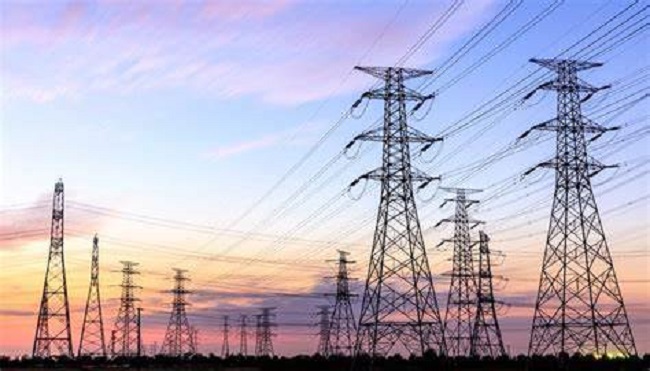
National grid
National grid lines

He said electricity distribution companies (DisCos) needed to strengthen service delivery and address concerns relating to estimated billing and metering.

According to him, some consumers continue to incur additional costs in accessing electricity services, which include investments in infrastructure such as transformers and meters.

Bosah also noted that stakeholders in the sector must continue to work toward improving generation capacity and strengthening transmission infrastructure.

He emphasised the importance of sustained reforms and investments to enhance efficiency and ensure better outcomes for electricity consumers.

On the way forward, Bosah called for increased transparency, accountability and stakeholder engagement in the management of the power sector.

He added that collaborative efforts among government, operators and consumers would be critical to achieving stable and affordable electricity supply.

Bosah further underscored the need for policies that support equitable access to electricity and promote long-term sustainability in the sector.

He said addressing challenges in the power sector remained vital to economic growth and improved living standards for Nigerians.

Meanwhile, many traders in the Federal Capital Territory (FCT) say their businesses are folding up following the power outage being presently witnessed.

They described the situation as frustrating and embarrassing.

Some of traders who reside in Karu, ACO Estate, Deidei and Dutse said this in an interview in Abuja on Sunday, April 5, 2026.

Most of the traders disclosed that they depend on power to run their businesses.

Many parts of the territory, especially the satellite towns had been without power for days, even weeks.

Mr. Andrew Okorie, who runs a cold room in Karu, said that he spent a lot on diesel to preserve some perishable items in his freezer.

“I spend nearly N20,000 daily on diesel to run my cold room, It’s not funny at all and I am making little or no profit, especially with this unstable power supply,” he said.

He appealed to the Federal Government to do everything within its power to fix electricity to cushion the effect on consumers.

Mrs. Agnes Odiase, who also runs a restaurant in Karu, described the situation as “frustrating and chaotic” as her customers were not comfortable due to the incessant power outage.

“I can’t boast of power supply for one hour at a stretch. It just comes and goes every one or two hours and this is affecting my business seriously,” she said.

A barber in ACO Estate on Airport Road, Mr. Segun Ayomide, said that he had to increase the price for his services from N500 to N1,000 for an ordinary haircut in order to meet up with his expenses on fuel.

Ayomide said that in the past three days, power supply had not been stable in the estate and this was making him lose money.

Mr. Raymond Okon, a fashion designer in Dutse, said that the power outage was affecting his business and as such he was unable to meet his customers’ demand.

Okon said that, for days, there might be no electricity in his area, adding that he needs it to do the job.

”I am unable to meet up with my customers demand because of the power supply in my area and I am aware some electricity consumers are getting up to 18  hours supply, especially those on Band A.

”My appeal to government is to do everything possible to improve power supply in the country to reach every citizen and not  favour some and abandon others,” he said.

Mrs. Caroline Uneru, who sells cold drinks and water in Dei-Dei, said that the electricity situation in her area was discouraging.

Uneru said that the little business she was using to feed her family had gone down due to poor power supply.

“I am tired of the situation; the little business I am doing to feed my family is going down every day because there is no electricity to freeze my goods.

“In this heat period, nobody wants to buy hot drinks or water, so I am appealing to government to do everything it can to alleviate our suffering,” she said.

The Nigerian Independent System Operator (NISO) had attributed the continued decline in electricity generation on the national grid to the persistent gas supply constraints affecting several thermal power plants

The Minister of Power, Mr. Adebayo Adelabu, had assured Nigerians that power supply would improve within two weeks.

He also apologised to Nigerians for the current epileptic power situation in the country.

“With the committee we have set up, the feedback from gas suppliers, and the timeline for repairing the gas pipelines, I can say that within two weeks we should start seeing improvements in power,” he said. 

By Yunus Yusuf and Constance Athekame