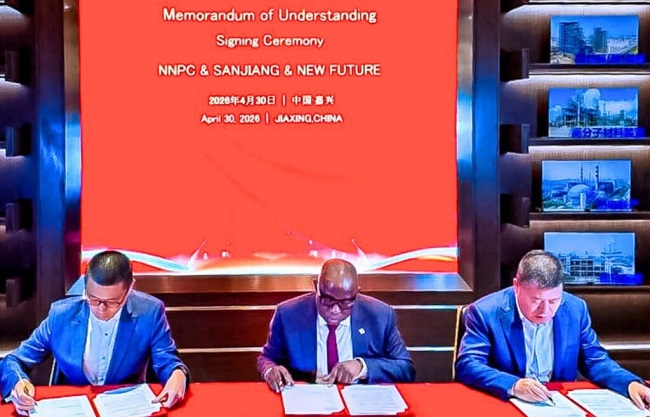
The NNPC Ltd has signed a Memorandum of Understanding (MoU) with two Chinese companies, Sanjiang Chemical Company Limited and Xingcheng (Fuzhou) Industrial Park Operation and Management Co. Ltd, for collaboration through a potential Technical Equity Partnership (TEP) in support of the completion and operation of the Port Harcourt and Warri Refineries.
Andy Odeh, Chief Corporate Communications Officer, NNPC Ltd., made this known in a statement.
According to Odeh, the MoU was signed by the Group CEO, NNPC Ltd, Bayo Ojulari; Chairman, Sanjiang Chemical Company, Guan Jianzhong; and Chairman of Xinganchen (Fuzhou) Industrial Park Operation and Management Co. Ltd, Bill Bi, in Jiaxing City, China, on Thursday, April 30, 2026.
Group CEO, NNPC Ltd, Bayo Ojulari (middle), signing the MoU in the company of Chairman, Sanjiang Chemical Company, Guan Jianzhong, and Chairman of Xinganchen (Fuzhou) Industrial Park Operation and Management Co. Ltd, Bill Bi
He revealed that the potential framework would cover completion of outstanding work at the two refineries, together with operating and maintaining both facilities to achieve best-in-class, sustainable performance.
“Planned expansion and upgrades would elevate both facilities to cleaner, more profitable product standards.
“The potential collaboration also contemplates expanding the refineries’ petrochemical capacities and harnessing gas and downstream opportunities through the development of co-located, gas-based industrial hubs,” Odeh revealed in the statement.
Ojulari, speaking shortly after the signing, described the MoU execution as a significant milestone, following more than six months of concerted engagement between the technical and management teams of NNPC and the two Chinese partners, Sanjiang and Xinganchen.
“All parties recognise mutually beneficial opportunities for the development and long-term sustainable profitability of NNPC’s refining assets in Nigeria, and the collective weight required for success,” Ojulari noted.
The GCEO further stated that the MoU is an important step on the journey towards identifying potential technical equity partner(s) to restart and expand NNPC’s refineries, and to explore opportunities in co-located petrochemicals and gas-based industries.
The MoU reflects the parties’ shared intent to progress discussions in good faith, with any definitive arrangements to follow in due course and subject to customary approvals.
Recently, Sierra Leone became the frontline of West Africa’s war on malaria as health ministers, experts, and partners converged on Freetown with one warning: the region either fights together or continues to lose lives.
At the just concluded 27th Ordinary Session of the ECOWAS Assembly of Health Ministers in Freetown, Sierra Leone, delegates called for a unified, multi-sectoral and data-driven approach to malaria elimination.
They warned that fragmented interventions and inefficient use of resources continue to hinder progress.
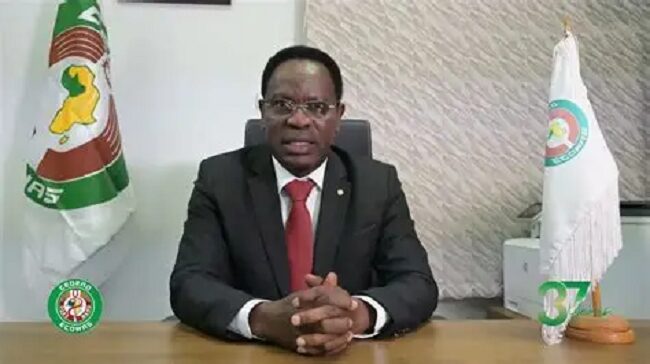
Dr Melchior Aissi, WAHO Director General
Organised by the West African Health Organisation (WAHO), the session urged a strengthened malaria elimination framework, operationalisation of the regional community health policy, and adoption of the Freetown Charter.
The stakeholders described malaria as a leading cause of death in the region, noting that in spite decades of interventions, the disease persists due to disjointed strategies and weak coordination across sectors.
The meeting reviewed health performance across member states, aligned strategies, and formulated recommendations to guide ministerial decision-making on malaria elimination and health system strengthening.
Ministers approved WAHO’s annual report, noted progress in regional health security, and endorsed continued dialogue on malaria elimination.
A key highlight was renewed emphasis on domestic resource mobilisation as a cornerstone of health sovereignty.
Dr Melchior Aissi, WAHO Director General, told delegates that elimination had become a regional security issue, not just a health goal.
According to Aissi, the theme, “Advancing Malaria Elimination through an Integrated Regional Strategy,” reflects both the scale of the challenge and urgency of collective action.
With West Africa carrying 40 per cent of the world’s malaria burden, he said no country could eliminate malaria alone.
He called for a unified approach anchored on solidarity, harmonised interventions across borders, and real-time data sharing.
“In a region where people and mosquitoes move freely, fragmented campaigns will always fall short,” he argued.
He praised Cabo Verde’s malaria-free certification as proof that elimination was possible in West Africa, but cautioned that without stronger political commitment, gains could slip.
“Elimination is not a one-time event; it is a sustained effort.
“Beyond political will, there are two non-negotiables: technical rigour and sustained domestic financing.
“Donor cycles end, but surveillance, testing, and treatment must continue every rainy season,” he said.
Aissi tabled WAHO’s regional strategic framework for malaria elimination before the ministers.
It prioritises five pillars: strengthened health governance to align national plans, digital transformation for real-time surveillance, effective data use to target hotspots, local innovation to adapt tools to West African contexts, and community engagement to ensure last-mile delivery.
He stressed that elimination could be achieved through isolated national efforts but requires coordinated regional action.
This includes harmonised strategies, continuity of cross-border interventions, integrated epidemiological surveillance, sustained investment, and synchronised implementation.
Aissi reaffirmed the ambition to eliminate malaria across all 15 ECOWAS member states within the next decade, pointing to Cabo Verde as evidence the timeline was possible.
Speaking for technical and financial partners, Mr Dionke Fofana, Lead of WAHO partners, reiterated support for strengthening health systems.
He said that shared priorities among member states were non-negotiable if donor and domestic funds were to be used efficiently.
Fofana called for integrated approaches that break silos, more domestic financing to reduce aid dependency, innovation in tools and delivery, and data-driven decision-making backed by stronger private sector engagement.
He commended WAHO’s leadership for progress despite funding and climate headwinds.
The Assembly reviewed the 2025 WAHO Annual Report, adopted the Regional Framework for Malaria Elimination, and considered the Freetown Charter.
Ministers also tackled strategic priorities: strengthening health financing, aligning with breastfeeding standards, and integrating health into climate change adaptation strategies.
President Julius Bio of Sierra Leone, who chairs the Authority of Heads of State and Government of ECOWAS, underscored the Assembly’s weight as a platform for decisive regional action.
Represented by Chief Minister David Sengeh, Bio said population health was a core test of governance.
He called for concrete, measurable outcomes and a shift from malaria control to elimination through stronger, data-driven, and innovative health systems.
Sierra Leone’s Health Minister Dr Austin Demby, who chaired the session, warned that global malaria progress has stalled since 2015.
With declining external financing and climate change altering transmission dynamics, observers say the region cannot afford business as usual.
He advocated for increased domestic investment, innovation, and transformation of health systems into more resilient and responsive platforms.
Demby said eliminating malaria required collective regional action and integration of financing, vector control, vaccination, diagnostics, treatment, and community engagement.
He noted past efforts were undermined by fragmented planning.
“Financing, insecticide resistance, vaccine deployment and treatment strategies are handled in isolation rather than as interconnected components of a single response framework,” he said.
Demby stressed collaboration across ministries such as finance, environment, water and sanitation, gender, and communication, noting malaria elimination extends beyond health.
He cited the U.S., India and Libya as examples of successful elimination through coordinated efforts.
Sierra Leone’s Deputy Minister of Health Prof. Charles Senesie underscored the urgency of intensifying efforts against malaria, calling it a persistent public health threat.
He urged participants to strengthen cooperation for coordinated regional action.
WAHO used World Malaria Day to restate its commitment, noting West Africa bears about 40 per cent of the global malaria burden.
In spite of progress with nets, indoor spraying, seasonal chemoprevention, rapid tests, treatment, and now vaccines, the disease still hits children under five and pregnant women hardest.
The organisation highlighted stalled progress driven by funding gaps, insecticide and drug resistance, climate change, and conflicts that disrupt services.
These threats demand urgent, coordinated action or risk reversing gains.
WAHO called on governments, partners, civil society, and the private sector to intensify investment in prevention, diagnosis, and treatment. Strengthening health systems, expanding community-based interventions, and fostering innovation are critical to hitting 2030 targets.
“Cross-border collaboration is non-negotiable. No single country can eliminate malaria alone.
“From joint surveillance to synchronised campaigns in border districts, collective action is the only path to a malaria-free West Africa,” WAHO said.
Experts say aside from the speeches and the outlined framework, what happens after the ministers leave Freetown will decide whether it was just another health summit or the start of malaria’s end in West Africa.
According to them, surveillance systems, financing pledges, and border campaigns will be the real verdict – not communiqués.
As Aissi put it: “No country can eliminate malaria in isolation; our solidarity, our data, and our domestic commitment will decide if we meet this target in ten years, or if we fail our people again.”
The Least Developed Countries Group on Climate Change (LDC Group), hosted by the Government of Timor-Leste and chaired by Ambassador Adão Barbosa, has concluded its first Strategy Meeting of 2026, held from April 28 to 30 at Novo Turismo Resort in Dili.
The three-day meeting brought together LDC thematic coordinators, Elders, and technical experts to reflect on the outcomes of COP30 in Belém and to deliberate on the Group’s strategic priorities ahead of the climate negotiations at the 64th session of the Subsidiary Bodies in June 2026 in Bonn, and the 31st Conference of the Parties (COP31) in Antalya.
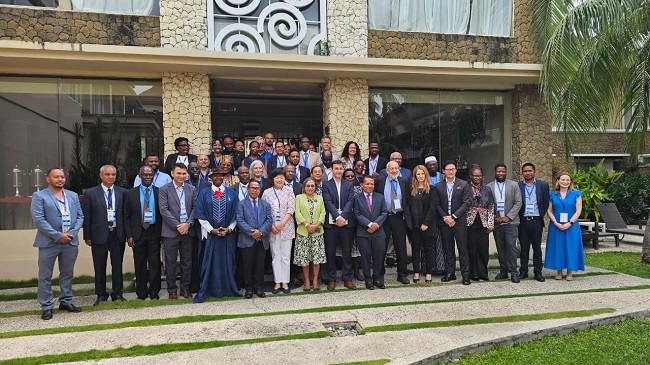
Participants at the LDC Strategy Meeting in Dili
The meeting reaffirmed the unity and collective commitment of the LDC Group to advancing climate justice, ambition, and implementation for the world’s most climate-vulnerable countries. Discussions focused on key negotiation areas, with participants emphasising the urgent need to make further efforts to limit the global temperature rise to 1.5°C, avoid the risks of overshoot, and mobilise adequate support for implementation, ensuring that global climate action responds to the lived realities of LDCs.
“The temperature overshoot would take us closer to adaptation limits, increase loss and damage, and increase finance needs. Therefore, urgency must drive climate action. In the context of ‘moving from negotiation to implementation’ we need to secure ambitious climate action that deliver 1.5°C aligned action and reflect the needs for adequate financial support.” said Ambassador Adão Barbosa, Chair of the LDC Group.
The Group stressed that, while some progress has been made, access to finance remains difficult and available resources continue to fall far short of the needs of LDCs. There was a call for enhancing the provision of climate finance by urgently implementing the new finance goal (NCQG) decision, in particular through scaled-up grant-based finance and simplified access, while taking into account the special needs and circumstances of LDCs.
There was further call for support to LDCs through enhanced means of implementation in executing National Adaptation Plans (NAPs) and actions to address loss and damage, recognising their urgent need to build climate-resilient communities.
“The need to scale up adequate, accessible, and predictable grant-based climate finance remains important to help strengthen resilience and implement urgent climate action for LDCs’’, said Ambassador Adão Barbosa, Chair of the LDC Group.
The meeting concluded with renewed commitment from LDC members to speak with one strong and united voice across the different thematic areas. As Chair of the group, Ambassador Adão Barbosa reaffirmed Timor Leste’s commitment to supporting effective coordination within the Group and ensuring that the priorities of LDCs remain central in international climate negotiations.
Stakeholders in Nigeria’s power sector have called for accelerated delivery of the Ikere Gorge Hydropower Project, describing it as critical to improving electricity supply and driving economic growth.
They made the call in Ibadan, Oyo State, on Monday, May 4, 2026, during a UK PACT stakeholder engagement workshop on the imperatives for fast-tracking the project through a Public-Private Partnership (PPP) framework.
Chief Executive Officer of Quaint Energy, Mr. Mobolaji Durodola, said the workshop was aimed at developing a clear framework and pathway to ensure successful execution of the project.
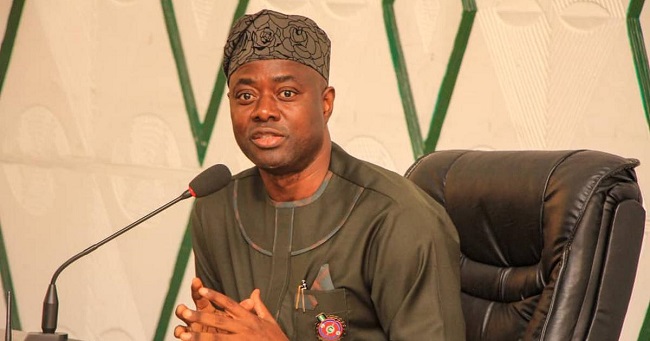
Gov. Seyi Makinde of Oyo State
Durodola said that although the project was complex, stakeholder engagement would help simplify implementation and ensure it delivers expected outcomes.
“We want to define critical aspects of the project, address technical challenges and gather feedback from stakeholders to ensure a well-informed and effective plan,” he said.
The CEO further said that sustained engagement with communities, financiers and regulators would be key to achieving seamless execution.
Also, the Managing Partner, AP3, Dr Olusina Gori, said the event, UK PACT Clean Energy Transition programme, focused on catalysing Run-of-River small Hydropower for Nigeria’s decentralised energy transition.
“With rising demand, increasing strain on national grid infrastructure and persistent energy deficits across rural and productive-use communities, the need for diversified, resilient and low-carbon solutions has never become more urgent.
“Small hydropower, particularly, Run-of-River systems offers a unique opportunity to bridge this gap.
“It is a clean, reliable, locally sourced, climate-resilent and capable of powering livelihoods and local industries while reducing the nation’s dependence on diesel and other carbon-intensive alternatives,” Gori said.
In her remarks, Hajia Aisha Sutura of AP3 Advisory emphasised the role of the private sector in infrastructure development, noting that governments alone could not meet energy demands.
Sutura described the project as a potential model for developing Nigeria’s numerous small hydropower resources.
“Power is critical to development, and this project can serve as a catalyst for similar initiatives across the country,” she said.
Dr Sunday Owolabi, Director of Renewable Energy and Rural Electrification, Federal Ministry of Power, said that the project aligned with Nigeria’s renewable energy goals and could boost rural electrification and climate resilience.
Owolabi, represented by Mr. Shehu Ibrahim, the Assistant Chief Electrical Engineer of the ministry, identified financing constraints, regulatory bottlenecks and risk allocation issues as major challenges facing power projects in the country.
“The PPP model provides a practical pathway to unlock projects like Ikere Gorge by leveraging private sector expertise and capital,” Ibrahim said.
He stressed the need for bankable project structures, transparent regulations and strong institutional coordination to ensure success.
The Oyo State Commissioner for Energy and Mineral Resources, Prof. Dahud Sangodoyin, said the project would be implemented in line with the Electricity Act 2023 and existing regulatory frameworks.
Sangodoyin noted that the state had taken proactive steps, including establishing its electricity regulatory commission, to support energy investments.
Also, the Chairman of Quaint Energy, Mr. Femi Adeyanju, said the project marked a transition from years of planning to actual implementation.
Adeyanju highlighted Nigeria’s electricity deficit, noting that available generation remained far below national demand.
He said the Ikere Gorge project has greater capacity that would contribute to bridging the electricity gap estimated at 30,000 MW while promoting sustainable energy.
Managing Director of Ibadan Electricity Distribution Company, Mr. Deolu Ijose, said about 85 million Nigerians still lacked reliable electricity, stressing the importance of projects like the Ikere Gorge Hydropower Project.
Ijose said the company was ready to support efficient distribution and commercialisation of power generated from the project.
Similarly, Mr. Ibironke Babajide of the Nigerian Independent System Operator said hydropower remained vital for grid stability and renewable energy integration.
Babajide assured stakeholders of technical support and collaboration to ensure successful delivery.
A community leader from the Isalu, Iseyin/Ikere area, Chief Siji Oke, expressed optimism about the project, noting that it would bring long-awaited development to the area.
The Ikere Gorge Dam was initiated in 1983 but remained largely uncompleted until recent concession efforts revived the project.
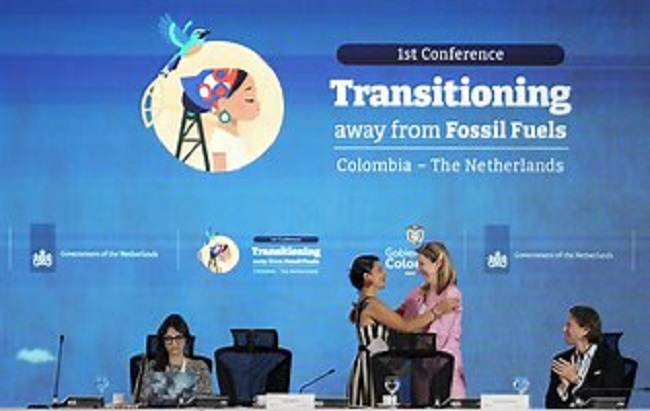
The first Conference on Transitioning Away from Fossil Fuels in Santa Marta has just concluded. It held from April 24 to 29, 2026 As the fallout from yet another fossil fuel price crisis underlines the extreme fragility of the current fossil energy system, Santa Marta created a space for countries that want to move faster and to talk seriously about how to leave coal, oil and gas behind.
This space was important. The countries gathered in Santa Marta did not include all the world’s major emitters / fossil fuel producers, but this was a feature, not a bug. With some countries acting as blockers of climate action in the UNFCCC, creating space to discuss fossil fuel phase-out within a group of the willing can actually help build momentum that drives action, moving beyond constraints that have stalled elsewhere.
First Conference on Transitioning Away from Fossil Fuels
But the Santa Marta participants still account for a meaningful share of the global fossil fuel economy, including major importers and exporters. They represent large shares of fossil fuel trade: 48% of gas imports, 34% of oil imports, 20% of coal imports, 39% of coal exports, 32% of gas exports and 22% of oil exports. What these countries do now – particularly as buyers – could shape investment signals, trade relationships, and the expectations placed on producers, to help shift the political economy of fossil fuels.
The road to Santa Marta
The Santa Marta conference has emerged in response to multiple different elements of global climate diplomacy. However, key to understanding Santa Marta is the Global Stocktake (GST). The first GST, concluded in Dubai in 2023, included an agreement across all countries to “accelerate the transition away from fossil fuels”, as part of the COP28 energy package. It is this commitment that Santa Marta was focused on.
The CAT has shown that implementing the transition away from fossil fuels, alongside action to cut methane emissions, could dramatically slow down warming almost immediately and cut 2100 warming by 0.9ºC, and would represent the biggest step forwards in climate action since the signing of Paris Agreement. Implementing the Global Stocktake is crucial for a liveable planet. We have the technical solutions – what is missing is the political will to drive implementation at the scale and pace needed.
If the process initiated at Santa Marta can catalyse greater political momentum to implement the GST energy package, it would truly represent the historic breakthrough that we need.
The Santa Marta workstreams
Participating countries have agreed to continue the conversation, including via a second conference in 2027, hosted by Ireland and Tuvalu. They also set up three key workstreams going forwards – around roadmaps, finance, and dialogue between fossil fuel importers and exporters.
New TAFF roadmaps represent a clear opportunity to turn political energy into national implementation, including by informing the next generation of NDCs and strengthening alignment with LT-LEDS as the backbone of long-term transition planning. These roadmaps need to align with the latest science around limiting overshoot of 1.5ºC, reaching net zero greenhouse gas emissions and getting temperature back below 1.5ºC well before 2100, to reduce the risk of severe and irreversible impacts. This means cutting production and use this decade, avoiding new fossil fuel lock-in, and sequencing the transition in ways that are socially and financially credible.
New roadmaps also need to tackle all fossil fuels, not just some. Further lock-in to gas remains a risk in many countries. Roadmaps also need to go beyond just phase-out dates, and address the myriad political, social, financial and institutional barriers to a rapid phase-out. Santa Marta saw the first new TAFF roadmap launched by France – more will follow. Divisions still remain within the Santa Marta attendees about how fast fossil fuels need to exit the system.
With notable fossil fuel exporters like Australia, Canada and Norway among the attendees, how willing these countries really are to produce TAFF roadmaps that align with the science remains to be seen, especially given their plans to continue and even expand fossil fuel production.
Climate Analytics helped coordinate a workstream on roadmap architecture at the academic pre-conference, and will work with partners to support the development of science-aligned, ambitious and fair TAFF roadmaps.
Meanwhile, economic diversification remains an unavoidable issue. Many developing countries face high debt burdens, limited fiscal space and real dependence on fossil fuel revenues for public budgets and debt payments. The transition cannot be framed as a simple choice between ambition and delay when some countries are financially locked into fossil fuel production. There can be no transition without revenue replacement. Debt relief, concessional finance, diversification support and targeted partnerships for highly dependent countries must be part of any serious pathway forward.
Finally, Santa Marta highlighted the practical value of producer-consumer cooperation. One promising idea was coordination among major fossil fuel importers: a buyers’ coalition that sends a clear signal that future trade relationships must align with fossil fuel phase-out, economic diversification and clean energy investment. The outlines of such producer-consumer alignment remain unclear, and such cooperation would face real design challenges, including trade rules and equity concerns.
But it could help shift the politics from abstract ambition to concrete incentives. Importing countries have leverage, and using that leverage responsibly could help drive a just and orderly transition. The recently agreed just transition mechanism and finance and trade discussions to be launched this year may all have a role to play in progressing this cooperation.
The role of science in guiding a fossil phase-out
Science has always been central to climate action, and Santa Marta was no different. Participants stressed that climate action must be supported by the best scientific information. Its importance was recognised by the establishment of a scientific panel on the global energy transition (SPGET), which will generate scientific evidence to support the advance of the different workstreams.
Beyond this, there was an explosion of scientific activity around the conference, including an academic pre-conference organised by scientists that aimed to inform the outcomes of the conference through a set of “12 actionable insights” on how to accelerate the transition away from fossil fuels.
It is vital that the global energy transition away from fossil fuels occurs at a rate and scale fast enough to limit peak warming to as close to 1.5ºC as possible, and enable us to reach net zero greenhouse gas emissions in the 2nd half of the century. Climate Analytics’ Highest Possible Ambition scenario demonstrates the pace of change we need – coal phased out by 2050, gas around 2060 and oil by 2070.
Top-down global insights are important, but can only get you so far. They need to be complemented with bottom-up processes that foreground country ownership and co-creation with national stakeholders.The scientific community can help provide this finer level of resolution to complement the more top-down such as the SPGET.
The workstream on roadmap architecture that Climate Analytics co-convened brought together experts from across energy systems, economics, policy and diplomacy. This holistic expertise will be key in providing actionable insights to countries seeking to develop TAFF roadmaps, and we will work to ensure this expertise is available to those who need it.
Where next for multilateralism?
There was also a wider political signal. A willing coalition showed that blockages in broader climate negotiations need not define the whole agenda. Countries with different interests – importers, exporters, small island states, developing economies and industrialised countries – began identifying where cooperation may be possible.
The question remains of how cooperation will move forward in the themes described above, where options range from a light touch space for sharing experiences to more active cooperation on policy coordination or establishing action-oriented alliances around technical and financial support.
In all of this, the connection to the Paris Agreement and the GST – and how this process feeds back into and strengthens countries’ NDCs – is key. While frustrations with the UNFCCC exist, the GST has delivered the crucial commitment on transitioning away from fossil fuels. What is missing is determined implementation of the GST at pace and scale.
If Santa Marta can help drive the implementation of the GST, it will address some of the main concerns around the UNFCCC process, and could help restore faith in multilateralism. If instead, Santa Marta initiates yet another talking shop that repackages existing (inadequate) policies and fails to drive new action, it could further undermine trust in the multilateral systems’ ability to address the climate crisis.
The test is whether cautious optimism now turns into action and whether, absent the so-called blockers, this group can bridge political differences and galvanise action around leaving all fossil fuels behind.
By Claudio Forner, Dr Neil Grant and Bill Hare(Climate Analytics)
The Ogun State Government has unveiled new planning regulations and a building and construction code aimed at ensuring orderly, safe, and sustainable urban development across the state.
Commissioner for Physical Planning and Urban Development, Olatunji Odunlami, disclosed this on Monday, May 4, 2026, at a news conference in Abeokuta, the state capital.
Odunlami said the new instruments, approved by the Ogun State House of Assembly, include five updated regulations and the Ogun State Building and Construction Code 2025.
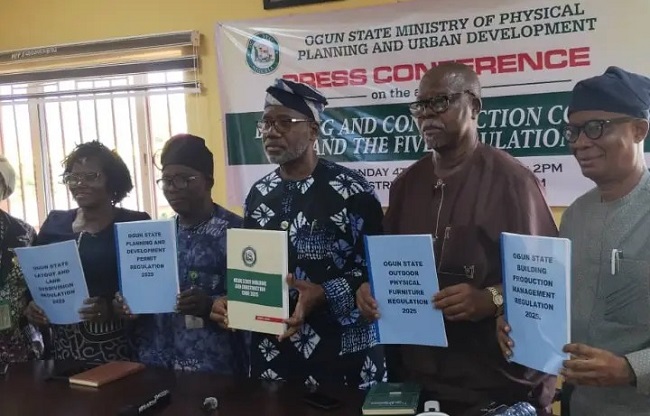
Commissioner for Physical Planning and Urban Development, Olatunji Odunlami, with Ogung State Government officials display copies of the new planning regulations and building and construction code
The regulations are: Ogun State Planning and Development Permit Regulation 2025, Slum Regeneration Regulation 2025, Building Production Management Regulation 2025, Outdoor Physical Furniture Regulation 2025, and Layout and Land Subdivision Regulation 2025.
According to him, the building and construction code, derived from the National Building Code, is the first of its kind by any state in Nigeria.
“The approval of these documents represents a bold and necessary step toward ensuring that Ogun State remains orderly, safe, environmentally sustainable, and nationally recognised in physical planning and urban development,” he said.
Odunlami explained that the review became necessary due to rapid urbanisation and economic growth in the state, which he described as the fastest-growing subnational economy in Nigeria.
He attributed the development to the administration of Gov. Dapo Abiodun, whose policies, he said, have improved infrastructure, enhanced security and boosted investor confidence.
He stressed that compliance with the new regulations was mandatory, warning that violations would attract sanctions including penalties, demolition of illegal structures, and possible prosecution.
“As growth is desirable, unregulated development can result in poor urban living, informal settlements, building collapse and environmental degradation.
“Government has strengthened its agencies and improved planning permit processes to ensure efficient service delivery,” Odunlami said.
The commissioner added that an e-planning system has been introduced in six pilot zones – Isheri, Ota, Abeokuta Metro, Abeokuta Central, Sagamu and Ijebu-Ode – to allow online submission of applications.
“This initiative is designed to make the planning permit process more transparent, accessible and efficient,” he said.
He also raised concerns over continued encroachment on road setbacks, describing it as illegal and a threat to safety, environmental quality and urban orderliness.
He listed affected corridors to include Lagos-Ibadan Expressway, Abeokuta-Sagamu Interchange Highway, Sagamu-Benin Expressway, Lagos-Abeokuta Highway, Papalanto-Sagamu Road, Ijebu-Ode-Mojoda Road and Ogijo-Sagamu Road.
He directed property owners along these routes to remove all unauthorised structures and activities within setback areas, warning that government would no longer tolerate violations.
Odunlami urged stakeholders, including developers, professionals and residents, to familiarise themselves with the new regulations and comply fully.
He emphasised that collective responsibility was essential to achieving a well-planned, safe and sustainable environment in the state.
The World Health Organisation (WHO) and the Africa Centres for Disease Control and Prevention say Africa is facing a widening funding gap for malaria, threatening progress toward elimination across the continent.
They raised the concern during the Africa CDC World Malaria Day 2026 Webinar, on Monday, May 4.
The event has “Advancing Africa’s Health Security and Sovereignty for Malaria Control and Elimination through PHC Transformation” as its theme.
Dr Dorothy Achu, Team Leader for Tropical and Vector-borne Diseases at the WHO Regional office for Africa
The Webinar was organised by the Africa CDC, UNICEF, WHO, and the RBM Partnership to End Malaria.
The organisations noted that Africa bore 96 per cent of global malaria cases and 97 per cent of deaths, adding that in spite of major progress, the burden persisted and it was time to change the equation.
The webinar explored how PHC transformation could accelerate malaria control and elimination in Africa.
Discussion focused on malaria stagnation and resurgence drivers across Africa, Primary Health Care (PHC) systems as the platform for integrated community-based malaria action, genomic surveillance, vector control, and malaria vaccine rollout.
It also focused on sustainable financing which aligns with the Africa Health Security and Sovereignty agenda.
They stressed that strong primary health care systems remained the backbone of malaria elimination across the continent.
Dr Dorothy Achu, Team Leader for Tropical and Vector-borne Diseases at the WHO Regional office for Africa, said Africa remained the global epicentre of malaria in spite of years of intervention.
According to Achu, the continent accounts for about 95 per cent of global malaria cases and 94 per cent of deaths, with an estimated 270 million cases and 580,000 deaths annually.
”About one billion people across 46 countries in Africa are exposed to malaria, with children under five accounting for 75 per cent of deaths.”
She added that malaria in pregnancy remained a major concern, with about 13 million cases recorded annually.
She noted that while interventions since 2015 had helped avert about 170 million cases and one million deaths globally, progress in Africa had slowed due to funding constraints and emerging threats.
She identified key challenges to include weak health systems, low utilisation of preventive tools, climate change impacts and increasing biological threats such as drug and insecticide resistance.
”The malaria funding gap has widened significantly from 2.6 billion dollars in 2019 to 5.4 billion dollars in 2024,” she said.
In his presentation, Dr Landry Tsaque, inaugural Director, Africa CDC’Primary Health Care, said malaria elimination would depend largely on strengthening Primary Health Care (PHC) systems.
Tsaque presented the Africa CDC’s PHC Transformation Framework, which focused on workforce development, infrastructure, commodity security, financing and governance.
He said expanding community health workers and deploying digital surveillance systems would improve early detection and treatment at the grassroots.
Also speaking, a Global Health Strategist, Dr Adewale Akinjeji, described malaria financing as a high-return investment that remained critically underfunded.
According to Akinjeji, about $9.3 billion is required annually for malaria control and elimination, but only $3.9 billion is currently available.
“This leaves a gap of over $5 billion, representing more than 58 per cent shortfall,” he said.
He added that every $1 invested in malaria control could yield up to $40 in economic returns, while the disease costs African economies over $12 billion annually in lost productivity.
He warned that heavy reliance on external donors, which accounted for about 56 per cent of malaria funding, posed a sustainability risk.
According to him, transitioning to domestic financing is critical, as an externally driven malaria response is not sustainable.
Similarly, Dr Yenew Kebede, Head of Division, Laboratory Systems and Acting Head of Surveillance and Disease Intelligence at Africa CDC, warned that emerging drug resistance could undermine current treatment efforts.
Kebede said resistance in Plasmodium falciparum had historically forced changes in treatment policy and could do so again if not contained.
He noted that mutations linked to artemisinin resistance were first identified in Africa in 2014, but surveillance across the continent remained limited.
”To address this, Africa CDC is supporting member states to strengthen molecular surveillance and building a continental database for early warning and coordinated response,” he said.
He added that recent findings had identified resistance-related mutations across several African countries, highlighting the urgency of scaling up genomic surveillance.
The experts emphasised that strengthening PHC systems, improving financing and enhancing surveillance would be critical to accelerating malaria elimination and improving health security across Africa.
They called on governments and partners to adopt coordinated and sustainable approaches to close funding gaps and fast-track malaria control efforts.
The Federal Government says no fewer than 10 million farmers will receive soil test-based advisory services by 2027 to boost productivity, nutrition and incomes nationwide.
The Minister of State for Agriculture and Food Security, Sen. Aliyu Abdullahi, said this on Monday, May 4, 2026, in Abuja at the unveiling of the Readiness Assessment of Sub-Nationals for the Nigerian Farmers Soil Health Scheme (NFSHS).
He said about five million hectares would be managed using improved soil practices, including organic fertilisers, lime application, cover crops and agroforestry systems.
Sen. Aliyu Abdullahi, Minister of State for Agriculture and Food Security
Abdullahi said digital soil health cards would be distributed to farmers across the 774 local government areas using mobile technology.
He said the readiness assessment would identify degraded soils, gaps in soil testing access, and capacity constraints in delivering soil advisory services nationwide.
He added that the assessment would guide investments for maximum impact in nutrition, resilience and productivity, especially under the 2026 budget framework.
“The readiness assessment provides evidence that addressing soil health at scale requires strong policies, robust institutions, modern infrastructure and coordinated partnerships,” he said.
Abdullahi said the report was based on fieldwork, laboratory audits, policy analysis, stakeholder consultations and data validation across states.
According to him, it will guide alignment of public and private investments, including coordination of the National Agricultural Development Fund, state budgets, donor and private financing.
He said the assessment covers five pillars: policy and governance, institutional capacity, technical readiness, stakeholder engagement, and monitoring and evaluation systems.
Abdullahi said the NFSHS was designed to address soil degradation, improve nutrient efficiency and strengthen the scientific basis of food production.
He said decades of nutrient depletion, erosion, flooding and poor land use had reduced soil fertility and increased farmer vulnerability.
He stressed that soil health is critical to food security and national survival, warning that neglect would undermine development goals.
The minister said the scheme would expand soil testing through mobile laboratories and the Nigerian Soil Information System in collaboration with development partners, including GIZ.
He added that it would promote organic fertilisers, biochar, lime application and improved extension services supported by digital tools.
Abdullahi said key milestones include development of the concept note, establishment of technical committees, soil health card design and creation of the national soil information system.
Others, he said, include integration into the ECOWAS fertiliser hub and provision of laboratory equipment to 12 states.
Earlier, the Permanent Secretary, Ministry of Agriculture and Food Security, Dr Marcus Ogunbiyi, said soil health had become a national security priority under the Renewed Hope Agenda.
He said the government was working to transform agriculture into a climate-resilient sector through large-scale soil testing and establishment of laboratories.
Ogunbiyi said the readiness assessment would identify gaps, strengths and priorities in extension services, input systems and data platforms.
He added that findings would guide the final design, budget and implementation strategy of the soil health scheme.
The Publisher of August24news.com, Mr. Ajagbe Adeyemi Teslim, has been bestowed with the Media Personality of the Year Award by Go-Culture.
The award comes in recognition of his achievements as the first media personality on Lagos Island to establish an online media platform – August24news – and for his contributions to the development of the media profession in Lagos.
The maiden edition of the award, tagged the 2016 Celebrity Cup, is aimed at recognising outstanding individuals whose consistency and creativity continue to make a lasting impact in the Lagos Island community.
Publisher of August24news.com, Mr. Ajagbe Adeyemi Teslim
The event took place on Sunday, May 2026, at the Glover Memorial Hall, Custom Street, Tinubu, Lagos Island.
According to the organiser of the award, Mr. Idris Iwalewa-Coker, CEO of Go-Culture, the award is not about competition but about recognising excellence among distinguished individuals who have contributed their quota to the development and positive image of Lagos Island.
He said: “We want to change the narrative about how some people portray Lagos Island. We appreciate the great minds who have done remarkable work in reshaping the image of the community. We want to tell the outside world that Lagos Island is great and blessed with professionals who are excelling in their respective endeavours, contrary to some negative perceptions.”
Speaking after receiving the award, Teslim, told newsmen: “I am honoured to be part of the 2026 Celebrity Cup Award. This recognition highlights the importance of our voice and the impact of our work in society. We will not relent, as we remain committed to doing everything possible to move Lagos Island forward. This is our home and our root.”
Ajagbe began his journalism career with the defunct Island News before moving to P.M. News as an entertainment reporter. He later worked on the crime desk of the defunct National Mirror before launching his online platform in 2010, becoming one of the pioneers of online journalism in Nigeria through August24news.com.
Ajagbe is also the first online media personality in Lagos Island Local Government to be officially recognised by a sitting council chairman. He was appointed Special Assistant on Media and Digital Communications by the Executive Chairman of Lagos Island East LCDA, Muibi Alade Folawiyo, a role he performed meritoriously.
Other awardees in the media personality category include the Publisher of Islanders Magazine, Mogaji Ola Muhammad; Mrs. Tawakalitu Adeniran of Kalite Media; and Mr. Jubril Gawat, Senior Special Assistant to the Governor on Digital Media.
The award ceremony also featured various categories, including Content Creators, Bloggers, Disc Jockeys (DJs), Afrobeats Artists, Fuji Artists, Poets, Hype Men, Masters of Ceremony, Photographers, Filmmakers, Dancers, Fashion Designers, Caterers, Merchandise Printers, Festival Band Performers, Event Guards, and Event Promoters.
World Migratory Bird Day falls on Saturday, May 9, 2026. To mark it, BirdLife International is asking people to look beyond the wonder of migration and listen to what the birds are saying about the health of our planet.
Migratory birds carry nutrients across oceans, pollinate plants, spread seeds, and help keep crops growing and diseases in check. And yet, worldwide, more than 40% of bird species are now in decline. Martin Harper, BirdLife International CEO, says the signals coming from the great migratory routes are hard to ignore.
“Migratory birds connect us across countries, continents and ocean currents,” Harper says. “Protecting the major migratory highways of the world is how we reverse those declines. And when we do, people gain too: cleaner water, food security, flood protection, and more resilience to a changing climate.”
Observed in May and October each year, World Migratory Bird Day matches the peaks of migration in each hemisphere and invites communities to take part in one of nature’s greatest shared stories. In May, species along routes such as the African–Eurasian Flyway leave the warmth of Africa and travel north to nest.
The highways of the sky
BirdLife International, the only global partnership conserving birds and all life on our planet, says the day is a chance to better understand the broader impact of birds’ natural migration routes, known as global flyways.
Birds use these routes as they travel between breeding grounds, feeding areas and seasonal refuges. Around the world, they follow four major flyways on land: the African–Eurasian, East Asian–Australasian, Americas and Central Asian. They also follow six marine flyways. These pathways stretch across borders and oceans, joining habitats that lie thousands of kilometres apart.
When one link in a flyway is broken, a wetland drained or a coastline degraded, whole species can decline. Some can vanish for good, as the recent extinction of the Slender-billed Curlew reminds us.
“Migration is one of the wonders of the natural world. It also carries a very practical lesson,” Harper adds. “International challenges need international cooperation. Protecting flyways helps bring birds back. It also brings real benefits to people: healthier wetlands, more reliable food, and stronger resilience as the climate keeps shifting.”
Africa at the heart of a global migration story
One of the world’s most important migration systems is the African–Eurasian Flyway, which links Africa, Europe and Asia. Along this route, birds travel from the Arctic to southern Africa and back again.
Dr Paul Matiku, Executive Director of Nature Kenya, the BirdLife Partner in Kenya, says Africa has a central role to play in keeping these shared routes alive.
“Africa is at the heart of some of the world’s great flyways,” Matiku says. “The health of our wetlands, rangelands and coastlines matters far beyond our borders. When we protect these habitats, we protect birds, biodiversity and the communities that live alongside them.”
“It is especially meaningful that the Global Flyways Summit will take place in Nairobi this September – the first time the summit is being held on the African continent.”
Co-hosted by BirdLife International and Nature Kenya, the Global Flyways Summit will bring together leaders from science, policy, finance, business and civil society. Together, they will agree on the action needed to protect migratory birds and the ecosystems they depend on. BirdLife scientists will also launch the new edition of the State of the World’s Birds report, with a focus on flyways. It offers the latest picture of bird populations and what they reveal about the wider health of nature.
How can the public get involved?
To mark World Migratory Bird Day, BirdLife International is inviting people to step into this worldwide celebration of birdwatching and citizen science. Head outdoors, watch the birds and record what you see. Every observation adds to the data that conservation depends on.
“You don’t need to be an expert to care about birds,” Harper concludes. “When we notice the wildlife around us, we start to understand the condition of the places we all rely on. Birds give us both a warning and an opportunity. They show us where nature needs urgent action, and where there is still hope.”