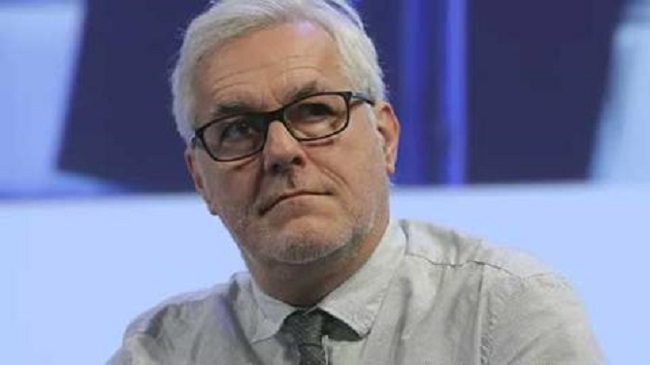
The Lagos State Commissioner for Environment and Water Resources, Mr. Tokunbo Wahab, says the government will introduce incentives to reward the cleanest local government after each month’s environmental sanitation exercise.
Wahab spoke on Saturday, April 25, 2026, while monitoring the newly reintroduced environmental sanitation exercise around Obalende, Ikoyi area.
The sanitation exercise is to be held on the last Saturday of every month between 6.30 a.m. and 8.30 a.m.
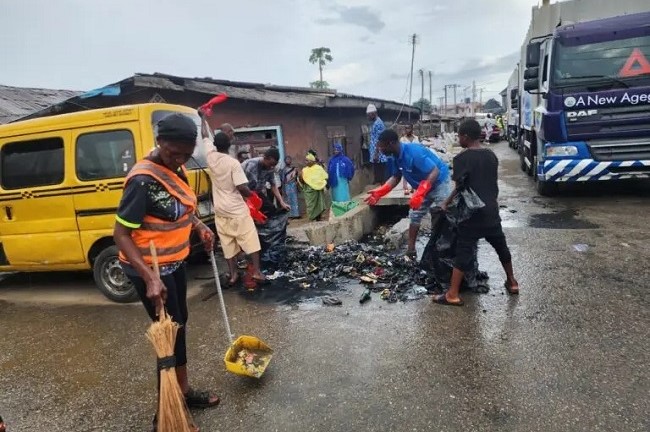
While commending residents for their high level of compliance with the exercise, Wahab said the incentive was to encourage healthy competition among local governments.
“After today’s exercise, we will assess all local governments and announce the cleanest among them for recognition within the week,” the commissioner said.
He called for sustained commitment to cleanliness across the state, saying that the turnout and voluntary participation of residents reflected a shared resolve to keep Lagos clean and safe.
“Commercial vehicles stayed off the roads and residents complied because they want to keep Lagos clean and safe.
“We thank Lagos residents, the state government, the deputy governor, and all stakeholders, including local government chairmen, who ensured that the message got to the grassroots,” he said.
Wahab described the level of compliance as impressive, estimating it at over 98 per cent.
“You have seen the level of compliance yourself. It is mind-blowing and shows that Lagos residents have been waiting for this,” he said.
Wahab said that the monthly sanitation exercise was aimed at rebuilding a culture of environmental responsibility.
According to him, the idea is to build a culture of giving just 120 minutes in a month, which is not too much, to clean the environment and make Lagos clean and safe.
On legal concerns regarding restriction of movement, he said that existing court judgements affirmed the state’s authority, but noted that the government had chosen to prioritise voluntary compliance.
“We have favourable judgements affirming our powers, but we chose to build community ownership rather than enforce strict restrictions,” Wahab said.
Also speaking, the Wife of the Governor, Dr Ibijoke Sanwo-Olu, described the exercise as encouraging, noting that it recorded significant participation across the state.
“The exercise this morning is encouraging. It was flagged off last month and this is the first full implementation.
“We have seen residents come out to participate. It is a gradual process, but the response has been positive,” Sanwo-Olu said.
She said that residents adhered to the sanitation guidelines, with minimal commercial activity observed.
“People complied with the directive. Vendors did not display their goods and only those cleaning their environment were visible.
“For a first-time exercise, I am impressed with the level of compliance,” Sanwo-Olu said.
She urged residents to adopt daily sanitation habits, rather than relying solely on the monthly exercise.
Sanwo-Olu said that students were deliberately involved in the exercise to instil environmental consciousness early in life.
“We brought students in to catch them young and build a culture of cleanliness among the younger generation,” she said.
The exercise recorded high compliance across Lagos Mainland and Ikorodu, with authorities and residents describing the exercise as successful.
In Lagos Mainland Local Government Area, the Chairman, Mr. Jubril Emilagba, led the exercise, deploying task forces across various wards, to ensure effective clearing of drainages and prompt evacuation of refuse.
Emilagba said the initiative was aimed at improving public health, preventing flooding, and enhancing environmental aesthetics.
“This exercise demonstrates our commitment to a cleaner and healthier Lagos Mainland. We ensured proper coordination, with all drainage channels desilted, to allow free flow of water ahead of the rainy season,” he said.
The chairman said the council worked closely with the Lagos Waste Management Authority (LAWMA) and local sanitation officers to achieve efficient waste disposal.
He also said that community leaders and market associations were actively engaged to promote awareness and ensure the sustainability of the sanitation culture.
“Environmental cleanliness is a collective responsibility. We will continue to sensitise residents to maintain this momentum beyond the exercise,” Emilagba said.
In Ikorodu, residents also fully complied with the sanitation directive, with major roads, including the usually busy expressway, free of human and vehicular movement during the exercise.
Sanitation officers monitored compliance and sanctioned defaulters accordingly.
Chairmen of Ikorodu Local Government and the Local Council Development Areas (LCDAs) in the division, commended residents for their cooperation.
The Chairman of Ikorodu LGA, Mr. Adedayo Ladega, urged continuous participation in subsequent exercises, noting that proper sanitation would help protect the environment and prevent disease outbreaks.
“We appeal to all residents, business owners, and stakeholders to sustain this level of compliance. A clean environment is essential for healthy living,” Ladega said.
He reiterated that adherence to environmental sanitation remained key to building a safer and healthier society, stressing that “cleanliness is next to godliness”.
Stakeholders also expressed appreciation to President Bola Tinubu and Gov. Babajide Sanwo-Olu, for their leadership and continued support for environmental initiatives in the state.
They noted that sustained collaboration among government officials, community leaders, and residents would further drive progress, toward a cleaner and more prosperous Lagos.
The Chairman, Agege Local Government Area of Lagos State, Mr. Abdul-Ganiyu Obasa, led a sanitation team across the community as residents actively participated in the reintroduced monthly environmental sanitation exercise.
Residents and officers of the Kick Against Indiscipline (KAI) joined the exercise, demonstrating discipline and responsibility in promoting environmental cleanliness.
Speaking during the exercise, Obasa said the initiative was part of deliberate efforts by the state government, to prevent health hazards and entrench discipline among citizens.
“Cleanliness must become a daily culture, not just a monthly obligation observed during sanitation exercises,” he said.
He noted that Agege’s compliance reflected sustained environmental transformation through responsive leadership and responsible citizenship.
Obasa explained that the monthly initiative was designed to build a cleaner, safer, and resilient society.
According to him, sanitation should not be seen as a one-off activity but as a lifestyle which residents must embrace to protect public health.
“Consistent waste disposal and clearing of drainage channels are vital practices to reduce flooding and disease outbreaks in Agege and across Lagos,” he said.
The chairman added that the exercise underscored government’s commitment to environmental sustainability, noting that responsive leadership must be matched by responsible citizenship.
Besides, he noted that instilling early discipline among children was crucial, as they represented the future custodians of environmental responsibility in the state.
It was observed that community participation in the exercise was vibrant and had active involvement of school children.
In Agege, residents cleared gutters, disposed refuse responsibly, and restored sanitary order in public spaces.
The exercise appeared to demonstrate that environmental management thrives with collective effort.
The sanitation exercise however recorded low compliance in Oworoshoki area of Lagos State, as many residents failed to participate.
Only a few residents came out to clean their surroundings on several streets in Oworoshoki, including Salami, Ireku, Oriola, Miyaki, Ayoola, Onabanjo and Sokoya.
Most residents were observed going about their normal activities, while others remained indoors without participating in the exercise.
In separate interviews, some residents attributed the low turnout to inadequate sensitisation by the government on the reintroduction of the exercise.
Mrs. Elizabeth Komolafe said there was need for government to deploy officials to educate residents and sensitise them on the importance of the exercise.
“Government needs to give time for sensitisation and make jingles on radio and television to create awareness, as many people are not even aware that the exercise has resumed.
“Government should deploy law enforcement and environmental officials to enforce the exercise and ensure compliance, as awareness alone is insufficient, and many will not comply without consequences,” Komolafe said
On his part, Mr. Abdullahi Usman said that while the sanitation exercise was important for public health, the absence of water and electricity hindered effective participation.
“It is very important for people to clean their environment, but there is no water. People cannot carry out sanitation without water. Even washing hands is a challenge.
“When residents clean their gutters, the refuse is left behind. When it rains, everything goes back into the drainage, making their efforts useless,” he said.
Usman also noted that waste evacuation remained a major challenge, alleging that refuse collectors had not been consistent in clearing waste in Oworoshoki.
Another resident, Mr. Banji Lawal, agreed that inadequate awareness contributed to the low turnout, but added that lack of basic amenities such as water supply also posed a challenge.
He called on government to ensure the provision of basic necessities such as potable water and regular waste evacuation services to make the exercise more effective.
He stressed that the exercise would promote public health if properly organised.
Further observations at Miyaki and adjoining streets showed that many residents were either seated outside their homes or engaged in conversations, with little or no effort to clean their environment.
Although vehicular movement was minimal, there was no visible enforcement by officials of the Lagos State Government or environmental agencies in the areas visited.
Meanwhile, some Lagos residents have expressed satisfaction with the reintroduction of the monthly environmental sanitation exercise, describing the move as a step in the right direction.
They said that the exercise would positively impact environmental health, as well as safety and wellbeing of residents, if sustained.
A good number of residents in Lekki phase one, as well as residents of Disu Aina-Efon community in Ilewe-Ejigbo Lagos, complied with the state government’s directive on the monthly sanitation.
In Lekki, a group under the aegis of Lekki Residents Association (LERA) approved of the exercise, describing same as successful.
LERA had ensured that residents embarked on massive cleaning of a popular canal in the area.
Chairman of LERA, Mrs. Shareefah Andu, described return of the monthly sanitation, as a welcomed development.
According to her, the association will strategise on how it can sustain the exercise in sectional phases, to achieve cleaner environment.
“If we do this, like, every month for a full year, the whole environment will be different, and I am so confident about that,” she said.
On his part, Special Adviser to the Lagos State government on Tourism, Arts and Culture, Mr. Idris Aregbe, commended Lekki residents, for their efforts in keeping the environment clean.
“What I have seen here today is commendable; we have a beautiful community with responsible citizens who have also joined with the government to see how they can, clean our environment.
“Every responsible citizen needs to take their communities; for me, tourism thrives in a cleaner environment and that is what I want in Lekki,” he said.
Elsewhere at Disu Aina-Efon community in Ilewe-Ejigbo, the turnout of residents for the monthly sanitation was also commendable.
Both the young and elderly were seen contributing efforts to the cleanup exercise on the streets.
Chairman of Disu Aina-Efon Street, Mr. Ikenna Abu, said he was happy with the impressive turnout of residents.
He noted that a clean environment remains top priority for the community, and underscored the need for residents to always contribute their quotas.
“We are delighted about the development, we can only pray for more of it as it is an essential part of community development objective,” he said.
Also speaking, another resident, Mr. Edem Ibanga, said that residents had come out in their numbers, in a bid to give back to the community.
Another member of the community, Mr. Femi Adeosun, also expressed satisfaction with the process, and urged that it be sustained.
A large number of Lagos residents said they were excited with the return of the exercise and expressed optimism that the process would be sustained for overriding public good.
In a related development, the Chairman of Badagry Local Government Area, Mr. Babatunde Hunpe, has called for strict enforcement of movement restrictions, during the monthly environmental sanitation to ensure compliance.
Hunpe made the call on Saturday while monitoring the reintroduced exercise in Badagry.
“If there is enforcement, people will comply; We know our people in Lagos, if you don’t enforce it they won’t come out,” he said.
He noted that some motorists still plied the Badagry expressway during the exercise, claiming ignorance.
“Enforcement is the key,” he added.
He said the exercise coincided with the burial rites of the late Akran of Badagry, as the day had been set aside for cleaning all eight quarters in the town.
“Women in all the eight quarters have come out with brooms to sweep their environment and gathered at Akran’s palace.
“On our own, we have moved from Ajara to expressway to Agbalata market in Badagry, the compliance is highly commendable,” he said.
He expressed optimism that participation would increase in subsequent exercises.
Mr. Martin Bankole, Leader of the BLG legislative Arm, said the council would revisit the law guiding the exercise to reintroduce stricter enforcement.
He described the exercise as successful, with residents cleaning and disposing of waste in vehicles of the Lagos Waste Management Authority (LAWMA).
In the same vein, Council Manager, Mrs. Senami Avoseh, said compliance was acceptable for the first exercise and urged residents to keep their environment clean always.
Similarly, residents of Ayobo-Ipaja Local Council Development Area (LCDA) turned out in large numbers on Saturday for the monthly environmental sanitation, following a mobilisation drive by the council Chairman, Dr Lukman Agbaje.
Agbaje, who monitored the exercise, commended the Lagos State Governor, Babajide Sanwo-Olu, for reintroducing the monthly sanitation programme, describing it as a step in the right direction.
“Let us first appreciate Gov. Sanwo-Olu for reintroducing environmental sanitation in Lagos State. It is a commendable initiative,” he said.
The chairman expressed satisfaction with the level of compliance, noting that many residents were actively cleaning their surroundings.
“I am impressed with what we have seen so far. People are complying, and many are carrying out sanitation within their compounds,” he said.
He urged residents to sustain the efforts by maintaining clean environment and avoiding indiscriminate dumping of refuse.
“We appeal to residents not to dump waste in gutters and drainage channels but to patronise approved waste managers in their communities,” Agbaje added.
He said the council had earlier embarked on extensive public enlightenment campaigns, including stakeholders’ meetings with artisans, traders, community leaders and transport unions, to sensitise residents on the importance of sanitation.
According to him, environmental sanitation holds every last Saturday of the month between 6.30 a.m and 8.30 a.m in the LCDA.
Also speaking, the Head of Environmental Services Department, Mrs. Rachel Adebisi, said the council had intensified efforts to promote hygiene and sanitation through stakeholder engagement and enforcement.
“This exercise has been successful. We have compactors moving around to clear refuse, and our task force is on the ground to arrest offenders who dump waste indiscriminately,” she said.
Adebisi noted visible improvements across the area, particularly in cleared road medians, adding that sanitation remained a continuous process supported by regular inspection and enforcement.
A resident, Mr. Sunday Odion, commended the chairman for leading by example and encouraging community participation.
“I am happy to see the chairman actively involved. It is impressive and will bring positive change to the community,” he said.
In a related development, Mr. Akinola Idowu, the Chairman of Orile-Agege Local Council Development Area, also led an inspection tour to mark the resumption of the monthly sanitation exercise.
Idowu, accompanied by council executives, visited strategic locations to monitor compliance.
He described the exercise as “a renewed commitment to community hygiene,” stressing that sanitation is not just routine but a civic responsibility that defines the health of the people.
Our reporters observed residents cleaning their surroundings, while some men evacuated waste from gutters.
Idowu who described cleanliness as a collective duty, urged households and marketplaces to contribute to a healthier Orile-Agege.
Commending residents for their participation, he said: “I appreciate those who actively joined today’s exercise. We must sustain this spirit and ensure strict adherence in the future.”
The chairman pledged stronger enforcement, assuring that monitoring would be intensified across all wards.
He noted that compliance was non-negotiable in achieving lasting cleanliness.
Idowu also highlighted gaps in waste disposal and promised improved strategies.
“We are listening to residents and adjusting our approach for better results,” he said.
He stressed that sanitation goes beyond sweeping streets, describing it as discipline, responsibility, and lifestyle.
Idowu also reminded the residents of their role in maintaining hygienic marketplaces with council executives noting that economic growth thrives in clean environments.
“This is not a one-off. We are building a sustainable culture of cleanliness that will benefit generations,” he added.
Some residents of Lagos on Saturday commended the reintroduction of the monthly environmental sanitation but called for a review of the timeframe to enable wider participation.
The Lagos State Government had reinstated the exercise, which took effect from April 25, mandating residents to clean their surroundings, including drainages, and adjoining streets, on the last Saturday of every month between 6.30 a.m and 8.30 a.m.
A correspondent who monitored the exercise in Oke-Afa reported no vehicle movement. Residents were mostly chatting and drinking in groups, with a few cleaning their shops and surroundings as required.
Shops remained locked during the exercise, with business activities suspended.
Speaking, a trader at Balogun Market, Mr. Micheal Adindu, described the initiative as a welcome development but said the timing was too early for many traders to participate.
“I think the time is too early to allow people to get to their respective shops and business areas.
“I do not go to the market early; I usually leave home around 8.00 a.m daily. As a result, I am still at home and waiting for the restrictions to be lifted.
“If the time can be reviewed, perhaps starting from 8.30 a.m, it will enable more people to participate properly,” he said.
In the same vein, Mrs. Grace Raymond suggested that movement restrictions be relaxed to allow residents access to their business locations.
“I intend to clean the drainage in front of my shop, but I could not leave home before 6.00 a.m due to domestic chores.
“I have taken care of my home, but I am unable to get to my shop where I planned to carry out the cleaning,” she said.
A shop owner, Ms. Peace Chimere, however, faulted residents who used the sanitation period for leisure instead of participating.
She described the initiative as a good one that would improve environmental hygiene, reduce flooding and promote cleanliness, while urging the government to strengthen enforcement.
Meanwhile, residents of Igbogbo-Baiyeku Local Council Development Area (LCDA) expressed mixed reactions to the exercise, citing inadequate time, poor sensitisation and low compliance.
Monitoring by NAN in Igbogbo, Baiyeku and adjoining communities showed that many residents remained indoors, with only a few cleaning their immediate environment.
Mrs. Titilayo Akinjopo, a businesswoman, said the two-hour window was insufficient.
“The time given is too short. Even when it was from 8.00 a.m to 10.00 a.m, it was not enough considering the level of dirt.
“The government should consider increasing the time to achieve meaningful results,” she said.
Mr. Atunde Ibrahim also criticised the level of awareness, noting that ongoing road construction was affecting the exercise.
“The sensitisation was not enough. The LCDA needs to do more because construction activities are disrupting drainage cleaning,” he said.
Mr. Akinola Igbekoyi emphasised the need for proper waste evacuation.
“The LCDA should ensure that all collected waste is promptly evacuated; otherwise, it will return to the drainage,” he said.
Mrs. Funke Adeyemi also lamented the short duration, saying it discouraged thorough cleaning.
“Two hours is not enough. By the time you gather tools and start, the time is almost over.
“The government should extend it to at least half a day,” she said.
Mr. Sadiq Lawal noted low compliance, saying many residents did not take the exercise seriously.
Responding, the Chairman of Igbogbo-Baiyeku LCDA, Mr. Hammed Aroyewun, said the council had carried out extensive sensitisation before the exercise.
“We engaged the Community Development Committees, traditional and religious organisations, and used local radio for over a month to sensitise residents.
“However, we will continue to improve on identified challenges,” he said.
Aroyewun assured residents of proper waste evacuation, noting that the process would continue beyond the stipulated sanitation hours.
“We have several vehicles on the ground to clear waste, and we will not allow refuse to litter the environment again,” he said.
He warned that defaulters would be sanctioned, adding that offenders would be prosecuted accordingly.
Also speaking, the Director of Environmental Services in the LCDA, Mr. Adekunle Esso, attributed some of the challenges to ongoing construction activities.
“Construction debris often clogs drainage systems. Once projects are completed, we will ensure proper evacuation,” he said.
Esso added that the current exercise was part of a reorientation process following years of suspension, with stricter enforcement expected in subsequent exercises.
He urged residents to take ownership of their environment for sustainable sanitation.
By Aderonke Ojediran, Oluwaseun Nubi, Adepote Arowojobe, Moronke Boboye, Linda Ogbonna, Raji Rasak, Esenvosa Izah, Babatunde Ogunrinde, Kazeem Akande, Damilola Nubi and Lilian U. Okoro