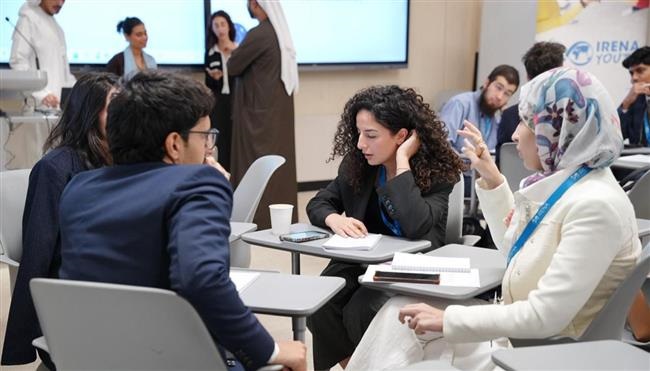
The International Renewable Energy Agency (IRENA) launched the fourth edition of the IRENA NewGen Renewable Energy Accelerator (NewGen), aimed at supporting young entrepreneurs and innovators in driving the renewable energy transition.
NewGen provides capacity building, mentorship, and tailored support to youth-led start-ups and growth businesses that develop innovative solutions to advance renewables deployment.
The initiative is delivered with the support of the Government of the United Arab Emirates, in partnership with Social Alpha (a non-profit organisation based in India that supports social start-ups) and Enel Foundation (a global non-profit think-tank focused on energy transition and climate change).
NewGen provides capacity building, mentorship, and tailored support to youth-led start-ups
Both partners serve as knowledge partners, contributing technical expertise and mentorship to help participants turn their ideas into scalable solutions.
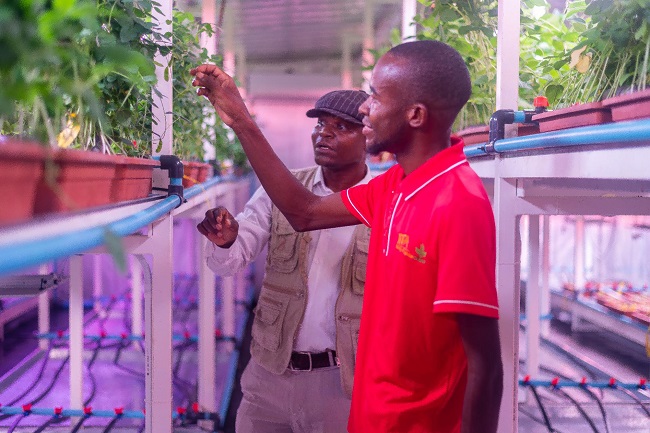
Building on the success of three editions, the 4th NewGen aims to continue its impact. Last year saw 13 startups from emerging markets – including six women-led ventures – take part in the programme. The 2025 edition produced three IRENA Rising Stars Award winners whose solutions included battery-swapping networks (Bangladesh), solar-powered cooling technology and edible coatings (Uganda), and artificial intelligence (AI)-driven precision farming (Zambia).
Reflecting on her experience, last year’s participant, Stuti Kakkar, from Meine Energy (India), said: “The IRENA NewGen Accelerator helped us sharpen our understanding of renewable energy markets by giving us access to global founders, expert insights, and market perspectives that clarified where our technology can create the greatest impact in enabling the clean energy transition.”
Oliver Mbuzi from Netagrow (Zambia), last year’s third-place winner, added: “The IRENA NewGen Renewable Energy Accelerator has been a transformative journey for Netagrow, strengthening our clean-energy and AI-driven approach to climate-smart agriculture by connecting us with global renewable energy experts, mentors, and partners.
“The programme enabled us to scale solutions that empower over 10,000 farmers with energy-efficient, climate-resilient farming systems that contribute to the global energy transition and sustainable food production.”
Open to start-ups from around the world, NewGen seeks innovative solutions across three key areas: renewable energy technologies, climate adaptation technologies, and climate mitigation technologies. Applicants must be between 18 and 35 years old, with the call for applications running from April 6 to May 3, 2026. Selected participants will be announced on May 18, 2026.
In a period of four months, participants will take part in a hybrid acceleration programme featuring a tailored curriculum in renewable energy and clean technology, expert-led webinars and workshops, and dedicated mentorship from IRENA experts. They will also gain access to pitching events, investment matchmaking, and the chance to be recognised through the IRENA Rising Stars Award.
The Accelerator reflects IRENA’s broader commitment to accelerating a global energy transition through renewables, led by youth. For more information and to apply, please visit NewGen Renewable Energy Accelerator. Applications close on May 3, 2026.
No doubt, climate change is intensifying; urban expansion is steadily consuming green spaces while insecurity is creeping further into forest corridors.
Stakeholders say these concerns entail that biodiversity restoration can no longer be left to government agencies, foresters, and policy meetings alone.
Their argument is simple but urgent: if forests are to survive, the battle must move beyond forest reserves and official declarations into classrooms, neighbourhoods, churches, farms and homes.
Forest ecosystems
Recently, at this year’s International Day of Forests celebration in Ibadan, the Oyo State capital, academics, geospatial professionals, foresters and public officials acknowledged a troubling reality of Nigeria’s shrinking forests.
Available data indicates that Nigeria is estimated to have about 1,160 constituted forest reserves covering roughly 10 per cent of the country’s land area; however, studies suggest many of these reserves have been severely degraded over the decades.
Records also indicate that the country lost about 47.5 per cent of its forest cover between 1990 and 2010, placing it among nations that have experienced intense deforestation pressure.
Experts say the current forest estate remains far below the 25 per cent threshold often recommended for ecological balance and climate resilience.
In Oyo, the local picture is equally sobering.
Conservation records indicate that the state has nine gazetted forest reserves covering about 342,461 hectares, representing roughly 12.92 per cent of its land area.
Opara Forest Reserve alone accounts for about 248,640 hectares, making it by far the largest, while other notable reserves include Ijaiye, Gambari and Lanlate.
Yet, the scale of those reserves has not insulated them from pressure.
Studies reviewed by stakeholders show that forest cover in some of Oyo’s major reserves, including Opara and Igangan, declined by between 42.26 per cent and 91.21 per cent between 1990 and 2020.
The decline was driven largely by agricultural expansion, settlement growth, illegal logging and other extractive activities.
Some assessments also suggest that about half of the reserves have been affected by conversion to farmland or human habitation.
Against this backdrop, the Geo-Information Society of Nigeria (GEOSON) is pushing a new conservation model it calls “Geomentorship for Biodiversity Restoration and Monitoring”.
The model is built around an idea many speakers at the Ibadan event repeatedly emphasised: that tree planting alone is no longer enough.
For GEOSON, that thinking is already being translated into action.
Its chairman in Oyo, Mr. David Afolayan, said the society planned to plant 5 million trees within the next three years to four years, using Oyo as a pilot before scaling the initiative across the country.
“We are going to schools to plant trees, using our technology to map where the trees have been planted, using the same technology to monitor as the tree grows,” he said.
GEOSON’s response is to start where habits can still be shaped early, which is, in schools.
Stakeholders argue that if children are introduced early to environmental stewardship, spatial awareness and the practical value of trees, conservation can gradually become a culture rather than an annual ritual.
Dr Rotimi Obateru, a lecturer and researcher in the Department of Geography, University of Ibadan, said the first step must be knowledge.
According to him, Nigeria cannot effectively conserve its natural resources without first understanding what it has, where those resources are located and how they are changing under mounting environmental pressure.
“We need to first understand what we have, take inventory of our natural resources, and have deep knowledge of what we have.”
For him, inventory is only the foundation.
He said the next layer was environmental education; not just policy conversations among experts, but grassroots engagement that helped citizens understand how their daily actions affected land, water, vegetation and climate.
He identified deforestation, indiscriminate land-use transformation and poor waste management as examples of human activities steadily degrading the environment.
In a climate-stressed era, he said, the pressure on ecosystems was no longer abstract.
According to him, it is visible, cumulative and increasingly disruptive.
“We cannot control the natural, but we can control the anthropogenic, that is, our actions. We humans are the drivers of that,” he said.
Obateru also framed the issue in terms that resonated beyond environmental policy.
According to him, there is a “circular causal relationship” between humans and the environment: people shape ecological systems, and those same systems eventually shape human survival, health and livelihoods.
With reports of illegal activities around reserve corridors and the continuing pressure from sawmills and extractive livelihoods, the challenge in Oyo increasingly sits at the intersection of conservation, local economy and public safety.
This is one reason many of the stakeholders insisted that tree planting should not be reduced to symbolism.
Oyo State Commissioner for Environment, Dr Ademola Aderinto, said the scale of the challenge required not only stronger enforcement, but also wider citizen participation.
“You must realise this is not what government can do alone; there is a limit to how much government can do in terms of this,” Aderinto said.
The commissioner said the state government was engaging stakeholders and exploring stronger legislation to improve environmental compliance, forest protection and biodiversity restoration.
He also noted that Oyo was looking outward for lessons, citing countries such as Rwanda and Kenya, where environmental discipline and conservation culture were more visibly integrated into governance and daily life.
“Stronger legislation would go a long way in enforcing a lot of things,” he said.
Still, several experts at the event argued that legislation alone would not be enough unless communities began to see trees as assets rather than obstacles.
Dr Mary Ugobi-Onyemere, a philosopher and researcher in geospatial problems and prospects at Dominican University, Ibadan, urged schools, particularly at the secondary level, to become more environmentally conscious and more spatially responsive, so that conservation was not merely taught, but practised and measured.
“We must support continuous tree planting, build and sustain nurseries, map planted trees and prioritise indigenous species that stand a better chance of survival within local ecological conditions.
“We need more trees than what we deforest,” she said.
Her emphasis on indigenous species was echoed by other speakers, who cautioned against treating all tree planting as equal.
Also, Vice-Chancellor of Dominican University, Ibadan, Prof. Jacinta Opara, said restoration must be guided by science, not sentiment.
According to her, universities can support communities through research on biodiversity, ecosystem dynamics, soil conditions, threatened species and climate suitability for different trees.
She said institutions could also deploy tools such as Geographic Information Systems (GIS), remote sensing, environmental modelling and data analytics to monitor restoration efforts and determine which species should be planted in specific locations.
“Telling people to plant trees is not enough; they need to know which trees to plant, where to plant them, how far from buildings to place them, what soil they need and how to keep them alive,” Opara said.
On his part, Dr Osikabor Benson, Director of Research at the Forestry Research Institute of Nigeria (FRIN), said one of the major gaps in many conservation campaigns was the absence of aftercare.
Beyond supplying seedlings, he said the institute was willing to support schools, communities and private planters with technical guidance, including plantation management, species selection, spacing and responses to pest or insect infestation.
Benson said that fruit trees, orchards, timber species and carefully selected indigenous plants couild provide food, medicinal value, shade, carbon benefits and future income.
“A tree that cools a compound can reduce energy use. A tree that stabilises soil can protect farmland; a tree that bears fruit or yields timber can become a household asset.
“In that sense, the green economy may be one of conservation’s strongest arguments,” he said.
According to stakeholders, what is emerging from Oyo is a growing recognition that Nigeria’s forest crisis is not only about disappearing trees.
They say unless homes, schools, churches, farms and neighbourhoods begin to treat trees as part of everyday life, the restoration effort may remain smaller than the crisis it seeks to confront.
For conscious environmentalists in Oyo, the future of forests may depend not only on what happens in reserves and policy circles, but on teaching the next generation that trees are essential for survival, not just scenery.
The National President Association of Waste Managers of Nigeria (AWAMN), Dr Olugbenga Adebola, has described sustainable infrastructure as critical to achieving efficient and reliable waste management systems in Nigeria.
Adebola said this at Infra360 sessions at the West Africa Infrastructure Expo at the Landmark Event Centre on Wednesday, April 8, 2026, in Lagos.
He spoke on the topic: “Sustainable Infrastructural Development- The Impacts on Integrated Waste Management Systems.”
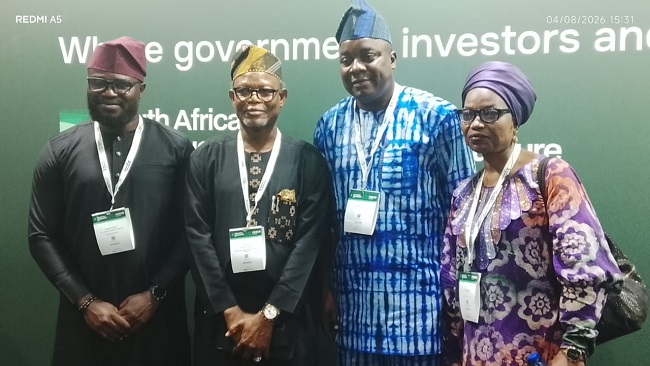
National President Association of Waste Managers of Nigeria (AWAMN), Dr Olugbenga Adebola (second left), with some dignitaries at the West Africa Infrastructure Expo in Lagos
He said waste management must function as an integrated system, where collection, transportation, recycling, and treatment processes operate seamlessly to deliver optimal results.
He noted that inefficiencies at disposal sites often disrupt operations, causing delays in waste collection and reducing overall service effectiveness.
The expert said with proper infrastructure, waste collection systems could achieve faster turnaround times and improved service delivery.
Adebola said waste should be viewed as a resource rather than mere refuse.
He described waste as a material in the wrong place or in the wrong hands, noting that it holds economic value when properly managed.
Adebola emphasised the importance of household waste bins, describing them as essential infrastructure for promoting source segregation at the point of generation.
He said source segregation enhanced recycling efficiency and reduces contamination in the waste management process.
He highlighted the role of recycling facilities, composting plants, and waste-to-energy systems in reducing landfill volumes and promoting a circular economy.
He added that improved waste traceability ensured accountability and increases recycling potential, thereby reducing environmental pollution.
According to him, effective waste management plays a critical role in protecting public health and preventing disease outbreaks.
He warned that poor waste handling could lead to blocked drainage, stagnant water, and the spread of vector-borne diseases.
He also cautioned against open burning of waste, saying that it releases toxic substances harmful to human health.
Adebola called for increased investment in infrastructure, including waste collection vehicles, transfer loading stations, and sanitary landfill facilities.
He stressed the need for strong regulatory frameworks, policy consistency, and enforcement to ensure sustainable waste management practices.
He also underscored the importance of political will in driving reforms and achieving long-term environmental sustainability.
He added that sustainable infrastructure was essential for building a resilient, efficient, and environmentally responsible waste management system.
The IMF, World Bank Group and the World Food Programme(WFP) have pledged coordinated support to countries impacted by the Middle East crisis, targeting economic stability and food security.
This s is contained in a joint statement issued on Thursday, April 9, 2026, in Abuja.
According to the statement, the heads of the institutions met to discuss the global economic and food security impacts of the war in the Middle East.
Kristalina Georgieva, Managing Director, International Monetary Fund (IMF)
The institutions said the Middle East war was upending lives and livelihoods in the region and beyond.
They said the war had already triggered one of the largest disruptions to global energy markets in modern history.
“Sharp increases in oil, gas, and fertiliser prices, together with transport bottlenecks, will inevitably lead to rising food prices and food insecurity.
“The burden will fall most heavily on the world’s most vulnerable populations, particularly in low‑income, import‑dependent economies.”
They said spikes in fuel prices and potential sharp increases in food prices were especially concerning where fiscal space was constrained and debt burdens were already high.
This, they said, had led to a reduction in governments’ ability to protect vulnerable households.
“Our institutions will continue to monitor developments closely and coordinate the use of all available tools to support those impacted by the crisis.
“In accordance with our respective mandates, and building on existing response mechanisms, we will provide support to safeguard lives and livelihoods.
“We will also lay the foundations for a resilient recovery that delivers stability, growth and jobs.”
The Ogun State Waste Management Authority (OGWAMA) has arrested and prosecuted 108 alleged violators of environmetal laws in Abeokuta.
The Special Adviser to the Governor on OGWAMA, Farook Akintunde, disclosed this in a statement on Wednesday, April 8, 2026, in Abeokuta, the state capital.
He said that the offenders were apprehended by the agency’s enforcement team in various parts of the state capital for dumping refuse on roadsides, public place and medians, in violation of the state’s waste management law.
The Special Adviser to the Governor on OGWAMA, Farook Akintunde
Akintunde said the offenders had been prosecuted in customary courts across the capital and fined to serve as a deterrent to others.
He expressed concern that some residents continued to dispose of waste indiscriminately despite government efforts to ensure proper waste collection at residents’ doorsteps.
“It is unfortunate that we have to take this route to stop some individuals from dumping waste indiscriminately on roadsides and in public places.
“We have sensitised, appealed and encouraged them to hand over their waste to the Private Sector Participants (PSP) assigned to their areas for proper disposal, but to no avail,” he said.
Akintunde reiterated the state government’s resolve to sustain the enforcement exercise until compliance improves.
“We are determined to continue this exercise until residents desist from indiscriminate dumping of waste, especially as the state is improving its waste management system,” he said.
The governor’s aide warned that improper waste disposal could lead to flooding and groundwater contamination, particularly during the rainy season.
Akintunde advised residents to comply with waste management regulations or risk prosecution, adding that the government would not tolerate wastes on roadsides causing eyesore to the environment.
A chieftain of All Progressives Congress (APC), Chief Sam Onuigbo, says the Renewed Hope Agenda of President Bola Tinubu is yielding results that will make the party the one to beat in the 2027 general elections.
Onuigbo, a former member of the House of Representatives, stated this in an interview in Abuja on Thursday, April 9, 2026.
He said that several economic and social reforms, including the removal of the fuel subsidy and the unification of the foreign exchange rate, had set Nigeria on a path of long-term greatness.
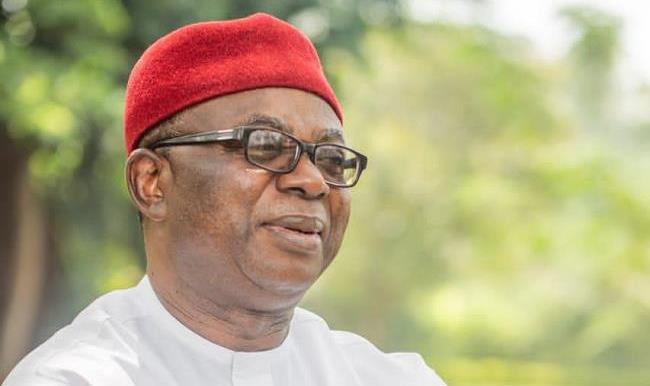
Rep. Sam Onuigbo
According to him, the removal of fuel subsidy has significantly increased the revenue available to state governments, enabling them to execute more projects.
“Today, the governors are having so much money, which is the fallout of the removal of fuel subsidy. That is helping those who truly want to work in their states to execute numerous projects.
“Before President Tinubu came, governors were going cap-in-hand looking for bailouts to pay salaries. Today, is anybody still going cap-in-hand to pay salaries? The answer is No.
“We give credit to the president for being courageous in taking that decision,” he said.
Onuigbo also highlighted the successful implementation of the student loan scheme and the unification of exchange rate as key milestones of the current administration.
He added that the foreign exchange reforms had provided a level of predictability for investors, which was absent during the period of “uncertainty and jumping rates”.
“You also talk about major infrastructural projects, and there is the Ministry of Interior, where it is now easy to get passports. These are things that seemed impossible before now,” Onuigbo said.
The Nigeria Customs Service (NCS), Federal Operations Unit (FOU) Zone ‘B’, has intensified its crackdown on endangered species trafficking with the interception of additional live pangolins along the Kano-Takai Jigawa axis.
This is contained in a statement by Mohammad Balarabe, the acting Public Relations Officer, Zone “B” Kaduna.
According to the statement, the latest seizure, which occurred on March 26, 2026, at about 1:00 p.m., marks the second major interception within a fortnight, following a similar operation carried out on March 12.
The Customs officers with the intercepted live pangolins
The seizures were effected in line with the Convention on International Trade in Endangered Species of Wild Fauna and Flora (CITES), an international agreement to which Nigeria is a signatory, prohibiting trade that threatens the survival of endangered species.
According to the unit, operatives acting on credible intelligence intercepted a suspicious vehicle during a routine patrol.
“A search of the vehicle led to the discovery of the live pangolins concealed within.
“All rescued animals from both operations have been transported to the FOU Zone ‘B’ headquarters in Kaduna for further processing and eventual handover to relevant wildlife authorities.
“The Comptroller of the Unit, Aminu Sule, ordered a comprehensive investigation aimed at dismantling the syndicate behind the illegal trade.
“The frequency of these interceptions, twice within a fortnight, demonstrates our heightened surveillance.
“This seizure sends a clear message: Zone ‘B’ will not be a transit point or a safe haven for wildlife traffickers,” the statement said.
The NCS reiterated its commitment to enforcing environmental laws and international treaties to safeguard Nigeria’s biodiversity and uphold its global conservation obligations.
Pangolins are widely regarded as the most trafficked mammals globally, driven by illegal demand for their scales and meat.
Some farmers in the country have proffered workable solutions to address Nigeria’s growing post-harvest losses estimated at $10 billion annually.
The farmers proffered the solutions in separate interviews on Thursday, April 9, 2026, in Lagos.
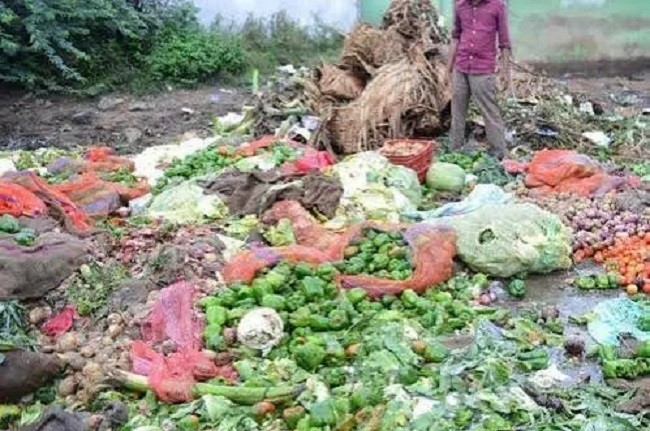
Nigeria loses an estimated 30 per cent to 50 per cent of its total annual agricultural output to post-harvest waste.
Post-harvest losses
The losses estimated at approximately ₦3.5 trillion annually, and roughly at $3.7 billion to $10 billion, are majorly driven by poor storage, inefficient transportation, and limited processing capacity.
The most affected post-harvest loss crops include and are not limited to fruits, vegetables, and tubers.
An agriculture analyst and crop farmer, Mr. Omotunde Banjoko, identified bad roads, multiple taxations and poor storage facilities as the major causes of Nigeria’s post-harvest losses index.
“Before now, we used to say Nigeria’s post harvest loss is estimated at about N3 trillion annually, but more recent reports indicate it is about N5 trillion annually. That’s a huge number and that calls for concern for everybody.
“We should look at where does these losses actually occur. It occurs most times because the farmers can’t even move out what they have produced on the farm to the nearest market or to the off takers in good time.
“The state of our roads is a major issue. Most of our farm roads are not good. So, if a farmer produces, no transporter is willing to go there to pick the produce. The ones that even try to pick the produce get stuck because of bad roads.
“We should look at both the local government, the state government and some federal roads. Roads connecting the farms, the production hubs. They don’t need to cost so much for funding, but they can be well graded.
“We need to have good roads so that easily we can move out the produce, the bad roads are a major constraint to resolving post-harvest losses in the country,” Banjoko said.
According to him, another factor that elicits post-harvest losses is the various stops on the roads, while these products are being transported.
“Farmers face a lot of delays due to multiple taxations from security personnel on our roads.
“A truck of vegetables I was personally transporting to Lagos State from Ogun State was stopped by security personnel and we were delayed for more than a day.
“By the time they released my truck in the morning, I just told them to go and dispose of the vegetables because they had gone bad and no longer had the quality to be sold fresh in the market.
“So, we consider the multiple tax, and the frequent stops by local security agencies on the road; they frustrate a lot of farmers which in turn results in post-harvest losses we are currently dealing with,” he said.
He also stressed the need for adequate cold chain storage facilities in various markets in the country.
“We also need adequate cold chain storage facilities in our markets to address post-harvest losses.
“Most markets and off takers don’t have adequate storage facilities or handling equipment that can hold these things fresh for a longer period.
“So, we also have to look at the quality of the processing facilities or holding facilities that we have in our market to be able to hold this produce fresh.
“There are cooling trucks that can be provided to keep agro-produce fresh from the farm gate to the market and the ultimate consumer. There are also mini cooling trucks that can be provided.
“To address our growing post-harvest losses, as a nation, we should start looking at the aforementioned factors both as government and as private investors,” the expert said.
On his part, the Secretary-General of All Farmers Association of Nigeria, Mr. Femi Oke, noted that farmers must collaborate with the government at all levels to address the growing post-harvest losses rate in the country.
“What we have seen mostly as a cause for the increasing post-harvest losses we are experiencing is the negligence on some parts of farmers and the government on preservation of our agriproducts.
“We have concerns over the post-harvest losses of most of our agro-produce and we need to preserve, because mostly we hardly preserve our harvests.
“For example, over the years, we have spoken about the disadvantage of using rafia baskets to transport tomatoes from one part of the country to another but still in 2026 the same baskets are still being used.
“They are unhygienic and definitely farmers face huge losses every time they are used except we adopt government and the farmer’s research institute approved crates we may continue in this loss,” Oke said.
He also stressed the need for reconstruction of silos for preservation of grains by the government.
“The government also needs to reconstruct our silos for preservation of grains so we can increase our food reserves and prevent food shortages due to post-harvest losses.
“Farmers also need to be trained and retrained on better measures to preserve the approaches and prevent post-harvest losses. We need to equip our farmers with the necessary information to cut down these losses in the country.
“The Federal Government should engage more extension officers to help farmers navigate areas where they can reduce post-harvest losses of their produce,” he said.
The World Liquid Gas Association (WLGA) is participating in the Sub-Saharan Africa LPG Expo taking place from April 9 to 10, 2026, in Johannesburg, South Africa, at a time of heightened demand for liquefied petroleum gas (LPG) in southern African cities.
Michael Kelly, Chief Advocacy Officer and Deputy Managing Director of WLGA, joins over 2,000 delegates from the international energy community and clean cooking experts to accelerate LPG use in Africa.
Michael Kelly, Chief Advocacy Officer and Deputy Managing Director of World Liquid Gas Association (WLGA)
Key moments of the Expo will include:
A Cooking for Life Workshop, hosted by the WLGA Cooking for Life Africa Taskforce will empower individuals to share proven strategies for expanding LPG access and best practices for clean cooking programmes.
The official launch of the Saudi Forward7 Initiative Africa Clean Cooking Competition, a cross-sector programme designed to identify and scale innovative clean cooking solutions across Africa.
Taking place under the theme of “Clean Cooking for a Greener, Healthier Sub-Saharan Africa” the Expo will highlight that LPG is abundant, affordable, and deployable today and has driven around 70% of global clean-cooking gains since 2010.
The Expo is another critical milestone for the global LPG community ahead of the IEA’s second Summit on Clean Cooking in Africa set to take place from July 9 to 10, 2026, in Nairobi, Kenya, as well as the WLGA’s Liquid Gas Week which will convene the global LPG industry in Istanbul, Turkey, from October 12 to 16, 2026, under the theme “Resilience in a Changing World”.
Natacha Cambriels, VP LPG and Clean Cooking, TotalEnergies and Cooking for Life Africa Taskforce Chair, said: “The first Sub-Saharan Africa LPG Expo arrives at a critical time for our industry against a backdrop of geopolitical instability that is already affecting critical LPG markets like India. The WLGA Cooking for Life Africa Taskforce shows that the private sector is building the infrastructure and driving the technical innovation needed to facilitate the rollout of clean cooking solutions across a complex supply chain.
“This Expo is a critical milestone on the road to Nairobi and Istanbul, which the private sector and governments must use as a platform to accelerate clean energy access and clean cooking across the world.”
Michael Kelly, Chief Advocacy Officer and Deputy Managing Director, World Liquid Gas Association, said: “Now more than ever our industry needs to go further and faster. We have the fuel and the technology for deployment, and it is now a case for regulation to move at the same pace.
“Specifically, we need coherent regulations on cylinder management across Africa, which is a key chokehold on progress. If we can make progress on this in 2026, we will have made a huge impact in unlocking LPG’s potential to drive a sustainable energy transition and ultimately save lives across Africa.”
In the Global South, LPG offers a cost-effective energy solution for over a billion people currently without grid access and leads directly to improved health and economic dignity of women and girls who bear the brunt of energy poverty. Since 2024, the global clean cooking community has achieved significant momentum:
$470 million has been disbursed across 22 African countries to accelerate deployment, with $2.2 billion total pledged.
LPG has driven 70% of global clean-cooking gains since 2010 and unlike large-scale electrification, it is affordable and deployable today.
900 million Africans still lack clean fuel, including 90% of schools, resulting in severe health impacts and widespread deforestation.
This progress however must be seen in the context of the past decade. The IEA’s World Energy Outlook released in November 2025, reveals that progress on clean cooking access has decelerated in recent years. While 100 million people gained access to clean cooking in 2023, this represents a decline from 120 million in 2019.
Accelerating this rate of change is crucial, as household air pollution from traditional cooking methods causes premature deaths and transitioning to clean cooking solutions could reduce these fatalities by nearly two-thirds globally by 2040.
The International Institute of Tropical Agriculture (IITA) has launched Africa’s first soybean speed breeding facility in Zambia, marking a major breakthrough in efforts to accelerate crop improvement and strengthen food systems across the region.
Soybean has emerged as one of the most strategic crops in Sub-Saharan Africa, supporting nutrition, livestock feed, and agro-industrial development. From soybean oil and soymilk to its critical role in the poultry industry, the crop is increasingly driving rural livelihoods, income generation, and economic growth.
With rising global demand, particularly from Asia, and shifting international market dynamics, Africa is well positioned to expand its role in soybean production. However, achieving this potential depends on faster development of improved varieties that meet the needs of farmers and markets.
Soybean has emerged as one of the most strategic crops in Sub-Saharan Africa
Traditionally, developing improved soybean varieties has been a lengthy and resource-intensive process, taking between six to eight years before new seeds reach farmers. This delay slows innovation and limits farmers’ ability to respond to emerging challenges.
In Southern Africa, pests and diseases compound these challenges, particularly soybean rust, which can significantly reduce yields. For many smallholder farmers, the cost of fungicides and the technical expertise required for disease management remain out of reach, highlighting the urgent need for early- to medium-maturing, high-yielding, and disease-resistant varieties.
The newly launched facility introduces speed breeding, an advanced technique that accelerates plant growth by optimising environmental conditions such as light, temperature, and humidity. This enables researchers to produce multiple crop generations within a single year, dramatically shortening breeding cycles.
With this innovation, the time required to develop new soybean varieties is expected to drop from six to eight years to just four to five years.
The facility is the first of its kind for soybean in Sub-Saharan Africa and only the second on the continent, following a similar facility in Morocco focused on wheat and barley. Its focus on soybean and other tropical crops, including cowpea, makes it uniquely suited to the region’s agricultural priorities.
By accelerating breeding cycles, the facility is expected to increase the number of improved soybean varieties available, reduce the time it takes for new seeds to reach farmers, enhance yield potential, and strengthen resilience to climate stress and diseases such as soybean rust.
Speaking during the inauguration on March 30, 2026, Zambia’s Director of Agriculture, Chizumbna Shepande, emphasised the significance of the investment.
“This facility strengthens our ability to respond to the growing global demand for soybeans, particularly in light of shifting international market dynamics,” Shepande said.
The facility aligns with Zambia’s national target of producing one million tons of soybean by 2030. Achieving this goal will depend on access to improved, high-yielding varieties and stronger seed systems.
Soybean plays a critical role in crop rotation, improving soil fertility, supporting livestock feed, particularly for poultry and driving agro-processing industries that create jobs and economic opportunities.
Dr Shepande added, “Achieving this target requires innovation, improved seed systems, and access to high-performing varieties.”
While the facility primarily supports research, its impact extends across the agricultural ecosystem, benefiting universities, national research systems, and regional breeding networks, including the Soybean Improvement Network supported by the Gates Foundation.
Dr David Chikoye, Director of IITA’s Southern Africa Hub, and IITA Zambia Country Director, highlighted the importance of partnerships and farmer-centered innovation.
“Our focus is on developing early- to medium-maturing soybean varieties that are high-yielding, climate-resilient, and resistant to diseases such as soybean rust – traits that are critical for smallholder farmers. Through collaboration with partners, we are strengthening soybean breeding systems across Africa and accelerating agricultural transformation.”
Jeff Ehlers, Senior Programme Officer at the Gates Foundation, added, “This investment is targeted toward smallholder farmers, who are often underserved by the private sector. Through on-farm varietal testing, we can better understand farmers’ preferences and ensure improved varieties meet their needs.”
The launch of the soybean speed breeding facility represents more than new research infrastructure, it marks a turning point in how crop improvement is approached in sub-Saharan Africa.
By combining science, innovation, and strategic partnerships, the facility is set to accelerate breeding timelines, expand access to improved varieties, boost farmer productivity and incomes, and strengthen food systems across the region.
As climate change, population growth, and global market pressures continue to reshape agriculture, innovations such as speed breeding are not just beneficial – they are essential.