The Executive Secretary, Economic Commission for Africa (ECA), Claver Gatete, has called for coordinated and transformative action to advance Africa’s development goals.
Gatete made the call in his opening address at the 12th Africa Regional Forum on Sustainable Development (ARFSD-12) in Addis Ababa monitired virtually.
He said the continent must accelerate progress towards the 2030 Agenda and the African Union’s Agenda 2063.
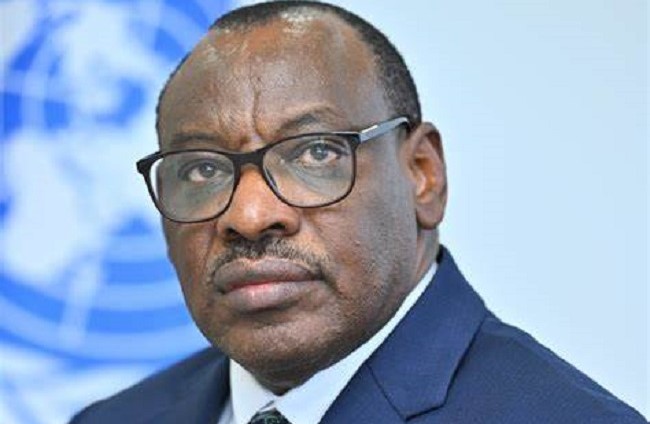
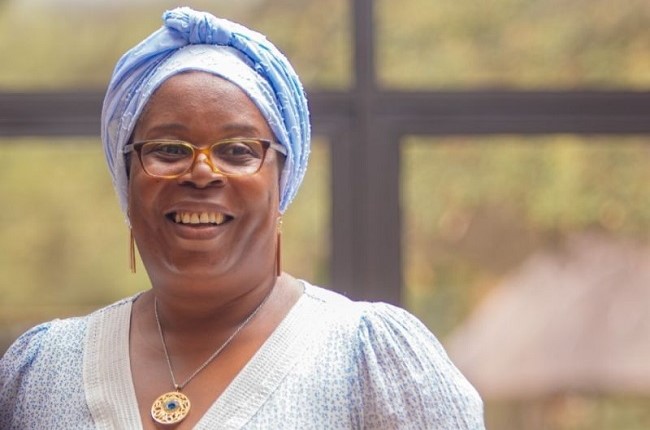
Claver Gatete, Under-Secretary-General and Executive Secretary of the UN Economic Commission for Africa (ECA)
According to him, Africa faces slowing global growth, rising inequalities, climate shocks and mounting fiscal pressures.
He said that geopolitical tensions were also affecting global stability and development prospects.
Gatete said these challenges should not limit ambition but inspire innovation and stronger commitment to solutions.
He commended Ethiopia for hosting the forum and its leadership in advancing climate action.
Gatete said that Ethiopia’s Green Legacy Initiative had resulted in the planting of billions of trees.
He said that the country had made significant progress in renewable energy and climate-smart agriculture.
The ECA executive secretary said climate change was already affecting food security, water availability and infrastructure across Africa.
He said that climate action and sustainable development must be pursued together while urging African countries to move from sector-based planning to integrated systems approaches.
Gatete further reiterated the need to shift from policy discussions to large-scale implemrntation, saying that foundational services such as water, energy and infrastructure must be treated as economic assets.
He called for increased financing, including private sector investment, to close Africa’s infrastructure gap and highlighted the importance of urbanisation, saying cities must be leveraged for jobs and productivity.
The ECA boss called for alignment of digital and green transitions to drive sustainable growth, adding that strong institutions, data and regional cooperation were key to delivering results.
He said Africa’s main challenge was not lack of frameworks but implementation at scale.
Gatete then reaffirmed the commitment of the commission to support member states with policy advice and partnerships.
He urged stakeholders to use the forum to move from “diagnosis to delivery” in achieving development goals.
The Kano State Government has announced plans to distribute 10 million tree seedlings for planting across the state, as part of efforts to improve the environment and mitigate the effects of climate change.
The Commissioner for Environment and Climate Change, Dahir Muhammad-Hashim, disclosed this during an inspection visit to tree nurseries in Gwarzo and Dawakin Kudu Local Government Areas.
He said the seedlings to be distributed include moringa, baobab, lemon, neem, mango, orange, and locust bean trees which are expected to be planted within communities.
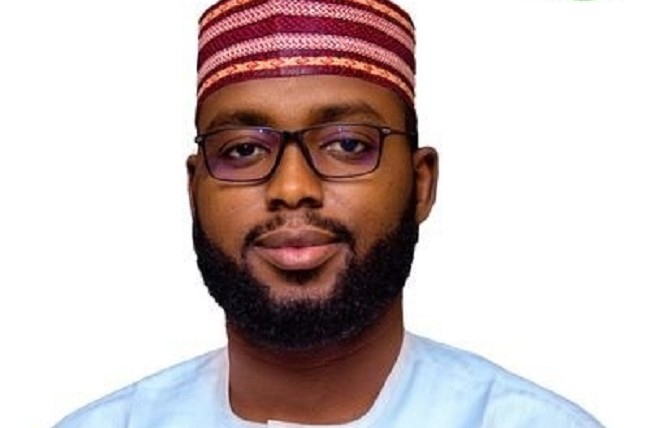
Dr. Dahir M. Hashim, Commissioner, Ministry of Environment and Climate Change, Kano State
According to the commissioner, the initiative is being implemented under the leadership of Governor Abba Kabir-Yusuf which has committed to ensuring a cleaner and healthier environment.
Muhammad-Hashim called on community groups and schools to take advantage of the programme by applying through designated forms or contacting the ministry to obtain seedlings for planting in their respective areas.
The commissioner added that the initiative forms part of the government’s broader strategy to improve the wellbeing of residents and protect the environment across Kano State.
Some Lagos residents on Tuesday, April 28, 2026, expressed divergent views on a directive by the state government requiring its approval before external alterations and solar panel installations on its housing estates.
The policy, which applies specifically to Lagos State Government-owned estates, is aimed at regulating structural changes, ensuring safety, and maintaining uniformity across housing schemes managed by the state.
A construction expert, Mr. Ayotunde Bally, described the policy as having both benefits and drawbacks.
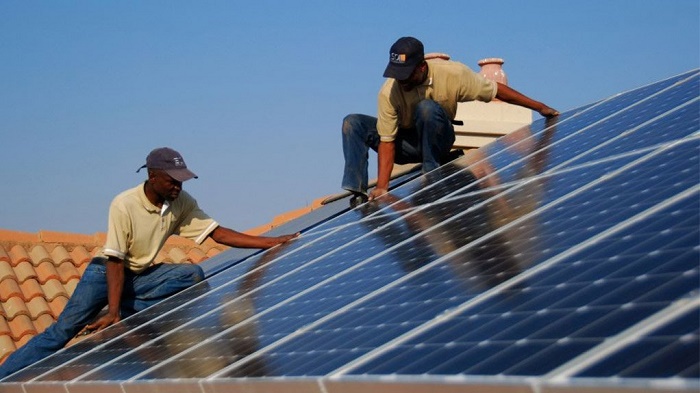
Solar panels installation
Bally said that the policy appeared to be aimed at strengthening control over standards, safety and revenue within government-owned housing estates and the wider real estate sector.
“This new policy is less about restrictions and more about the government trying to regain control over standards, safety and revenue,” he said.
He said that from a structural and safety perspective, the concerns raised by the government were valid.
“There are legitimate concerns around structural capacity as well as fire risks arising from poor installation. These are valid considerations and should matter to serious developers,” he said.
Bally, however, said that from a developer’s standpoint, the policy was a mixed bag and, in some areas, counterproductive.
He expressed concern over the likely practical implications of the policy on homeowners and developers.
“It will slow down property usability for buyers, add friction to an already expensive real estate market, and discourage renewable energy adoption, particularly solar, which should ideally be encouraged to address energy poverty.
“It also creates room for bureaucratic delays and unofficial costs,” he said.
He urged the state government to consider reducing or removing fees associated with solar installations to promote the use of alternative energy.
“While the government is positioning this policy as a safety measure, it should consider heavily discounting or completely removing fees related to solar installations in order to encourage alternative energy consumption,” he said.
Some residents also expressed concerns over what they described as additional bureaucracy due to the policy.
They said that the policy could complicate efforts to adopt alternative power sources in a city with inconsistent electricity supply.
A resident of a Lagos State-owned estate in Alimosho, who preferred anonymity, said that approval of solar installations on such estates should be simple.
“We are trying to solve our electricity problems. If approvals take too long or cost too much, they defeat the purpose,” the resident said.
Mr. Silas Iheoma, a resident of Jakande Estate, Isolo, however, supported the policy, saying it would help to prevent poorly executed modifications that could pose risks to occupants.
According to him, the policy will preserve the aesthetic value and structural orderliness of government estates.
The government has emphasised that the policy is not intended to restrict occupants but to ensure that all structural changes comply with safety standards and estate management regulations.
Stakeholders have called for a balanced approach that will protect infrastructure and encourage innovation, particularly in adopting renewable energy solutions such as solar power.
The United Arab Emirates (UAE) said on Tuesday, April 28, 2026, that it would withdraw from the Organisation of the Petroleum Exporting Countries (OPEC) and the wider OPEC+ alliance, with effect from May 1, 2026.
The decision reflects the UAE’s long-term strategic and economic vision of evolving energy profile, including accelerated investment in domestic energy production, said Dubai local media report.
It follows a comprehensive review of the UAE’s production policy and its current and future capacity, the report said.
OPEC
“This would be based on the UAE’s national interest and commitment to contributing effectively to meeting the market’s pressing needs,” the report added.
The UAE would continue to act as a responsible and reliable energy supplier, bringing additional production to the market in a gradual and measured manner in line with demand and market conditions.
The Emirates also reaffirmed its commitment to investing across the energy value chain, including oil and gas, renewables and low-carbon solutions, and to working with partners to ensure stable global supply.
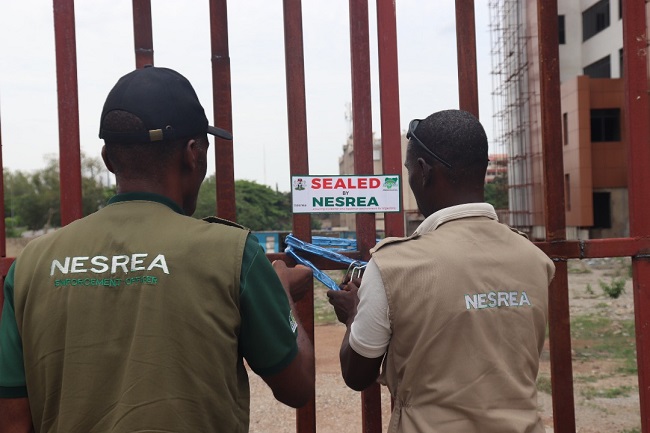
The National Environmental Standards and Regulations Enforcement Agency (NESREA) has sealed 30 construction sites in the FCT for violating provisions of the National Environmental (Construction Sector) Regulations, 2011.
The affected facilities include Primgate Reality in Wuye, XTadok Nigeria Limited in Wuye, and Samdus Limited in Asokoro District, among others.
Speaking with newsmen after the exercise, the Director-General of NESREA, Prof. Innocent Barikor, expressed concern over poor compliance with environmental regulations by operators in the construction sector.
Officials of the National Environmental Standards and Regulations Enforcement Agency (NESREA) during an enforcement operation
Barikor, who was represented by Mr. Elijah Udofia, Director of Environmental Quality Control, said the violations were uncovered during routine inspections and compliance monitoring across the FCT.
According to him, the affected facilities failed to meet regulatory requirements, especially in environmental documentation and responsiveness to compliance directives.
“These facilities demonstrated unwillingness to fully comply with regulatory requirements relating to environmental documentation and engagement,” he said.
He explained that the enforcement action was taken to halt environmentally non-compliant activities, compel adherence to regulations, and ensure corrective measures are implemented within stipulated timelines.
Barikor noted that while the construction sector remains vital to national development, it must be effectively regulated to mitigate risks such as poor waste management, construction on floodplains and environmentally sensitive areas, as well as uncontrolled dust emissions.
“Where regulatory communication is clear, time-bound and evidence-based, failure to respond constitutes a serious breach of compliance obligations and poses risks to both the environment and public health,” he said.
He stressed that the regulations were designed to prevent environmental harm and ensure responsible construction practices from the outset.
“Environmental compliance is not optional,” Barikor warned.
The NESREA boss assured that the agency would continue to enforce environmental laws fairly and consistently nationwide.
“Let this enforcement serve as a clear directive. NESREA will continue to enforce environmental regulations rigorously, particularly where non-compliance poses risks to the environment and public health,” he added.
He called on stakeholders to cooperate with the agency to improve environmental performance in the construction sector.
How can Africa elevate climate finance justice by ensuring transparent, equitable and accountable use of both domestic and international resources?
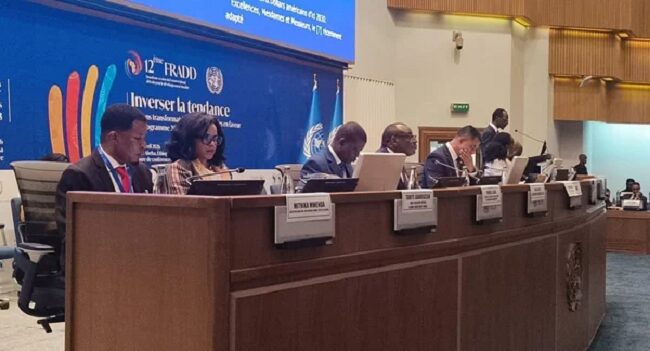
This query was raised by Dr Mithika Mwenda, Executive Director of the Pan African Climate Justice Alliance (PACJA), as he threw a challenge to the global community during the second day of the 12th Africa Regional Forum on Sustainable Development (ARFSD-12) taking place in Addis Ababa, Ethiopia.
Dr Mwenda joined a panel discussion of panellists, including the Executive Secretary of UNECA, the COP32 Presidency, AGN Chair, among other guests, who discussed “Unlocking climate finance for sustainable development in Africa”.
Dr Mithika Mwenda, Executive Director of the Pan African Climate Justice Alliance (PACJA) (left), at the 12th Africa Regional Forum on Sustainable Development (ARFSD-12) taking place in Addis Ababa, Ethiopia
In his intervention, he noted that if the world is truly serious about climate justice, three major problems in the current system must be urgently addressed.
“Looking back at the Climate Finance Responsibility, the UNFCCC and Paris Agreement are dotted with the Common but Differentiated Responsibilities and Respective Capacity (CBDR-RC) principle, which acknowledges that all nations must address climate change, but developed countries bear greater responsibility due to their historical emission and higher capacity. The principle dictates that climate actions should be tailored to national circumstances.”
Pointing to CBDR-RC, Dr Mwenda said that the first challenge is the gradual weakening of the principle of the common but differentiated Responsibilities and respective capacities (CBDR-RC) principle under UNFCCC. He said that African continues to see climate finance delivered mainly as loans instead of grants, commitments that are unpredictable, and growing pressure for African countries to finance their own survival.
He stressed that Africa must demand climate finance that is public, grant-based, sufficient and reliable, especially for adaptation. He emphasised that development and climate justice cannot be separated.
Africa is carrying the crisis it did not create
Africa contributes least to the global emissions, and in the current context, the continent is being asked to decarbonise faster than its stage of development allows. This also forces it to absorb worsening climate shocks and navigate financial systems designed elsewhere. Dr Mwenda described this as the second injustice of transferring the climate burden to Africa.
“The question is not whether Africa should act, because Africa is already acting. The real question is why Africa is being asked to carry a disproportionate share of the cost,” Dr Mwenda said.
He continued calling for more concessional finance, simplified access to funding, and global trade and energy rules that do not disadvantage African economies.
Financing Based on Needs, not Donor Priorities
African Climate activists have been pointing out that African countries know what they need in line with the local context. Hinting at that, Dr Mwenda said that this remains a challenge as the current Climate Finance system prioritises what is profitable, low-risk, or aligned with donor interests rather than what African Communities truly need.
He argued that justice requires a needs-based Approach, one that asks what African countries require to adapt, build resilience, protect livelihoods, and achieve sustainable development.
He urged African countries to push for stronger commitments under the New Collective Quantified Goal (NCQG) on climate finance, ensuring resources align with national priorities and reach local communities directly, especially women and grassroots actors.
It is easy to get discouraged by the state of the planet.
Humanity is breaking all the wrong records on global warming. Fragile ecosystems face enormous pressure. Dirty air and chemical pollution threaten our land, ocean and health.
But International Mother Earth Day, observed on Wednesday, April 22, 2026, is a reminder that there is a lot we can do as individuals to tackle environmental crises like climate change, nature, land and biodiversity loss, and pollution and waste.
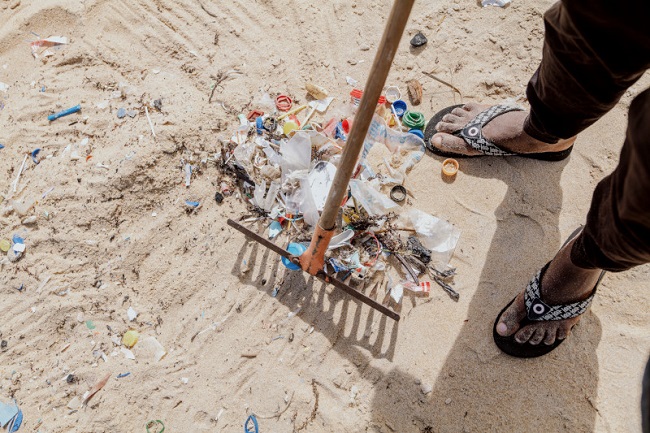
Clean-up
To help you in that quest, the United Nations Environment Programme (UNEP) has developed toolkits for taking action on a range of environmental issues. Here is what those documents recommend.
1. Revive the ecosystems that sustain us
Did you know that globally over 2 billion hectares of land are degraded? Or that the number and duration of droughts has risen by 29 per cent since 2000? Finding solutions to these global problems is crucial. That is why World Environment Day on June 5 is focusing on land restoration, desertification and drought resilience.
The world is in the grip of a climate emergency, a “code red for humanity,” according to the UN Secretary-General. Unless humanity reins in greenhouse gas emissions, warming could reach a catastrophic 2.8°C this century.
The United Nations’ Act Now campaign shows how everyday people can cut their carbon footprint by doing simple things, like eating more plants, switching to LED lights and walking instead of driving. The campaign also dives into how citizens can urge governments and businesses to deliver the kind of systemic change needed to avoid a full-blown climate catastrophe.
3. Conquer the global mountain of plastic
Plastic is everywhere you look. It is in our clothing, household appliances, children’s toys, food packaging, medical devices…the list goes on. While plastic has many uses, plastic pollution is proving disastrous for the planet, swamping lakes, rivers, the soil and the ocean.
UNEP’s Gameplan: It’s time to beat plastic pollution toolkit sets out what individuals can do to help end this environmental scourge. Its recommendations include cutting down on single-use plastic and supporting brands that are developing plastic alternatives.
4. Banish dirty air from the skies
More than 99 per cent of the global population breathes unsafe air. Air pollution is the biggest environmental health risk of our time, causing an estimated 8 million premature deaths every year.
This UNEP interactive guide details how you can help make the air cleaner. Some of the pointers are remarkably simple, like walking a little more, recycling non-organic trash and avoiding single-use plastic where possible.
5. Get tree planting right
Trees are amazing. They capture carbon from the atmosphere, protect and fertilize soils, provide a source of firewood and timber, and shelter many animals, birds and insects. No wonder tree planting, to restore ecosystems and counter climate change, has become so popular. But it is not as simple as it sounds.
For example, planting the wrong trees in the wrong places can harm biodiversity and lead to all sorts of unintended consequences. UNEP’s crash course on Tree planting and ecosystem restoration sets out five basic rules for getting the process right.
Global efforts to combat viral hepatitis are delivering measurable progress in reducing infections and deaths, but the disease remains a major global health challenge, according to a new World Health Organisation (WHO) report released on Tuesday, April 28, 2026, at the World Hepatitis Summit holding in Bangkok, Thailand.
Viral hepatitis B and C – the two infections responsible for 95% of hepatitis-related deaths worldwide – claimed 1.34 million lives in 2024, the latest data show. At the same time, transmission continues, with more than 4900 new infections every day, or 1.8 million each year.
The 2026 Global hepatitis report documents significant gains made since 2015. The annual number of new hepatitis B infections has dropped by 32% and hepatitis C-related deaths have fallen by 12% globally. Hepatitis B prevalence among children under five has also decreased to 0.6%, with 85 countries achieving or surpassing the 2030 target of 0.1%.
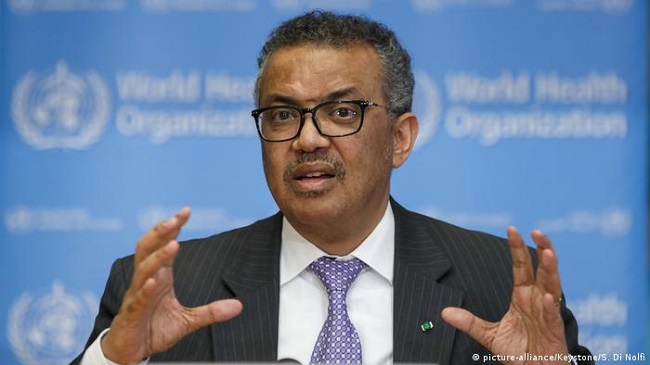
Dr. Tedros Adhanom Ghebreyesus, Director-General, World Health Organisation (WHO)
These achievements reflect the impact of sustained, coordinated global and national action following the adoption of WHO viral hepatitis elimination targets by Member States at the World Health Assembly in 2016. However, the report warns that current rates of progress are insufficient to meet all 2030 elimination targets, underscoring the urgent need to accelerate prevention, testing, and treatment efforts worldwide.
“Around the world, countries are showing that eliminating hepatitis is not a pipedream, it’s possible with sustained political commitment, backed by reliable domestic financing,” said Dr Tedros Adhanom Ghebreyesus, WHO Director-General.
“At the same time, this report shows that progress is too slow and uneven. Many people remain undiagnosed and untreated due to stigma, weak health systems and inequitable access to care. While we have the tools to eliminate hepatitis as a public health threat, urgent scale-up of prevention, diagnosis and treatment is needed if the world is to meet the 2030 targets,” added Ghebreyesus.
Global burden and gaps in response
Updated WHO estimates indicate that 287 million people were living with chronic hepatitis B or C infection in 2024.
That year, 0.9 million people were newly infected with hepatitis B. The WHO African Region accounted for 68% of new hepatitis B infections, yet only 17% of newborns in the region received the hepatitis B birth-dose vaccination.
A further 0.9 million hepatitis C infections were recorded in 2024. People who inject drugs accounted for 44% of new infections, highlighting the urgent need for stronger harm reduction services and safe injection practices.
Of the 240 million people with chronic hepatitis B in 2024, fewer than 5% were receiving treatment. Only 20% of people with hepatitis C have been treated since 2015, when a new 12-week treatment with a cure rate of about 95% became available.
As a result of limited access to prevention and care, in 2024 an estimated 1.1 million people died from hepatitis B and 240 000 from hepatitis C. Liver cirrhosis and hepatocellular carcinoma were the main causes of hepatitis related deaths. A large share of hepatitis B-related deaths occurred in the African and Western Pacific Regions.
Ten countries – Bangladesh, China, Ethiopia, Ghana, India, Indonesia, Nigeria, the Philippines, South Africa and Viet Nam – accounted for 69% of hepatitis B related deaths worldwide in 2024. Hepatitis C-related deaths are more geographically dispersed. In 2024, 10 countries accounted for 58% of the global total: China, India, Indonesia, Japan, Nigeria, Pakistan, the Russian Federation, South Africa, the United States of America and Viet Nam.
Proven solutions
Despite these challenges, progress in countries such as Egypt, Georgia, Rwanda, and the United Kingdom demonstrates that eliminating hepatitis as a public health problem is achievable with sustained commitment and investment.
Highly effective tools are already available:
hepatitis B vaccine protects more than 95% of vaccinated people against both acute and chronic infections;
long-term antiviral treatment for hepatitis B can help effectively manage chronic infection and prevent severe liver disease; and
hepatitis C short-course curative therapy lasting 8-12 weeks can cure more than 95% of infections.
“The data shows that progress is possible but also reveals where we are falling short. Every missed diagnosis and untreated infection due to chronic viral hepatitis represents a preventable death,” said Dr Tereza Kasaeva, Director, WHO Department for HIV, TB, Hepatitis and Sexually Transmitted Infections. “Countries must move faster to integrate hepatitis services for people living with hepatitis B and C into primary care, and to reach the communities most affected.”
The report identifies priority actions to accelerate hepatis elimination as a public health threat. These include scaling up treatment for chronic hepatitis B infection, particularly in the WHO African and Western Pacific regions, and expanding access to hepatitis C treatment in the WHO Eastern Mediterranean Region.
It also calls for stronger political commitment and financing, improved coverage of hepatitis B birth-dose vaccination and expanded antiviral prophylaxis to prevent mother-to-child transmission of HBV infection, particularly in the WHO African Region.
In addition, the report emphasises the need to improve injection safety in both health-care settings and community practices, including through strengthened harm reduction services for people who inject drugs.
As global leaders gather for the First International Conference on the Just Transition Away from Fossil Fuels, Indigenous Peoples and feminist movements are issuing a powerful, unified call for a transformative shift in how the world approaches climate action, energy systems, and economic justice.
Co-hosted by Colombia and the Netherlands, the conference is holding from April 28 to 29, 2026, in Santa Marta, Colombia.
Dr Mela Chiponda
In a joint position emerging from global consultations and frontline experiences, Indigenous leaders reaffirm that they are rights-holders, self-governing Peoples, and custodians of lands, waters, and biodiversity. They stress that there can be no meaningful climate, environmental, or economic justice without full respect for their right to self-determination, Free, Prior and Informed Consent (FPIC), and the legal protection of their territories. They caution that any transition that ignores these principles risks reproducing the very injustices it claims to resolve.
This position is strongly echoed by feminist organisations, including Shine Collab, which are advancing an eco-feminist vision of the just transition – one that challenges the intersecting systems of patriarchy, colonialism, and extractivism that have long marginalised women, Indigenous Peoples, and rural communities. Together, these voices emphasise that transitioning away from fossil fuels must go beyond technological substitution and instead confront the structural inequalities embedded in current economic models.
“There is no justice in a transition that replicates dispossession under a green label,” said Dr. Mela Chiponda of Shine Collab. “We must fundamentally transform systems of power, ensuring that those most affected are not only heard, but are leading the way forward.”
Across the Global South, the risks of so-called “green extractivism” are already emerging. Indigenous representatives warn that the expansion of mining for critical minerals – often undertaken without community consent – threatens to repeat patterns of land dispossession, environmental degradation, and cultural disruption historically associated with fossil fuel industries. Feminist advocates reinforce this concern, noting that these impacts are often gendered, placing disproportionate burdens on women through loss of livelihoods, increased care responsibilities, and exposure to violence.
In Zimbabwe’s Bikita district, these global tensions are playing out at the local level. The surge in lithium mining has intensified pressure on community land rights and decision-making processes. In response, Shine Collab and its partners have introduced the Hanyanya Solar Project, a community-driven renewable energy initiative that places women at the centre of climate solutions.
Through this project, women are gaining access to clean energy technologies while also strengthening their knowledge of land rights, governance, and advocacy. The initiative is not only improving livelihoods but also redefining power by enabling communities to assert agency over their resources and development pathways.
“The experience in Bikita shows that alternatives already exist,” Dr. Chiponda added. “When communities – especially women – lead, the transition becomes not only sustainable, but just.”
At the heart of this joint call is a shared insistence that a just transition must respect Indigenous governance systems, guarantee inclusive and gender-responsive participation in decision-making, and protect the integrity of lands, territories, and waters. Indigenous knowledge systems and eco-feminist approaches are being highlighted as essential foundations for building regenerative economies that prioritise care, balance, and sustainability.
The statement also underscores the urgent need to move away from extractive economic models in all their forms. This includes rejecting false climate solutions such as geoengineering and market-based mechanisms that commodify nature, as well as ensuring that renewable energy expansion does not come at the expense of community rights. Instead, there is a growing call for decentralised, community-owned energy systems that advance energy sovereignty and equitable access.
Central to this vision is the recognition of care as a cornerstone of sustainable societies. Feminist advocates emphasise that care work, which remains largely invisible and disproportionately carried by women, must be valued and supported through public investment and policy reform. A transition grounded in care, they argue, offers a pathway that is both low-carbon and socially just.
Both Indigenous and feminist leaders are also calling for direct and accessible climate finance that reaches communities without restrictive intermediaries, enabling them to design and implement their own solutions. They stress that reparative justice must be a core component of the transition, addressing the historical and ongoing harms caused by fossil fuel extraction and related industries.
The Santa Marta co-hosts have also stressed that the conference is not meant to be an alternative or replacement for multilateral negotiations. Instead, it’s envisioned as complementary. The Brazilian COP30 presidency, which is running a parallel process to create a road map for fossil fuel phaseouts that will be delivered at COP31 in November 2026, has indicated that it will consider the outcomes from Santa Marta.
As negotiations unfold in Santa Marta, the message from Indigenous Peoples and feminist movements is clear and uncompromising: a just transition cannot be imposed from above or driven by profit. It must be built from the ground up, rooted in rights, equity, and the leadership of those who have long defended their lands and communities.
From Colombia to Zimbabwe and beyond, this growing alliance is redefining what a just transition looks like – one that is not only about energy, but about transforming systems, restoring dignity, and safeguarding the future of people and planet alike.
Civil society organisations from Africa and Latin America have expressed deep disappointment with the limited outcomes of the 2026 IMF and World Bank Spring Meetings, arguing that the institutions failed to deliver transformative solutions to the compounding debt, climate, food, energy and conflict crises facing the Global South.
The meetings, held in Washington DC from April 13 to 18, 2026, took place against a backdrop of renewed global instability, including the impacts of conflict in the Middle East that have driven up energy and food prices, exacerbating existing structural vulnerabilities in developing regions.
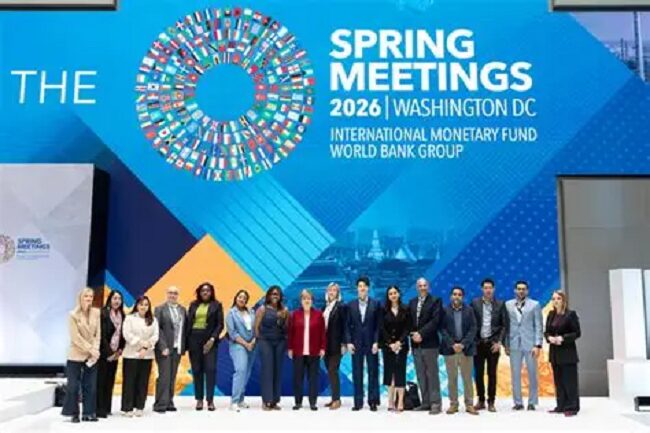
2026 IMF-World Bank Spring Meetings
A Perfect Storm for the Global South
Daniela Berdeja, Debt Analyst and Manager of the LAC Vulnerability Atlas at the Latin American Network on Debt, Development and Rights (Latindadd), described the current situation as a “perfect storm” where multiple crises are compounding rather than occurring in isolation.
“Rising energy prices are driving up production costs and the need for subsidies. The food crisis is putting pressure on public budgets and increasing food insecurity. Trade disruptions are reducing export revenues, while the tightening of global financial conditions is making debt servicing prohibitively expensive due to high interest rates,” Berdeja said.
The result, she noted, is a deepening fiscal crisis in which every additional dollar spent on debt servicing means one less dollar available for healthcare, education, social protection or climate adaptation.
Berdeja challenged the IMF and World Bank’s view of the situation as temporary shocks, insisting instead that it represents a systemic crisis.
“This is not a temporary crisis as the IMF and World Bank see it; it’s a crisis of the system itself,” she emphasised.
Limited and Non-Transformative Responses
Civil society panellists observed that the Spring Meetings largely emphasised strengthening existing instruments – more loans, adjustments to financial facilities, and calls to improve resilience – while continuing to promote the G20 Common Framework as the primary solution to debt problems.
Berdeja criticised this approach as remaining “limited and not transformative.” She pointed out that debt sustainability continues to be measured primarily in terms of repayment capacity rather than from a human development and climate perspective.
“There remains a heavy reliance on fiscal adjustment frameworks which in practice end up reducing public spending in contexts where it should be increasing,” she added.
This leaves Global South countries trapped between rising debt burdens and persistent austerity pressures.
Rising Demand for IMF Programmes
A notable trend highlighted was the increasing number of countries turning to IMF programmes amid energy shocks and conflict spillovers.
While this underscores the IMF’s role as lender of last resort, critics argue it exacerbates power imbalances and imposes conditionalities on already vulnerable nations.
Berdeja highlighted a fundamental tension: countries are expected to invest in resilience, energy transition and social protection even as they are required to implement spending cuts under programme conditions.
Key Priorities for Debt Justice
Civil society proposed several urgent priorities, including:
– Significant scale debt relief and cancellation, rather than marginal measures.
– Far-reaching reforms to the international financial architecture, including fairer and more transparent debt restructuring mechanisms.
– Initiation of a UN Framework Convention on Sovereign Debt, as called for in the Common African Position and by various Global South countries ahead of the 4th Financing for Development Conference.
– More equitable issuance and reallocation of Special Drawing Rights (SDRs).
– Stronger mobilisation of domestic resources through combating tax evasion and illicit financial flows.
Without these structural changes, Berdeja warned, the international community will continue “kicking the can down the road.”
Feminist Perspectives on Austerity and Subsidies
Grace Namugambe, Economic Justice & Rights Officer at the African Women’s Development and Communication Network (FEMNET), raised concerns about the IMF’s push to shift from broad energy and food subsidies toward targeted social protection systems such as cash transfers.
In the current context of climate crisis and global conflicts driving fuel price increases, Namugambe argued that removing subsidies is not feasible and disproportionately harms women.
“Women often spend the bulk of their income on food. These price hikes mean they have fewer resources for healthcare or education,” she explained.
Higher fuel costs also increase women’s care burden, reducing time available for economic activities and further entrenching gender inequalities. FEMNET maintains that governments must continue providing subsidies and essential services rather than encouraging privatisation.
Namugambe also criticised the persistent emphasis on blended finance, noting that it often fails to deliver resources at the required scale or conditions for the Global South.
She called for the IMF and World Bank to move away from systemic deregulation and instead support a stronger role for the state in safeguarding public welfare.
“Gender is central to the conversation on climate, debt and development financing because women bear the brunt of both crises,” she stated.
Launch of the Borrowers’ Platform
Diana Mochoge, Policy Research & Advocacy Officer for Domestic Resource Mobilisation at the African Forum and Network on Debt and Development (AFRODAD), highlighted one concrete development: the launch of the Borrowers’ Platform by UNCTAD during the Spring Meetings.
This platform, part of commitments from the Sevilla Conference on Financing for Development, aims to bring borrowing countries together for peer-to-peer learning, knowledge sharing, and collective advocacy on debt issues.
“It gives Africa and the Global South a bigger voice in changing the rules of the global financial architecture,” Mochoge noted.
She added that countries are emphasising progressive domestic resource mobilisation that does not place additional burdens on citizens, alongside calls for “automatic debt suspension” during crises and reforms to credit rating agencies.
Questioning the Institutions’ Role
Stefano Prato, Managing Director of the Society for International Development (SID), offered a sharper critique, suggesting that the IMF and World Bank primarily serve powerful geopolitical interests and are unlikely to deliver genuine solutions for developing countries, particularly in Africa.
Calls for Structural Change
Across the contributions, civil society representatives stressed that the core question is not merely how to respond to the latest crises, but why the global system continues to perpetuate them.
They called for debt justice, democratisation of international financial governance, and structural reforms that place human needs, climate action and gender equality at the centre, rather than debt repayment.
The Spring Meetings have once again underscored the urgent need for bolder action beyond incremental adjustments to existing frameworks.
As countries across Africa and the broader Global South grapple with shrinking fiscal space and multiple overlapping shocks, the gap between rhetoric and meaningful reform remains wide.
Stakeholders now look toward the Financing for Development process and other global forums to push for the transformative changes demanded by civil society, including a UN Framework Convention on Sovereign Debt and more equitable financing mechanisms.