Home Blog

Moving from energy crisis to energy security with renewables

The strategic deployment of renewables has provided enhanced resilience in the face of the current energy crisis by a number of countries, according to a new policy advisory from the International Renewable Energy Agency (IRENA).

The brief, aimed at policy makers responding to the disruption in international energy markets, suggests a set of immediate and longer-term actions to insulate countries and communities from the worst effects of the crisis, and steer their economic recovery toward greater energy security and resilience.

Renewable energy
Renewable energy

Renewables are already reducing dependence on fossil fuel imports across countries, the new brief finds – from Spain and Portugal in Europe, to China, India and Pakistan in Asia. Globally, renewable power capacity continues to grow at record speed, with 692 GW added in 2025.

Furthermore, falling costs have transformed the economics of power generation. More than 85% of new renewables are now cheaper than fossil fuel alternatives. Since 2010, the cost of solar has fallen by 87%, onshore wind by 55% and battery storage by 93%. Meanwhile, “firm” renewables, which combine wind or solar with battery storage, provide 24/7 power at lower costs than most fossil fuel-fired alternatives.

“The current crisis clearly demonstrates the strategic case for renewables as a national security imperative,” commented IRENA Director-General, Francesco La Camera. “There is an opportunity to prioritise actions that enhance long-term energy stability. Governments must urgently consider targeted interventions to steer investment and emergency responses towards accelerating the deployment of renewable power and the electrification of energy-consuming processes and sectors.”

The ongoing conflict in the Middle East reiterates the inherent structural weakness and vulnerability of national energy systems that remain reliant upon fossil fuels, and markets where the costs of oil and gas are highly influential on electricity prices.

The consequences will extend beyond energy markets and supply chains to affect whole economies, influencing inflation and economic activity simultaneously, with most pronounced effects likely for the most vulnerable communities around the world.

La Camera added: “Country examples in IRENA’s advisory confirm the resilience of renewables. They show the growing role that renewables can play in strengthening energy system resilience and security, reducing exposure to fossil fuel price volatility and supporting long-term economic stability.”

The brief advises policy makers to:

  • Facilitate the deployment of distributed renewables, leveraging cross-sector partnerships to mobilise rapid responses; provide financial and logistical support to fast-track development.
  • Use public information campaigns and mandates to reduce energy demand.
  • Fast-track time-of-use tariff adoption to enable consumers to shift their electricity consumption to times where renewable supply on grids is high and prices are low.
  • Implement fiscal measures such as grants, subsidies or tax rebates in support of electrification.
  • Accelerate solar PV–battery hybrid mini-grids in off-grid and weak-grid remote areas.
  • Accelerate two/three-wheeler electrification in emerging economies; incentivise electrification of public transport through financial and fiscal support; encourage car-pooling where appropriate.

Mid-term actions focus on accelerating renewable deployment while strengthening resilience and investment conditions. They include fast-tracking renewable and grid projects, ring-fencing funding and adapting policies to inflation and supply chain pressures. Expanding battery storage, demand-side measures and grid enhancements will improve flexibility and enable more solar and wind. Incentives should support heating, electrification, EV infrastructure and sustainable aviation fuel.

In the long-term, clear policy frameworks are needed to attract investment, integrate electrification into national planning and strengthen domestic supply chains. Facilitating hybrid projects, supporting industrial electrification, expanding mini-grids, and linking fossil fuel support to meeting renewable targets will be key.
COP31: Australian appointed youth champion as Türkiye sets dates

0

The 31st session of the Conference of the Parties (COP31) to the United Nations Framework Convention on Climate Change (UNFCCC) will be held in Antalya, Türkiye, from November 9 to 20, 2026.

In the lead-up, the COP30 Presidency and the incoming COP31 Presidency are working together to foster an open, transparent and inclusive process, through regular engagement with Parties and observers throughout the year.

Their engagements will bring together ministers, Heads of Delegation, and negotiators, as well as observers and stakeholders, to build shared understanding and lay the groundwork for successful outcomes in Antalya.

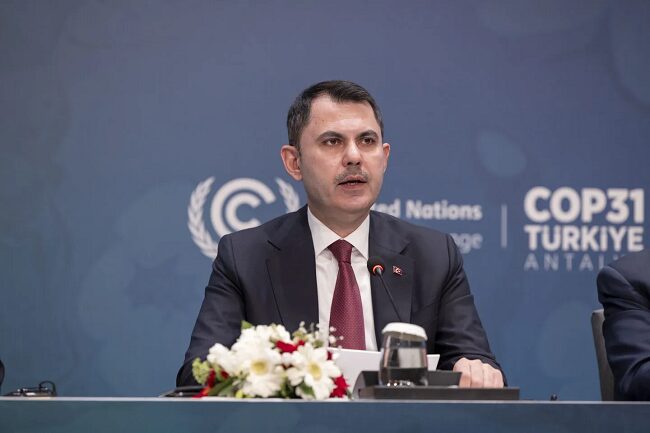
Murat Kurum
Murat Kurum, COP31 President-Designate, speaking in Istanbul on February 12, 2026. Photo credit: UN Climate Change

The Presidencies will coordinate closely with the Chairs of the subsidiary bodies to ensure coherence across the UNFCCC process.

The incoming COP31 Presidency and Australia will work in close partnership, in line with the Türkiye-Australia Partnership Modalities.

The Presidencies encourage Parties to engage in a spirit of unity and shared purpose as they work together to deliver transformative and ambitious outcomes at COP31 that enhance ambition and implementation of the global response to the threat of climate change.

The COP31 Presidency has been communicating and engaging with Parties and observers along the road to Antalya, going by a recent COP31 President Designate letter, wherein the Turkish government announced the dates and venues for the COP31 leaders’ summit and pre-COP meetings and appointed a Turkish waste campaigner and Australian cattle farmer as climate “champions”.

In the open letter, published by the UN climate body on Tuesday, April 13, 2026, the Turkish environment minister and COP31 President-Designate, Murat Kurum, said the COP31 World Leaders’ Summit, at which dozens of heads of government are expected, would take place in Antalya, on Türkiye’s south coast, on November 11 and 12.

Previous leaders’ summits have taken place on the first two days of the COP negotiations or, at last year’s conference in Belém, before the start. But this year’s gathering will take place on the third and fourth day (Wednesday and Thursday) of the November 9-20 talks. Kurum said the summit “will be a key moment in generating political momentum and visibility for COP31”.

Last November, when Türkiye was chosen as host of the annual UN climate summit, Kurum said that, while the negotiations would be in the resort city of Antalya, the leaders’ summit would take place in the country’s largest city Istanbul. No explanation for the change of decision was given in Kurum’s letter.

Pacific pre-COP

Every COP conference is preceded by a smaller pre-COP gathering, attended by government climate negotiators. Because of a deal struck with Australia, which gave up its bid to physically host the summit in exchange for leading the COP31 discussions, this year’s pre-COP will take place on the Pacific island of Fiji, with a “leaders’ event” a 2.5-hour flight north in Tuvalu.

Kurum’s letter said both events would take place between October 5-8 and “will contribute to reflecting diverse perspectives in an inclusive manner”.

The letter confirms that Australia’s climate and energy minister, Chris Bowen, will be given the title of “President of Negotiations” and “will have exclusive authority in leading the COP31 Negotiations, in consultation with Türkiye”.

“I have complete faith in his work,” said Kurum, adding that the two will send out a joint letter “in the coming weeks” which outlines their priorities regarding the negotiations.

The COP negotiations will be discussed at the annual Petersberg Climate Dialogue in Berlin on April 21 and 22. German State Secretary Jochen Flasbarth recently announced plans to travel to Australia and meet with Bowen to discuss the talks.

COP31 champions

In his letter, Kurum announced that Samed Ağırbaş, president of Türkiye’s Zero Waste Foundation, which was set up by the country’s First Lady, has been appointed as the COP31 Climate High-Level Champion, tasked with working with business, cities and regions and civil society to promote climate action.

Sally Higgins, a young Australian cattle farmer and sustainability consultant who has also carried out research on land-use change, has been appointed as Youth Climate Champion. Kurum said she “is a passionate advocate for climate change and elevating the voices of young people”.

Turkish officials Fatma Varank, Halil Hasar and Mehmet Ali Kahraman have been appointed as COP31 CEO, Chief Climate Diplomacy Officer and Director of the COP31 Presidency Office respectively. Deputy environment ministers, Ömer Bulut and Burak Demiralp, will lead on construction and infrastructure, and operational and logistical processes.

Kurum said Türkiye’s Presidency would continue to use the Troika approach – a term coined two years ago under Azerbaijan’s COP29 Presidency, which worked with the previous Emirati COP28 and subsequent Brazilian COP30 hosts.

Kurum said the Troika approach offers “stability and predictability by connecting past, current and future presidencies” and that “in this regard” Türkiye and Australia would work “in close cooperation with Azerbaijan and Brazil”. This appears to overlook the 2027 COP32 host – Ethiopia.

Navy intensifies crackdown on oil thieves, uncovers 600m illegal oil network

0

The Nigerian Navy has uncovered approximately 103,000 litres of suspected stolen crude oil and 190,000 litres of suspected illegally refined Automotive Gas Oil (AGO),” worth over ₦600 million across Rivers, Bayelsa and Delta states.

This is contained in a statement issued by the Director of Naval Information, Navy Capt. Abiodun Folorunsho, on Saturday, April 18, 2026, in Abuja.

The navy said the operation was conducted under the Operation DELTA SENTINEL, targeting illegal oil refining networks

Warri Operation
Warri Operation

Folorunsho said the breakthrough followed coordinated operations on April 17 against illegal refining sites and crude oil storage facilities in the Niger Delta region.

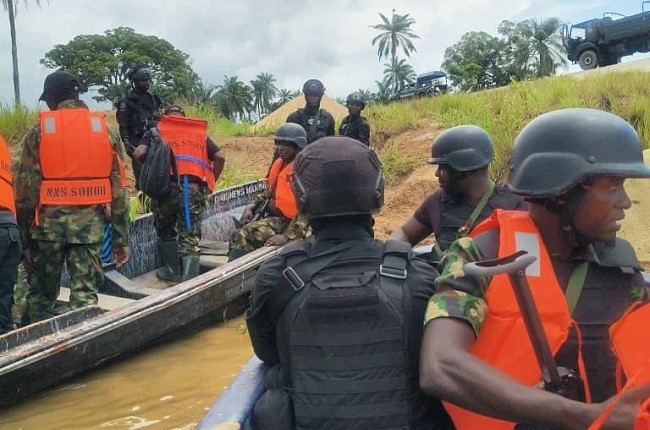
He said the personnel of Nigerian Navy Ship (NNS) SOROH, acting on credible intelligence, deployed an Anti-Crude Oil Theft team to the Egboama/Ogbogolo area of Ahoada West Local Government Area along the Rivers–Bayelsa boundary corridor.

According to him, the team carried out a coordinated land and water operation, uncovering multiple illegal refining sites comprising dugout pits, ovens, reservoirs and storage facilities used for illicit petroleum processing.

Folorunsho said the crude oil recovered was valued at over ₦91 million, while the illegally refined AGO was estimated at over ₦342 million, bringing the total value of the seizures in the area to over ₦433 million.

“In Delta State, personnel of Nigerian Navy Ship (NNS) DELTA uncovered and deactivated a concealed crude oil storage facility around Bennett Island.

“The facility, linked to a buried pipeline through an improvised hose system, contained about 78,000 litres of suspected stolen crude oil valued at approximately ₦69 million, alongside equipment used for illegal siphoning,” he said.

The Naval spokesman said all Illegal refining infrastructure and storage facilities were dismantled in situ, while recovered products were handled in line with extant operational procedures. It added that perpetrators fled upon sighting naval personnel.

Folorunsho added that the coordinated operations underscore the Navy’s intensified crackdown on crude oil theft and reinforce the momentum of Operation DELTA SENTINEL, which has been extended by 90 days.

The Chief of the Naval Staff, Vice Adm. Idi Abbas, commended the participating units and directed the Commander Task Group, Rear Adm. Suleiman Ibrahim, to sustain pressure on oil theft networks.

He reaffirmed the Nigerian Navy’s commitment to safeguarding critical national oil infrastructure and protecting the country’s economic lifelines.

By Sumaila Ogbaje

Rising fuel, energy costs drive Nigeria’s inflation – Experts

0

Some economic experts have identified rising fuel and energy costs as the primary drivers of the latest increase in inflation in Nigeria.

The experts, who spoke in Abuja on Sunday, April 19, 2026, said higher petrol and diesel prices had triggered increases in transport fares, logistics costs and the general distribution of goods across the country.

Prof. Ken Ife, a development economist, attributed Nigeria’s recent uptick in inflation to rising energy costs and structural inefficiencies in the oil and gas sector, calling for urgent policy actions to stabilise prices.

Fuel subsidy
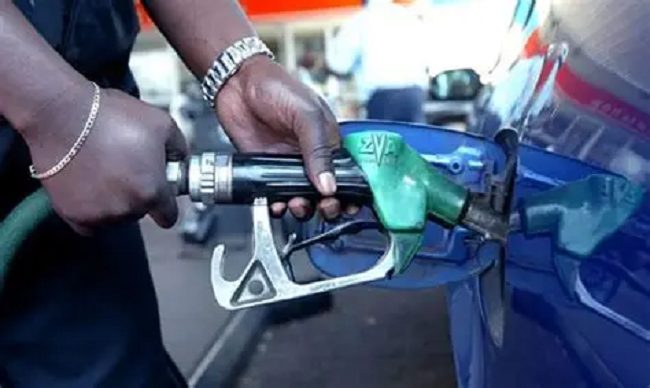
Rising cost of fuel is said to be a driver of Nigeria’s inflation

Ife, who is also a public policy analyst, said Nigeria’s inflation rate, which rose slightly to 15.38 per cent in March after 12 consecutive months of decline, was largely driven by increases in fuel and energy prices.

According to him, energy remains a critical driver of inflation due to its central role in transportation, production, and distribution.

“When energy prices go up, petrol and diesel prices rise, and these drive the entire transportation system.

“The cost of moving food, goods and people increases, and that translates directly into higher prices across all sectors.

“This may likely be worse on a  month-on-month basis . You will see month-on-month inflation going dramatically up.”

He said that rising gas prices, which are benchmarked internationally, also contribute to higher electricity tariffs and production costs.

“As gas prices increase, the cost of power generation rises, and consumers feel it in their electricity bills.

“Manufacturers also face higher costs due to increased energy and logistics expenses, leading to general price increase,” he said.

The professor said that while global factors such as tensions in the Middle East may influence energy prices, Nigeria’s situation was worsened by domestic structural challenges.

He criticised the handling of crude oil allocation, saying that local refining capacity was not being prioritised as required by law.

Ife referenced the operations of the  Dangote refinery, stating that it was not receiving adequate crude supply for optimal production.

“Local refiners require sufficient crude to operate efficiently, but current allocations fall short.

“This forces them to source crude externally at higher costs, including additional shipping and insurance charges, which ultimately push up domestic fuel prices,” he said.

He said such inefficiencies put pressure on the economy and contribute to inflationary trends.

On immediate measures, the expert urged authorities to prioritise crude supply to domestic refineries and ensure compliance with existing laws.

“Providing adequate crude for local refining and allowing transactions in Naira, as stipulated, will reduce costs and ease pressure on consumers,” he said.

He cautioned against a return to fuel subsidies or increased borrowing to cushion economic hardship, describing such measures as unsustainable.

“We are not going back to subsidies or excessive borrowing. The focus should be on fixing structural issues in the energy sector to ensure long-term stability,” he said.

Ife said that addressing these challenges would help moderate inflation and improve overall economic conditions.

Also, an economist, Mr. Chidi Nwanze, said the rise in inflation could be linked to renewed pressures in transportation and service costs.

“The rise, though marginal, suggests that structural factors such as logistics costs, exchange rate fluctuations and energy prices are still influencing inflation dynamics,” he said.

A financial analyst, Mr. Segun Ibikunle, said the sharp increase in month-on-month inflation was a more concerning indicator.

“The jump to 4.18 per cent month-on-month shows that price increases are accelerating in the short term.

“If sustained, it could reverse the gains recorded over the past year,” he said.

The March inflation figures showed that on a year-on-year basis, Nigeria’s headline inflation rose slightly to 15.38 per cent compared to 15.06 per cent and 27.35 per cent recorded in February and March.

The report was released by the National Bureau of Statistics (NBS).

It said that the month-on-month headline inflation rate in March was 4.18 per cent, which was 2.17 per cent higher than the rate recorded in February at 2.01 per cent.

The NBS identified food and non-alcoholic beverages, restaurants and accommodation services and transport as the major contributors to the headline inflation on a year-on-year and month-on-month basis.

By Okeoghene Akubuike

Firm moves to tackle gas leaks in oil industry

0

Alpha Designs Nigeria Limited, an oil and gas company, has introduced a Gas Imaging Camera to detect gas leaks in oil and gas facilities.

This, the company said, is to curb emissions and improve safety in the industry.

Sandra Oghobi, an Optical Gas Imaging Consultant in the firm, said in Abuja that the iCGAS 2.0 technology detects gas leaks from valves.

Russia gas supply
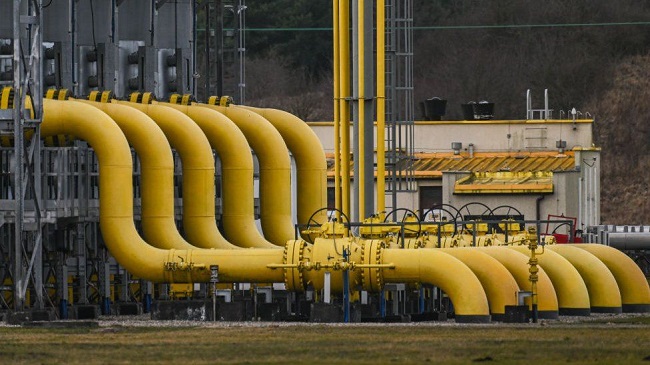
Gas pipelines

The technology, she added, also detects leaks in flanges and other components while quantifying hourly emission losses.

“You can be standing close to fumes of gas for a long time but you wouldn’t know because you can’t see the evaporation.

“With this technology, however, you can actually see that because it has an infrared spectral filter,” Oghobi said.

According to her, the camera detects methane as low as 0.35 grams per hour.

This, she said, is below the 60 grams per hour threshold set by the US EPA Appendix K standard and meets safety requirements.

“You don’t necessarily need to apply for a hot work permit because this technology has gone through that process of being certified globally,” she said.

Oghobi added that Alpha Designs is the only locally authorised firm to deploy the technology in Nigeria.

She said the firm had been training local OGI consultants to meet local content requirements.

Mrs. Joy Uku, also of Alpha Designs, on her part, unveiled the Genesis New Vision (GNV) App, an all-in-one platform with social media, charity and health sections.

She said the charity section allows users to raise causes for donation with a cap to stop excess contributions.

Uku said the health section enables users to monitor steps, create health events and live stream activities.

Miss Priscillia Oghoro, a representative of the Safe Delivery Box App, said the app enables contactless delivery and pickup, along with remote management of parcels by connecting to the delivery box.

She also said the application was patented under the laws of the Federal Republic of Nigeria which encompasses Lock, Seal and Safe Parcel Defender in Logistics.

“This innovation is a complete solution that will enhance trust, safety, security and reliability in the delivery industry today.

“Research has shown that one out of four delivery riders had admitted to tampering with customers’ order,” Oghoro said.

She said the app allows users to handle all operations from their mobile devices.

According to Oghoro, the app has enhanced security and crime deterrence capabilities.

Mr. Shittu Oladapo, Lead, Asset Integrity Department of the firm, said the innovations by Alpha Designs align with Nigeria’s pledge to reduce emissions to near net zero by 2030.

The firm’s innovations, he added, would create jobs through inspection centres and local expertise development.

By Olasunkanmi Onifade

Flood risk: NEMA tasks Lagos residents on precautionary measures

The National Emergency Management Agency (NEMA) has advised Lagos residents on precautionary measures to adopt to mitigate flood risks during the rainy season.

The Head of Lagos Operations, NEMA, Mr. Mohammed Olatunde, said this in a statement on Saturday, April 18, 2026, in Lagos.

Olatunde said the warning aligns with the 2026 Annual Flood Outlook released by the Nigeria Hydrological Services Agency (NiHSA) which listed Lagos among states at high risk of flooding.

Lagos flood
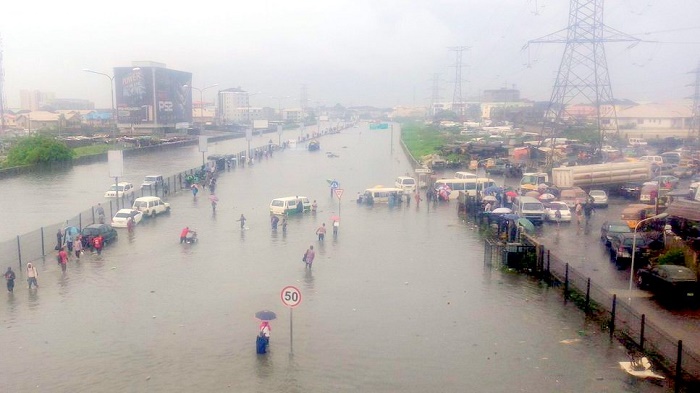
A flooded part of Lagos

“The outlook identified thousands of communities nationwide as vulnerable and urged early preparedness to reduce losses,” Olatunde said.

He stressed the need for proactive disaster risk reduction to prevent loss of lives, displacement, and destruction of property during the peak season.

Olatunde attributed recurring floods largely to human activities, including blocked drainage systems, indiscriminate waste disposal, and construction on natural waterways.

He advised residents to regularly clear gutters and drains to ensure free flow of water and avoid dumping refuse in canals and drainage channels.

He urged people in flood-prone areas to relocate to safer grounds and called on community leaders to promote awareness and enforce environmental compliance.

He also advised households to prepare emergency plans, protect valuable assets, and stay updated with weather forecasts and early warning alerts.

Olatunde warned motorists and pedestrians against moving through flooded areas, citing serious risks to life and property.

He appealed to residents to take warnings from NiMet and NiHSA seriously to minimise the impact of flooding.

“Prevention is far cheaper and better than cure,” he added.

Gov. Babajide Sanwo-Olu during the launch of its flood insurance cover for Lagos in March 2026, warned that inaction on climate change could cost the wider state government around $40 billion by 2050.

By Fabian Ekeruche

CAPPA to govt: Strengthen democratic institutions, tackle insecurity, deliver economic justice

0

Ahead of the 2027 general elections, Corporate Accountability and Public Participation Africa (CAPPA) has called on all tiers of government, electoral authorities, and political actors to take concrete steps to safeguard the country’s democracy, ensure credible elections, and address the worsening socio-economic and security crises confronting millions of Nigerians.

In a statement issued over the weekend in Abuja after a meeting of its board, the organisation warned that Nigeria’s democratic future depends not only on periodic elections, but on the integrity of the processes leading up to them, the transparency of institutions, and the protection of citizens’ rights to freely participate without fear or violence.

Akinbode Oluwafemi
CAPPA’s Executive Director, Corporate Accountability and Public Participation Africa (CAPPA) Akinbode Oluwafemi

The CAPPA board stressed that for the 2027 elections to command legitimacy, they must be free, fair, inclusive, and conducted in an atmosphere devoid of violence, voter suppression, and politically-motivated intimidation.

“Nigeria cannot afford another electoral cycle marred by irregularities, hate-speech, and loss of public trust,” the organisation noted. “The credibility of the elections will depend on the resolve of government at all levels, institutions, and political actors to uphold the rule of law.”

It urged the Independent National Electoral Commission (INEC) and security agencies to begin early preparations to guarantee electoral transparency and ensure that every vote counts. It also challenged the judiciary to stand firm against any overtures aimed at subverting the will of the people.

It further emphasised the need to curb the influence of money in politics, warning that vote-buying and the capture of democratic institutions by powerful interests undermine public trust and weaken governance outcomes. CAPPA called on political parties to uphold internal democracy, noting that the absence of due process within party structures fuels conflict and destabilises the broader democratic and electoral environment.

“As Nigeria prepares for its next general elections, this is a critical moment to reset national priorities,” CAPPA added. “The government and all stakeholders must show genuine commitment to democratic principles, economic justice, and the protection of human life. Anything less risks deepening public disillusionment.”

The board also expressed grave concern over the deteriorating state of security across the country, pointing out that despite consistently high budgetary allocations to the security sector, many Nigerians continue to face daily threats to their lives and livelihoods.

“It is deeply troubling that senseless killings, kidnappings, and violent attacks persist across various parts of the country, despite the enormous public resources committed annually to security,” CAPPA said. “Even more alarming is that ransom payments have become routine, with Nigerians forced to negotiate with violent actors in the absence of effective state protection.”

The organisation called for a comprehensive review of Nigeria’s security architecture, and a people-centred approach that centres intelligence gathering, community engagement, and justice for victims.

On the economy, the CAPPA board lamented that recent policy measures, including the removal of fuel subsidy and increased allocations to subnational governments, have yet to translate into meaningful relief for ordinary Nigerians. Instead, many households continue to grapple with rising inflation, food insecurity, unemployment, and declining purchasing power.

“While fiscal reforms are often necessary, they must not come at the expense of the most vulnerable,” it stated. “The expected gains from subsidy removal and increased revenues must be transparently managed and equitably distributed to create jobs and reduce poverty.”

The CAPPA board urged the federal government and state authorities to demonstrate greater accountability in the use of public funds, invest in critical social infrastructure such as healthcare, education, and water systems, and implement policies that protect citizens from the harsh impacts of economic reforms.

The board reaffirmed CAPPA’s commitment to working with civil society, communities, and the media to promote accountability and public participation in governance processes.

Flood alert: HEDA warns of rising national risks, FENRAD seeks urgent preparedness

The Executive Secretary, Human and Environmental Development Agenda (HEDA Resource Centre), Mr. Suleiman Arigbabu, has warned of rising national risks due to the recent flood alert by the Nigeria Hydrological Services Agency (NIHSA).

Arigbabu gave the warning in an interview on Sunday, April 19, 2026, in Lagos.

NIHSA recently released its 2026 Annual Flood outlook, predicting flooding across many parts of the country at different periods.

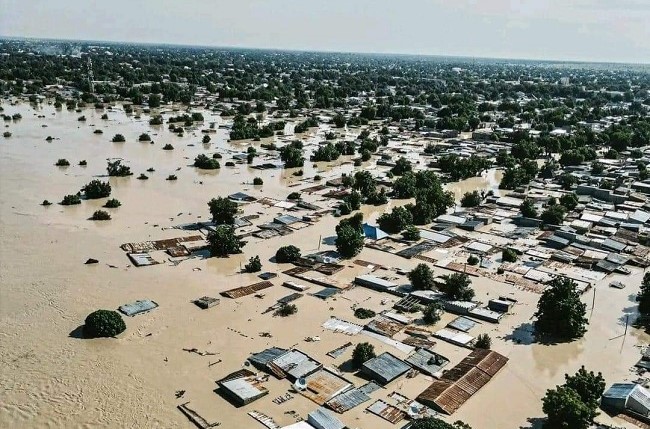
Flooding in Maiduguri

Arigbabu said the forecast reflects historical trends, noting the agency’s predictions have recorded over 80 percent accuracy in recent years.

He attributed flooding to climate change and human activities, warning that the crisis will persist without urgent intervention.

Arigbabu said increased rainfall intensity and frequency are causing rivers to overflow, leading to flash floods and widespread inundation.

He identified poor drainage systems and weak flood management as major contributors to urban flooding.

He added that indiscriminate waste disposal continues to block drainage channels in cities such as Lagos and Port Harcourt.

Arigbabu decried the destruction of wetlands, noting their critical role in absorbing excess water and reducing flood impact.

He also highlighted deforestation as a factor, reducing the land’s natural ability to manage water flow.

According to him, failure to desilt dams and drainage systems has reduced their capacity, making even moderate rainfall cause flooding.

He noted that recurring floods over decades reflect neglect and inadequate investment in preventive infrastructure.

Arigbabu warned that flooding has the capacity to affect communities, businesses, and government projects across the country.

He said capital projects under the 2026 budget may face delays or damage due to heavy rains.

He added that flooding could displace residents, disrupt livelihoods, and increase the spread of diseases.

Arigbabu warned of rising food insecurity, limited healthcare access, and greater vulnerability among women and children.

The expert called for improved infrastructure, better environmental management, and responsible waste disposal.

He urged government and citizens to change attitudes to reduce flooding and its impacts.

In a related development, the Foundation for Environmental Rights, Advocacy & Development (FENRAD Nigeria), an environmental justice campaign group, has expressed concern over the recent flood alert issued by the Federal Government of Nigeria, projecting widespread flooding across several states, including Abia State, during the 2026 rainy season.

In light of this development, FENRAD is calling for immediate preparedness, proactive mitigation, and intensified community engagement, particularly in Aba and other flood-prone communities across Abia State.

Over the years, Aba, Nigeria’s commercial nerve centre in the South-East, has experienced recurrent flooding due to poor drainage systems, unregulated urban expansion, and indiscriminate waste disposal. With forecasts indicating heavy rainfall between April and November, and peak flooding between July and September, urgent action is required to avert loss of lives, displacement, and destruction of livelihoods.

High-Risk Areas in Aba and Environs

FENRAD identifies the following communities and locations in Aba as particularly vulnerable to flooding:

Aba South LGA: Ariaria, Cemetery Road, Ngwa Road axis, Eziukwu, Waterside (Ogbor Hill), and Asa/Ndiegoro areas

Aba North LGA: Ogbor Hill, Osusu, Uratta, World Bank Housing Estate, and Umuola axis

Other Flood and Erosion-Prone Areas in Abia State

Beyond Aba, several communities across Abia State remain highly vulnerable due to active erosion sites and poor drainage infrastructure. They include:

Umuahia: Amuzukwu, Isi Gate axis, and surrounding communities

Isuikwuato LGA: Uturu and adjoining communities facing severe gully erosion

Ugwunagbo & Ukwa West LGAs: Riverine communities prone to seasonal flooding

Obingwa LGA: Mgboko, Owoahiafo, Ntigha, and adjoining settlements

These areas have recorded repeated ecological challenges, worsened by climate change impacts and weak enforcement of environmental regulations

FENRAD’s Call to Action

FENRAD calls on:

1. Abia State Government and Local Authorities: To urgently desilt and clear drainage systems, enforce environmental sanitation laws, strengthen urban planning compliance, and invest in resilient infrastructure.

2. Community Leaders, Youth Groups, and Residents: To intensify grassroots sensitization, promote proper waste disposal practices, identify safe evacuation routes, and actively participate in community-based flood preparedness initiatives.

3. The National Emergency Management Agency (NEMA) and Abia State Emergency Management Agency (SEMA): To scale up early warning dissemination, deploy emergency response teams, and pre-position relief materials in vulnerable communities.

4. Civil Society Organisations and Development Partners: To support public awareness campaigns, climate adaptation strategies, and humanitarian interventions, particularly for at-risk populations.

5. Media Organisations: To sustain public enlightenment efforts and ensure timely dissemination of verified information on flood risks and safety measures.

Conclusion

As an environmental justice campaigner and advocate for sustainable development, FENRAD emphasises that flood disasters can be significantly mitigated through proactive planning, responsible environmental practices, and strong community engagement.

The organisation reiterates that environmental protection, climate resilience, and sustainable urban management are critical to safeguarding lives and livelihoods in Abia State and beyond.

FENRAD says it remains committed to collaborating with government institutions, communities, and stakeholders to promote accountability, environmental sustainability, and disaster risk reduction.

“The time to act is now. Preparedness today will save lives tomorrow.”

Shell/NNPC, partners deliver Geosciences Centre of Excellence at Lagos varsity

0

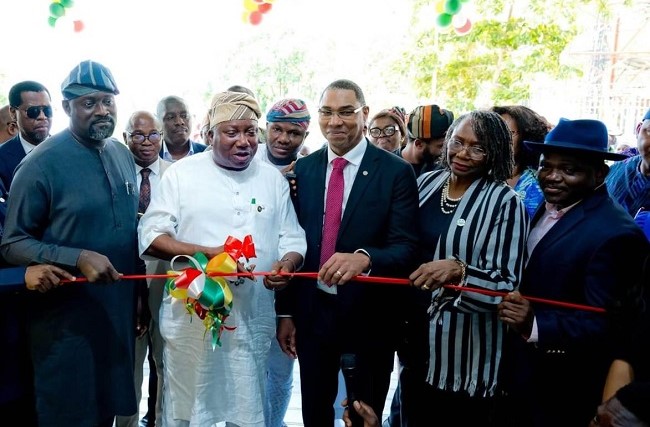
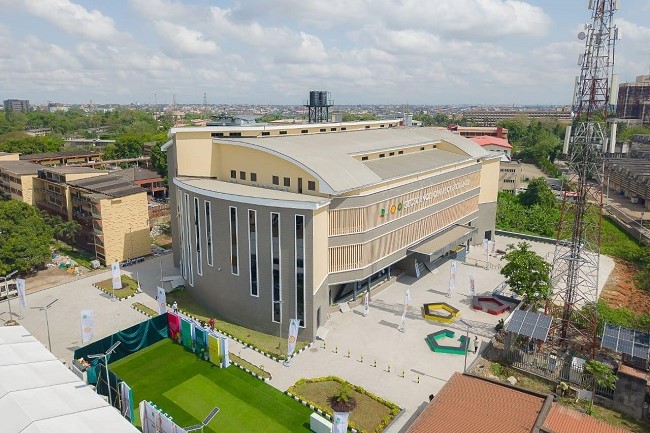
Shell Nigeria Exploration and Production Company Limited (SNEPCo) has teamed up with the Nigerian National Petroleum Company Limited (NNPC) and the Nigerian Content Development and Monitoring Board (NCDMB) to deliver a Geosciences Centre of Excellence at the University of Lagos, a world-class learning and research hub in a critical sector of the economy.

The centre which was commissioned on Friday, April 17, 2026, is an impressive five-level structure equipped with state-of-the-art learning and research facilities, including facilities for research in hydrogeology, mineralogy and environmental geology, a seismic laboratory and seismic interpretation room as well as a library and digital museum.

Shell/NNPC
L–R: Chief Investment Officer, NNPC Upstream Investment Management Services Ltd (NUIMS), Mr Olanrewaju Igandan; Lagos State Honourable Commissioner for Tertiary Education, Mr Tolani Sule; Managing Director, Shell Nigeria Exploration and Production Company Limited (SNEPCo), Mr Ronald Adams; Vice‑Chancellor, University of Lagos, Professor Folasade Ogunsola; and Director, Capacity Building, Nigerian Content Development and Monitoring Board (NCDMB), Engr Abayomi Bamidele, during the inauguration of the University of Lagos Geosciences Centre of Excellence, Lagos

The facilities are designed to support undergraduate and postgraduate studies and help to reduce the reliance of the Nigerian oil and gas industry on international markets for testing, training and research.

“This Centre represents a long-term investment in Nigeria’s greatest asset – its people,” said SNEPCo Managing Director, Ronald Adams, at the ceremony.

Lagos State governor, Babajide Sanwo-Olu, who was represented by Commissioner for Tertiary Education, Tola Sule, said: “The building will create an environment where students don’t just learn by textbooks but by doing.”

Chief Upstream Investment Officer of the NNPC Upstream Investment Management Services, Olanrewaju Igandan, described the handover of the Centre of Excellence as “a testament to what can be achieved when industry, regulators and the academia work together with a shared vision for national development.”

Executive Secretary NCDMB, Felix Ogbe, was represented at the handover ceremony by Director, Capacity Building, Abayomi Bamidele. He said: “The success of this centre will not be measured by its structure, but by its impact. The number of skilled graduates produced. The quality of research it generates. The solutions it provides to industry challenges.”

Shell
The University of Lagos Geosciences Centre of Excellence is a purpose‑built facility for learning, research and industry collaboration. It was constructed and equipped by the Nigerian National Petroleum Company Limited and Shell Nigeria Exploration and Production Company Limited in partnership with the Nigerian Content Development and Monitoring Board

Vice Chancellor, University of Lagos, Prof. Folasade Ogunsola, highlighted expectations from the facility.

“It will provide advanced analytical, interpretative, and research services that meet international standards as well as offer degree programmes, customised short courses, professional certifications, and executive training programmes tailored towards the needs of industry, government agencies, and international partners,” she said.

The project, which was originally conceived in 2010, was executed by an indigenous company, 225MM Construct Limited. Students from the University of Lagos, Obafemi Awolowo University in Ile Ife, University of Ilorin and Yaba College of Technology served on internship during construction, thereby gaining technical experience and exposure to project execution.

The establishment of the Centre of Excellence is the latest milestone in a wide-ranging support for education by SNEPCo and its partners which involves award of scholarships, donation of science laboratories to secondary schools across Nigeria and the construction of E learning centres at universities in Delta, Enugu, Edo and Bayelsa states.

UN-Habitat boosts water supply, sanitation in Niger communities

The Niger State Ministry of Water Resources says interventions by the United Nations Human Settlements Programme (UN-Habitat) have significantly improved water supply, sanitation and hygiene services in parts of the state.

The Permanent Secretary of the ministry, Alhaji Akilu Kuta, said this in Minna, the state capital, while assessing the impact of the agency’s projects on benefiting communities.

Kuta explained that the ministry was responsible for policy formulation, implementation and supervision of agencies under it, particularly in the delivery of water supply and sanitation services.

Mohammed Umar Bago
Gov. Mohammed Umar Bago of Niger State

He, however, noted that the sector continued to face challenges, especially theft and vandalism of facilities.

“UN-Habitat has intervened in several areas in the provision of water, as well as in the promotion of sanitation and hygiene.

“The intervention has impacted positively in towns and villages such as Gwada, Beji, Tungan Malam, Kateri and Mariga,” he said.

Kuta commended the organisation for its sustained support to the state.

Earlier, the Head of Sanitation, Niger State Water and Sewage Corporation, Hajiya Sadiya Suleiman, described Kpakungu community as densely populated with inadequate sanitation facilities.

She said the community had previously recorded frequent disease outbreaks due to poor hygiene and limited access to potable water.

According to Suleiman, the provision of solar-powered boreholes and modern toilet facilities has improved water supply and reduced open defecation.

“Before now, there was prevalence of diseases, including cholera, but with these facilities, hygiene practices have improved and disease outbreaks have reduced,” she said.

Some residents of Kpakungu also attested to the positive impact of the intervention.

Mrs. Mutiat Hussaini said infections were common in the past due to lack of access to water, but the situation had improved with the new facilities.

Similarly, Mrs. Ramat Hamza said residents now had access to clean water and functional toilet facilities.

The Ward Head of Kpakungu, Alhaji Tanko Ibrahim, said the intervention had curbed open defecation and improved overall hygiene in the area.

Another resident, Danasabe Mohammed, said the project had reduced the presence of mosquitoes and flies, while improving environmental sanitation.

He appealed for more interventions to sustain the gains recorded.

In his remarks, Ahmadu Yakubu said the community previously relied on wells and water vendors at high cost, adding that indiscriminate defecation was widespread.

Yakubu said the intervention had brought significant behavioural change, improved hygiene and reduced minor illnesses.

He added that the community actively participated in the construction of the facilities and commended UN-Habitat for the initiative.

By Rita Iliya