Home Blog

Farmers laud 57 new crop varieties, stakeholders project 20,000 jobs from climate-smart agric plan

The All Farmers Association of Nigeria (AFAN), Lagos State Chapter, has lauded the Federal Government’s approval of 57 crop varieties to strengthen agricultural productivity in the country.

The Lagos State AFAN Chairman, Mr. Sakin Agbayewa, disclosed this in an interview on Wednesday, April 8, 2026, in Lagos.

In March 2026, the Nigerian Federal Government approved 57 new improved crop varieties to boost food security, improve nutrition, and strengthen agricultural productivity.
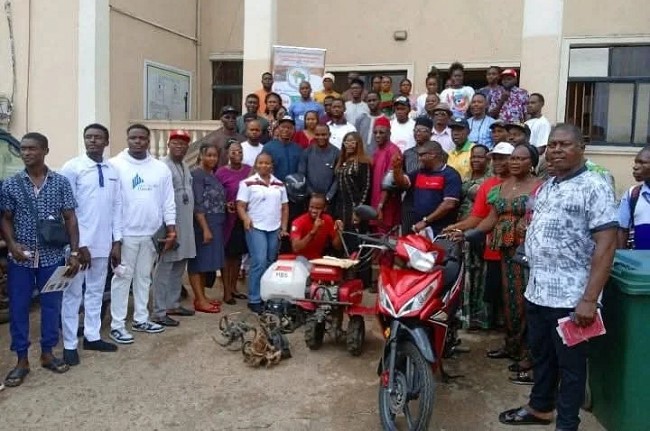
Anambra State
Participants at the sensitisation programme at Nnewi North Local Government Area of Anambra State

The crops, selected for early maturity, higher yields, and resistance to pests and diseases, include 14 different types of staples, with notable advancements in rice, maize, yam, soybean, and plantain.

Agbayewa noted that the approval of the crop varieties would help improve the yields of farmers in the state.

“We are excited to hear about the 57 new varieties of crops recently approved.

“What we desire currently in crop farming is not just about planting, it is about increased yield.

“A farmer can have a plot of land and have a high yield and another can have big plots of land and have a low yield.

“So, if when are talking about food security, it starts from the varieties you are planting and it starts from the seedlings.

“Improved seed varieties as well as improved seedlings will always give you higher yield on minimal land.

“You can barely imagine the higher yield farmers with larger land size will get with an improved seedling varieties,” Agbayewa said.

He described the introduction of the crops as a new development for crop cultivation.

“So, for us as an association, the introduction of the 57 crop is a good development for crop cultivation.

“It will help to curb the food insecurity we are talking about and shortage of food in the near future. It is a good one.

“This newly approved 57 crop varieties should however be popularised among local farmers because not everyone is aware of this latest development.

“There are a lot of issues currently affecting the cultivation of crops and the development of improved crop varieties will help the farmer’s productivity.

“Issues such as climate change effects, inconsistent rainfall patterns and weather clash among others are affecting farmers’ yield.

“So, what we want now is to have improved crop varieties that will give us higher yield,” he said.

Agbayewa said there should be massive advocacy of the approved crop varieties across the board for farmers.

“There should be a massive advocacy of the approved crop varieties across the board so that our farmers will be able to eat from their sweat and at the same time save the nation.

“We are excited that this new crop varieties was done in Nigeria and not by foreigners. It shows that our researchers are now waking up.

“The government is now waking up to their responsibility.

“So, we are now growing our own and eating our own varieties, which is good. And we are calling for more research like this to be done.

“With more research done, we will no longer be scared of genetically modified crops that will affect our people,” he said.

In a related development, stakeholders in Anambra State have said that effective implementation of climate-smart agriculture and bamboo development strategies could generate over 20,000 jobs for youths and significantly boost the state’s economy.

The stakeholders made the assertion at a sensitisation programme held at Nnewi North Local Government Area of Anambra on Wednesday.

The programme, themed “Sowing Seeds, Growing Future,” was organised by the Nigeria Youth Parliament in collaboration with the Sahelian Institute for Bamboo Research and Entrepreneurial Development (SIBRED).

Delivering the keynote address, former Commissioner for Agriculture, Dr Forster Ihejiofor, said a structured investment in bamboo and climate-smart agriculture could transform rural economies and tackle environmental challenges.

According to Ihejiofor, climate-smart agriculture rests on three pillars – productivity enhancement, climate adaptation and mitigation.

He proposed a phased implementation roadmap from 2026 to 2030, including statewide awareness campaigns, pilot youth demonstration farms and establishment of bamboo plantation clusters across the three senatorial zones in the state.

“If fully implemented, this initiative will reduce erosion impact across vulnerable communities, create more than 20,000 youth jobs, improve food security and raise rural incomes.

“It will also strengthen the state’s internally generated revenue through value chain development and export opportunities

“Bamboo is ‘Anambra’s green gold’, with wide applications ranging from erosion control and land restoration to construction, furniture, renewable energy and international trade.

“The opportunities in bamboo alone can reposition the state economically while addressing pressing environmental concerns,” he said.

In his remarks, the Vice-Chancellor of Nnamdi Azikiwe University, Prof. Joseph Ikechebelu, represented by Prof. Kingsley Ubaoji, said the initiative aligned with efforts to rekindle youth interest in agriculture.

He emphasised the need for government and stakeholders to invest in the sector to reduce dependence on imported food.

Also speaking, the Permanent Secretary, Anambra Ministry of Agriculture, Mrs. Ifeyinwa Uzoka, called for stronger commitment to organic farming to promote healthy living.

Uzoka warned against harmful practices in food processing, such as the use of detergents in cassava and dye in palm oil, urging stakeholders to prioritise agriculture in their community development plans.

She also highlighted a proposed Public-Private-Community Partnership initiative with Honda Agro and Power Products to support farmers, encouraging participants to leverage the opportunity.

Earlier, Mr. Chibuike Obiwuzie, lawmaker representing Anambra South in the Nigeria Youth Parliament, said the programme was designed to empower youths in the zone to take advantage of opportunities in agriculture.

Another speaker, Dr John Ogbodo, Director of SIBRED, underscored the importance of youth engagement in bamboo entrepreneurship.

The event featured a field demonstration of Honda Motorised Back Sprayer and Tiller equipment. 

By Mercy Omoike and Lucy Osuizigbo-Okechukwu

NCDMB to feature ex-NIMASA DG, Dakuku Peterside, in Book Reading Session

0

The Nigerian Content Development and Monitoring Board (NCDMB) has concluded plans to host the fourth edition of its Quarterly Book Reading Programme, featuring renownedleadership expert and former Director General of Nigerian Maritime Administration and Safety Agency (NIMASA, Dr. Dakuku Peterside.

The book reading session will hold on Wednesday, April 15, 2026, at the Nigerian Content Tower, Yenagoa, Bayelsa State.

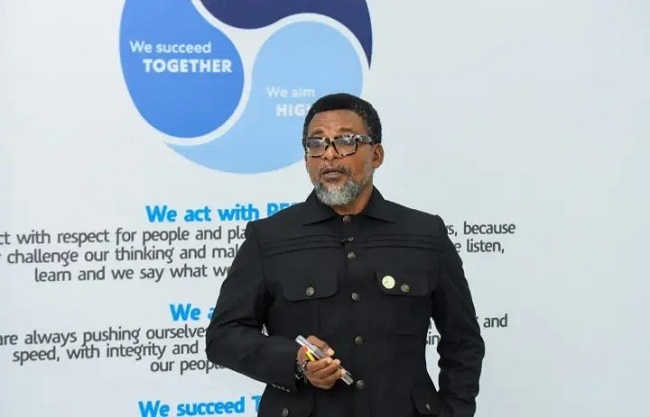
Dakuku Peterside
Dr. Dakuku Peterside

The programme is part of NCDMB’s sustained effort to promote literacy, critical thinking, and knowledge exchange through structured engagement with leading Nigerian authors and thought leaders. Since its start in August 2014, the book reading series has served as a platform for intellectual discourse on thematic subjects, while reinforcing NCDMB’s commitment to human capital development beyond the oil and gas sector.

This edition will focus on Dr. Peterside’s book Leading in a Storm, which explores practical approaches to leadership in times of uncertainty, crisis, and institutional change. Participants will engage with the author through a reading session, an interactive question-and-answer segment, and a book signing, providing a direct interface between the author and a diverse audience of professionals, industry stakeholders, and emerging leaders.

Dr. Peterside is recognised for his work in crisis leadership, public sector reform, and organisational transformation. With over 24 years of leadership experience across both public and private sectors, he has led complex institutions and driven reforms aimed at improving performance and accountability. His contributions to leadership development have earned recognition from global scholars and practitioners, with Leading in a Storm described as a practical guide for navigating complex leadership challenges. The book was also named Book of the Year 2025 by THISDAY newspaper, further cementing its relevance in contemporary leadership discourse.

Beyond his professional engagements, Dr. Peterside serves as an adjunct lecturer at leading business schools, where he mentors emerging leaders and shares insights from his extensive experience. He is also the author of other publications and continues to contribute to leadership thought through research, writing, and advisory roles.

Speaking on the essence of the book reading programme, the General Manager, Corporate Communication NCDMB, Dr. Obinna Ezeobi, pointed that the programme seeks toencourage learning, innovation, and value-driven leadership. He referenced the Board’s capacity building mandate, highlighting that the agency views the engagements as critical to building a knowledge-based society and strengthening the capacity of individuals to respond effectively to evolving economic and institutional challenges.

Ezeobi further disclosed that this fourth edition is expected to attract a wide range of participants, including professionals from the oil and gas industry, academia, government institutions, students, media, and the public.

In his words, “this programme will provide an opportunity for meaningful dialogue on leadership, resilience, and transformation, while advancing the Board’s broader objective of fostering intellectual growth and national development.”

Some of the authors who have featured in the book reading programme have included former Editor of The PUNCH Newspaper, Mr. Dayo Oketola, who authored “The Catalyst: Nigerian Tech Evolution Through a Journalist’s Lens,”

the Senior Vice-chairman and Editor-in-chief at Leadership Newspaper, Mr. Azu Ishiekwene, was the first guest on the platform in the August 2024 edition, where he shared insights from his book, Writing for Media and Monetising It. King Bubaraye Dakolo, the Ibenanaowei of Ekpetiama Kingdom, Bayelsa State has also shared his book, The Pirates of the Gulf

LASEPA seeks data-driven reporting, sustainability in environmental practice

0

The Lagos State Environmental Protection Agency (LASEPA) has called for a transition from bulky environmental documentation to data-driven, performance-based reporting to enhance compliance, transparency and access to environmental financing.

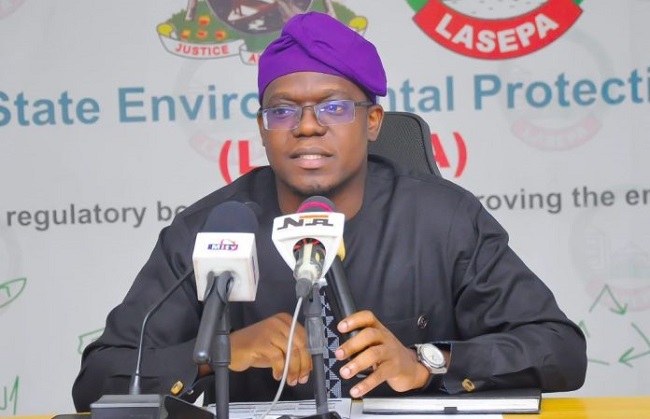
General Manager of LASEPA, Dr Babatunde Ajayi, made the call during the 2026 annual training for environmental consultants on Wednesday, April 8, 2026, in Lagos.

Ajayi stressed the critical role consultants play in regulatory enforcement.

Dr Babatunde Ajayi
General Manager, LASEPA, Dr Babatunde Ajayi

Ajayi described environmental consultants as “pillars that hold the monitoring framework in place.”

He noted that government alone cannot effectively address environmental challenges without strong private sector collaboration.

Ajayi observed that the current number of consultants was insufficient to meet the expanding scope of environmental monitoring across the state.

He urged experienced professionals, including retired directors, to transition into consultancy roles to strengthen capacity.

He also emphasised mentorship, encouraging senior practitioners to groom younger professionals to sustain industry growth and expertise.

Highlighting ongoing reforms, Ajayi said the agency has fully digitised its operations, including consultant registration and report submissions through an online portal.

According to him, the system enables performance tracking, report verification and detection of duplicated or substandard submissions using automated tools, warning against copy-and-paste reporting.

He disclosed that Lagos has launched a carbon registry to track emissions and support sustainability reporting across industries.

He noted that the initiative would position companies to access climate finance and sustainability-linked funding.

Ajayi stressed that financial incentives would drive compliance, adding that businesses are more likely to adopt environmental standards when tied to funding opportunities.

He said financial institutions were increasingly prioritising companies that demonstrate measurable sustainability performance.

The agency, he added, plans to introduce performance-based rankings and awards for environmental consultants to promote quality reporting.

In her goodwill message, Prof. Kehinde Olayinka, an expert in analytical Chemistry at the University of Lagos, urged environmental consultants to move beyond documentation and focus on addressing the root causes of environmental pollution.

Olayinka noted that Nigerian companies expanding internationally now face stricter environmental requirements, including environmental audits and impact assessments, particularly when seeking foreign financing.

According to her, many long-standing companies without prior environmental compliance records are now compelled to meet global standards.

Olayinka stressed that environmental practice must go beyond producing reports to integrating sustainability into operations and driving measurable improvements in facilities.

“We need to become change agents,” she said.

She called for greater transparency among companies, host communities and regulators.

She added that adopting practical, locally relevant solutions would help Nigeria transition towards a more sustainable and healthier environment.

Earlier in his address of welcome, Mr. Ibrahim Salau, an environmental consultant, underscored the importance of data in environmental reports.

Salau contrasted reporting, citing cases where companies lost funding due to lack of measurable environmental metrics despite submitting detailed reports with firms that secured funding quickly by presenting concise, data-driven performance indicators.

He noted that the difference lied in clear, traceable metrics rather than the volume of documentation.

Salau said the training aims to equip consultants with the skills to produce reports that support decision-making and attract investment.

The theme of the training is “Beyond Documentation: Integrating Sustainability and Performance Metrics into Environmental Practice.”

By Fabian Ekeruche

Beyond participation: Can African youth transform agriculture?

Africa is home to the youngest population in the world, with over 60 percent under the age of 25. At the same time, agriculture remains one of the continent’s largest employers, engaging 50 to 65 percent of Africa’s labour force and contributing 17 to 30 percent of GDP, making it a critical driver of food security and economic growth.

In recent years, youth engagement has been central to agricultural policy. The African Union’s Malabo Declaration encourages member states to create jobs for young people across agricultural value chains. The African Development Bank’s ENABLE Youth Programme has supported thousands of agripreneurs in more than 30 countries.

Stephen Adeyemo
Stephen Adeyemo

National initiatives such as Ghana’s Youth in Agriculture, Nigeria’s NPower Agro, and Kenya’s Ajira Digital and Agribusiness Fund reflect growing recognition of the role youth can play in driving transformation.

Yet, the reality often falls short. Young people are still mostly engaged as trainees or short-term participants rather than being supported to lead and invest. Many donor-funded projects provide training or small grants but rarely grow into sustainable agribusinesses.

Similarly, government employment schemes often rotate participants without creating long-term career or ownership opportunities. Closing this gap requires moving from temporary involvement to genuine empowerment, giving youth the tools, space, and confidence to become investors, innovators, and system builders in agriculture.

Why Participation Alone Is Not Enough

Across Africa, youth engagement is still largely driven by short-term programs and pilot initiatives. While valuable, these efforts rarely evolve into long-term opportunities or systemic change. According to the Food and Agriculture Organisation (FAO), youth unemployment remains disproportionately high, even as agriculture shows untapped potential across entire value chains. This disconnect reveals a deeper issue: young people are rarely integrated into the structural and economic fabric of agricultural systems.

Moreover, youth engagement is too often confined to primary production, overlooking opportunities in processing, logistics, input supply, market systems, data services, and agribusiness innovation. Agriculture is far broader than farming, and Africa’s youth are far more than labour. Limiting youth to production sidelines the creativity and entrepreneurial capacity that could energise entire sectors.

The Systems Gap

The biggest barrier is not ambition. A young entrepreneur may complete a promising agribusiness programme but still lack the capital to start or expand a venture. Another may possess strong technical skills but encounter regulatory barriers or limited market access. These gaps hinder youth initiatives from developing into sustainable enterprises.

Robust and integrated systems are critical to link training with financing, policy with implementation, and innovation with market opportunities. Without alignment, the potential and drive of young people are unlikely to translate into sustained, measurable impact.

As Ndidi Nwuneli notes in her Stanford Social Innovation Review article, “Creating a Level Playing Field for Social Innovators in Africa”, transformation depends on the creation of inclusive systems that enable local innovators to lead. When the ecosystem is uneven, potential alone cannot drive change.

From Labour to Leadership

Many young people are still positioned at the lowest levels of agricultural value chains. While trained in production or value addition, they often lack access to the support systems needed to establish, grow, and sustain viable enterprises.

Yet young people are already demonstrating leadership and innovation across the continent. They are developing agri-tech solutions, managing input distribution networks, establishing aggregation models, and advancing climate-smart and regenerative agricultural practices. These successes have largely been achieved despite systemic constraints, rather than because of enabling ecosystems.

Unlocking youth potential requires creating structured pathways that enable their transition into leadership roles. This includes addressing barriers to land, finance, and markets, while expanding opportunities for mentorship, professional networks, and tailored business development support to foster sustainable and scalable youth-led enterprises.

Rethinking Youth Engagement

Moving beyond participation requires deliberate shifts across three dimensions:

  1. From Programmes to Pathways
    Youth-focused initiatives should evolve beyond one-off interventions toward structured, end-to-end pathways linking skills development with finance, mentorship, and viable market opportunities. For instance, maize farmers trained on improved production can be connected to input financing, aggregation platforms, and structured off-take agreements with processors. Similarly, youth engaged in soybean processing can receive business support, equipment financing, and market linkages.
  2. From Access to Ownership
    Providing access alone is insufficient. Young people must be empowered to own and lead agribusinesses and influence value chains. In cassava, this could mean managing seed enterprises, operating aggregation centres, and engaging directly with processors through supply agreements. In yam production, youth can lead seed multiplication, manage distribution networks, and participate in platforms that set standards and pricing. Opportunities for representation in cooperatives, value chain platforms, and policy dialogues further amplify youth impact.
  3. From Fragmentation to Ecosystems
    Sustainable impact requires coordination across policy, finance, markets, and innovation. In dairy, youth-led milk aggregation thrives when government policies align with private investment in collection centres and cold chain infrastructure. For potatoes, linking seed system support with storage and processing investments opens reliable market pathways. Integrated systems allow youth-led businesses not just to survive, but to scale.

A Call for Intentional Action

Africa’s youth are ready to innovate, build, and lead in agriculture, but potential alone is not enough. Without deliberate systems, pathways, and support, promising ideas stall before reaching scale. Governments, development partners, and private sector actors must coordinate to:

  • Move beyond short-term programs to structured pathways linking skills, finance, and markets
  • Ensure youth have a voice in decision-making, investment planning, and policy design
  • Connect innovation to networks, mentorship, and resources that allow ideas to thrive

By positioning young people at the centre of agricultural ecosystems, Africa can foster a more dynamic, inclusive, and sustainable food future. The question is no longer whether youth should be engaged, but how rapidly systems can be designed to enable them to lead and drive transformation.

By Stephen Adeyemo

Mr. Adeyemo is an Analyst at Sahel Consulting Agriculture and Nutrition Limited, where he conducts market and industry research, stakeholder engagement, and provides technical support for programme implementation

Lagos consumer protection body links 80% of hazardous products to poor handling

General Manager, Lagos State Consumer Protection Agency (LASCOPA), Mr. Afolabi Solebo, says about 80 per cent of hazardous products stem from poor handling and improper storage.

Solebo disclosed this in a statement issued by Mr. Rufai Adesile, Assistant Director of Public Affairs (LASCOPA), on Wednesday, April 8, 2026, in Lagos.

He urged manufacturers and distributors to strengthen public sensitisation on proper storage and handling to uphold product quality and safety standards.

LASCOPA
Mr. Afolabi Soleb, General Manager, Lagos State Consumer Protection Agency

The general manager advised consumers to remain vigilant by checking labels, expiry dates and overall product quality before purchase.

Solebo said the agency’s Scientific Investigative Research, Monitoring and Enforcement departments work jointly to protect residents from unsafe and substandard products.

“As part of World Health Day activities, the agency conducted enforcement across over 200 stores and supermarkets in Lagos.

“This resulted in the discovery, seizure and removal of significant volumes of expired, substandard and hazardous products from circulation,” he said.

He noted such products pose serious health risks to consumers if left unchecked.

“We will continue to enforce strict compliance with consumer protection laws to safeguard Lagosians from unsafe and substandard products,” Solebo said.

He cautioned against prolonged exposure of plastic-bottled liquids to heat and sunlight, warning of potential chemical leaching.

“Such exposure may compromise product quality and pose health risks to consumers,” he explained.

Solebo advised residents to avoid exposing bottled drinks to sunlight and to refrain from reusing single-use plastic bottles, especially for drinking water.

He assured residents that LASCOPA would intensify enforcement to rid markets of unsafe products and uphold consumer rights.

Solebo urged the public to report consumer rights violations promptly to enable swift intervention.

“Health is not merely the absence of illness, but complete physical, mental and social well-being.

“The choices we make daily on what we eat, drink and use directly impact our overall health,” he said.

By Oluwatope Lawanson

Tinubu inaugurates landmark infrastructure projects in Lagos

0

President Bola Tinubu on Wednesday, April 8, 2026, inaugurated the Ojota-Opebi Link Bridge and two other landmark projects in Lagos State.

The three are among key projects to be inaugurated by the President during his two-day visit to Lagos.

Tinubu, represented by the President of the Senate, Sen. Godswill Akpabio, arrived at the Opebi-Ojota Link Bridge at 1.25 p.m. alongside Lagos State Gov. Babajide Sanwo-Olu.

Lagos projects
L-R: Speaker, Lagos State House of Assembly, Rt. Hon. Mudashiru Obasa; Senator Wasiu Sanni Eshinlokun; Senator Tokunbo Abiru; Governor of Lagos State, Mr. Babajide Sanwo-Olu; President Bola Tinubu represented by the Senate President, Senator Godswill Akpabio; Governors, Dr. Hope Uzodinma (Imo State); Prince Dapo Abiodun (Ogun State) and Senator Douye Diri (Bayelsa State) during the inauguration of the Opebi-Ojota Link Bridge, Multi-Agency Building (Bola Ahmed Tinubu Administrative Complex) and the Lagos State Geographic Information System (LAGIS) in Alausa, on Wednesday, April 8, 2026

The  Opebi-Mende Link Bridge is 5.04km.

The other projects inaugurated by the President on Wednesday are Lagos State Geographic Information System (LAGIS) Building, and Multi-Agency Administrative Complex at Alausa, Ikeja.

The complex will be known as Bola Ahmed Tinubu Administrative Complex (BATAC).

Tinubu said that the projects reflected Lagos State Government’s commitment to development.

He said that the projects were visible, impactful and people oriented.

“These projects undertaken by the administration of Gov. Babajide Sanwo-Olu are not just physical structures.

“They are symbols of purpose. They reflect a government that understands that development must be seen, must be felt and must be experienced by the governed,” he said.

Tinubu said that the Ojota-Opebi Link Bridge was more than a transport project, describing it as a strategic intervention that would improve mobility and boost productivity.

“The Ojota-Opebi Link Bridge is more than a road. It is a bridge to opportunities.

“In a city like Lagos, movement is everything.

“When traffic improves, productivity also improves. When time is saved, businesses grow. When access is made easier, life also gets better,” he said.

He said that the projects showed that Lagos would not be overwhelmed by the pressures of rapid urban growth, but would continue to confront and overcome its developmental challenges.

Tinubu added that Lagos State Government had been delivering infrastructure that aligned with the national vision of a modern and economically strong Nigeria.

“As President and Commander-in-Chief of the Armed Forces, I thank Lagos State Government headed by Gov. Sanwo-Olu assisted by the deputy governor, members of the executive council and the state house of assembly for the honour of naming the administrative complex after me.

“I accept this honour with humility, but let me be clear: this achievement is about a system that is working,” he said.

Tinubu said the Bola Ahmed Tinubu Administrative Complex represented an investment in efficiency, coordination and improved public service delivery.

“It strengthens the government so that government can better serve the people,” he said.

He added that LAGIS Building represented the future of governance, especially in an era where data and transparency were critical to development.

“A modern land administration system is not optional. It is essential.

“It reduces uncertainty, strengthens planning and unlocks economic value. This is how serious societies grow,” he said.

The President said the projects aligned with his broader national development vision of a digitally-enabled, infrastructure-driven and economically-resilient Nigeria.

“This is the standard we must replicate across the country,” he said.

He assured Nigerians that the Federal Government remained committed to investing in infrastructure, strengthening governance and expanding opportunities  for citizens.

“To the people of Lagos, I say that these projects are for you. They are investments in your future. Use them well, protect them and build on them,” he said.

He praised Sanwo-Olu and his team members for discipline, focus and sound financial management.

“You have shown that governance must be about service delivery,” he said.

Sanwo-Olu said at the event that Tinubu’s presence was a symbolic homecoming of a leader whose legacy continued to shape the development trajectory of Lagos State.

The governor noted that his administration had about 416 days left and was determined to sustain momentum in delivering people-centred projects until the last day.

“For us, finishing only makes sense if it is done well. Winding down is not an excuse to slow down or succumb to lower standards.

“On the contrary, it is meant to be an opportunity to ramp up momentum,” he said.

Sanwo-Olu said the three projects inaugurated reflected his administration’s commitment to addressing mobility challenges and improving urban planning and public service delivery in line with its THEMES Plus Agenda.

According to him, the Opebi-Mende Link Bridge is designed to decongest the busy Ikeja-Maryland-Ojota corridor and provide a new direct connection between the Opebi/Allen axis and Ikorodu Road through Odo-Iya-Alaro and Mende.

“The objective is to improve efficiency of traffic circulation with noticeable impact even beyond the immediate environs of the bridge.

“The expected and inevitable result is better quality of life for Lagosians, less stress, greater productivity and more time to spend at home resting with loved ones,” he said.

The governor said the road project included a 2.8km bridge, deck-on-pile structures, walkways and bicycle lanes.

He also said that it featured solar-powered street lighting, embedded service ducts and a comprehensive stormwater management system to tackle flooding on the Odo-Iya-Alaro corridor.

“This was not straightforward build. The terrain there is swampy and prone to flooding, which meant that conventional methods would not suffice.

“What you see, therefore, is the result of careful planning and application of advanced solutions,” he said.

On LAGIS Building, Sanwo-Olu said the facility would digitise land administration in Lagos, eliminate legacy paper-based bottlenecks, and strengthen property rights.

On the Multi-Agency Administrative Complex, Sanwo-Olu said the facility would improve speed, efficiency and coordination in public service delivery.

He said the complex, situated on approximately 2.01 hectares within the Alausa Government Secretariat precinct, comprised four blocks  with over 7,362 square metres of office accommodation.

The governor said the complex also had penthouse conference facilities, a parking space for over 300 vehicles, and fully-integrated mechanical, electrical, fire safety and external infrastructure systems.

“By bringing multiple agencies into a single, well-designed environment, we are enabling integration and responsiveness of public service delivery in Lagos State.

“It is a significant step towards a truly 21st Century, citizen-focused public service,” he said.

Sanwo-Olu said the decision to name the complex after Tinubu was in recognition of his enduring contributions to the institutional development of Lagos State.

“The decision to name this complex after Your Excellency is both deliberate and symbolic.”

The governor acknowledged Tinubu’s support for Lagos and his administration’s interventions in the state, including construction of the Lagos-Calabar Coastal Highway, upgrades at the Murtala Muhammed International Airport, and rehabilitation works at Apapa and Tin Can Island ports.

“Your bold reforms continue to speak loud and clear, even beyond the shores of Nigeria.”

Sanwo-Olu said the state government would intensify investments in infrastructure and institutional reforms in the remaining period of the administration.

Dignitaries at the event included Gov. Dapo Abiodun of Ogun, Gov. Douye Diri of Bayelsa, Gov. Hope Uzodimma of Imo, and Gov. Babagana Zulum of Borno.

Tinubu is expected to inaugurate the Tolu Schools Complex comprising 36 schools at Ajegunle, and Fresh Food Agro Hub in Abijo, Ibeju-Lekki, on Thursday.

By Aderonke Ojediran

Sub-Saharan Africa faces slower growth as U.S.-Iran war raises costs

0

The World Bank on Wednesday, April 8, 2026, cut the growth forecast for Sub-Saharan Africa for 2026 in a report, saying ‌the fallout from the Iran war was stalling the region’s recovery.

The lender now expects growth of 4.1 per cent in 2026, unchanged from 2025 but down from the 4.4 per cent the World Bank forecast in October.

The bank said numbers were revised down since the war in the Middle East ​broke out in late February, pushing up fuel and fertiliser costs and threatening investment flows while ​heavy debt burdens already were a drag on growth.

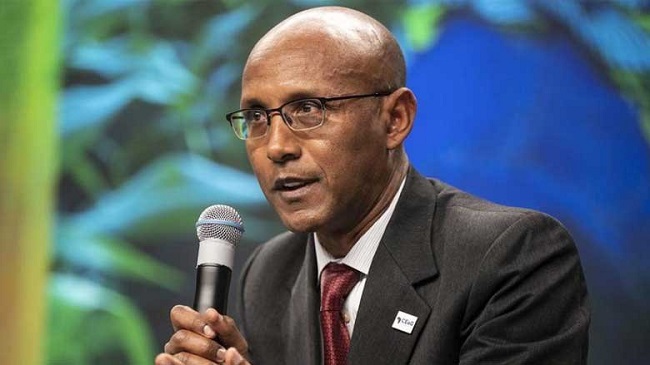
Andrew Dabalen
Andrew Dabalen, World Bank chief economist for Africa

The warning came as ⁠Washington and Tehran agreed to a two-week ceasefire, though the U.S. Energy Information Administration cautioned on Tuesday that fuel ​prices could continue to rise for months even after a reopening of the Strait of Hormuz, through which about ​one-fifth of global oil shipments pass.

Andrew Dabalen, World Bank chief economist for Africa, said the downgrade reflected a much tougher external environment than policymakers had expected in 2025.

“Since then, we have had the Middle East war that is ongoing, and both energy ​and fertilizer prices have risen sharply,” he said during a news briefing, adding the length and scale of ​the disruption was as yet uncertain.

At the same time, uncertainty was growing around investment from Gulf countries, which have become major ‌investors ⁠in Africa, especially in East Africa, in sectors including mining, renewable energy, real estate and ICT.

Remittance flows could also come under pressure if prolonged conflict weakens labour demand in the Middle East, where many African migrants work.

The shock is landing as many governments have little room to respond. Dabalen said debt-servicing costs had doubled from 9 per cent of revenues in 2017 to about 18 per cent in ⁠2025, while about half of African countries were either at high risk of or already in debt distress.

“There is very little scope actually for these countries to deal with this crisis because they just don’t have a lot of fiscal space,’’ he said.

Data for eastern ⁠and southern Africa showed the strain was concentrated in oil-importing and financially vulnerable economies with limited policy room, including Burundi, Malawi, Ethiopia, Kenya and Mozambique.

Kenya could face a sharp inflation shock under severe scenarios, while Ethiopia had about 750,000 ⁠workers in Saudi Arabia alone.

Dangote Refinery affirms petrol price stability, says ‘No increase’

0

Dangote Petroleum Refinery & Petrochemicals has stated that the price of Premium Motor Spirit (PMS) remains unchanged, amid concerns over potential volatility in the downstream market.

A source at the company confirmed that its pricing structure remains intact, with the gantry price at N1,200 per litre and the coastal price at N1,153 per litre.

Dangote Refinery
Dangote Refinery

“We are maintaining our existing price and have not implemented any new pricing for our customers,” the source said.

The source added that the refinery remains focused on ensuring the steady availability of refined petroleum products across Nigeria and the wider African market, reinforcing its role in supporting supply stability.

Middle East crisis: Group urges govts to act, says ‘Fossilflation’ likely despite ceasefire

0

Environmental campaign group, 350.org, has lauded the announcement of a two-week ceasefire between the United States and Iran as a first step, which it says raises concerns over its fragility and limited scope, and leaves the risk of persistently high fossil fuel prices.

According to the organisation, “Fossilflation” – or inflation caused by volatile and rising prices of oil and gas – is still likely to continue, due to the fragility of the ceasefire arrangement and extensively damaged fossil fuel infrastructure. 350.org said that governments must use this opportunity to double down on efforts to protect people from oil and price shocks and accelerate the shift away from fossil fuels. 

Oil reserve
Oil reserve

The campaigners calculated that price spikes due to the Iran war have cost consumers and businesses an additional $104.2–$111.6 billion in the first month of the war alone. They called on governments to tax the windfall profits of fossil fuel companies and to use revenues to directly support consumers and ramp up the deployment of renewable energy. 

Andreas Sieber, 350.org Head of Political Strategy, said: “Even if the Strait of Hormuz reopens and the ceasefire holds, oil and gas prices will stay above pre-war levels and consumers will pay. Volatility remains high, and supply will stay tight due to infrastructure damage and inventory rebuilding. LNG markets are still exposed, with few alternatives to Hormuz.

“This will deepen energy poverty, hunger and inequality. Protecting people means prioritising resilience and affordability now. The ceasefire must become permanent and extend across the whole region. This is not a temporary shock but a structural crisis. The only lasting answer is to replace volatile fossil fuels with homegrown, affordable renewable energy.”

Shell, NNPC boost respiratory care with donation of key equipment to LUTH

0

Shell Nigeria Exploration and Production Company Limited (SNEPCo) and the Nigerian National Petroleum Company Limited (NNPC) have donated an Endobronchial Ultrasound (EBUS) system and a Body Plethysmograph to the University of Lagos Teaching Hospital (LUTH), enabling one of Nigeria’s foremost health institutions to provide advanced diagnostics in pulmonary or respiratory care.

The EBUS system will enable doctors to perform real-time guided biopsies and accurately stage lung cancer – an essential step in determining treatment options and timelines. The Body Plethysmograph facilitates better diagnosis of asthma, restrictive lung diseases and related ailments.

Shell
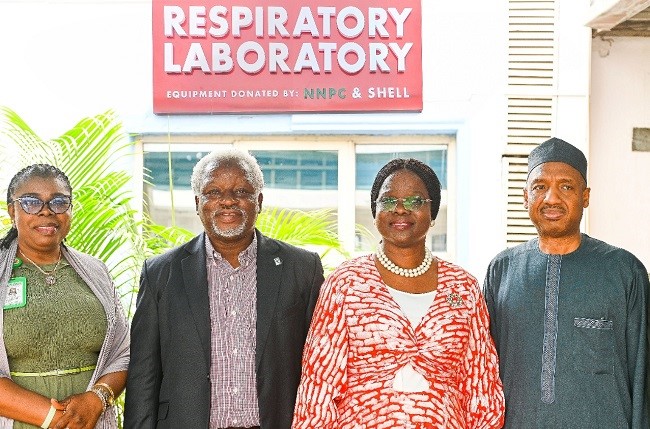
L-R: Director Administration, Lagos University Teaching Hospital (LUTH), Ms Omolola Fakeye; Deputy Chaiman, Medical Advisory Committee, LUTH, Prof. Babawale T. Bello; Manager, External Relations, NNPC Upstream Investment Management Services (NUIMS), Edith Bunmi-Lawson and Shell Nigeria Exploration and Production Company Limited (SNEPCo), Abubakar Ahmed during the donation at University of Lagos Teaching Hospital (LUTH)

“This is more than a donation – it is a shift,” said SNEPCo Managing Director, Ronald Adams, at the ceremony, in a speech read by Abubakar Ahmed, General Manager, Communications.

“It is a shift from constrained diagnostics to evidence-based, technology-enabled respiratory care. It empowers clinicians to practice medicine at the full height of their training and builds institutional capacity that will shape Nigeria’s healthcare landscape for generations,” added Adams.

In a speech, Chief Upstream Investment Officer, NNPC Upstream Investment Management Services (NUIMS), Olanrewaju Igandan, represented by Deputy Manager, External Relations, Edith Bunmi-Lawson, said: “This initiative reflects our belief that sustainable national development goes beyond energy production. It is about improving lives, building resilient institutions and investing in systems that endure.”

The Chief Medical Director, Professor Wasiu Lanre Adeyemo, who was represented by Deputy Chaiman, Medical Advisory Committee of LUTH, Prof. Babawale, described the donation “as a landmark event that provides access to highly specialised Pulmonology care in the public healthcare sector in Nigeria.”

He added: “This donation not only makes advanced Pulmonology care available but also makes it more affordable and convenient to access for Nigerians. We are extremely grateful for your generosity, foresightedness, commitment and trust in our hospital and its Management.”

In addition to boosting respiratory care, the donation will also enable LUTH to become a Pulmonology centre of excellence where patients can access world-class care and trainees in the field can acquire skills, even as the hospital actively participates in Pulmonology research.

The donation is part of a wide range of social investments by SNEPCo/NNPC and co-venturers in education, health and human capital development.