Home Blog

Households pay $12tr a year in hidden fossil fuel costs – Report

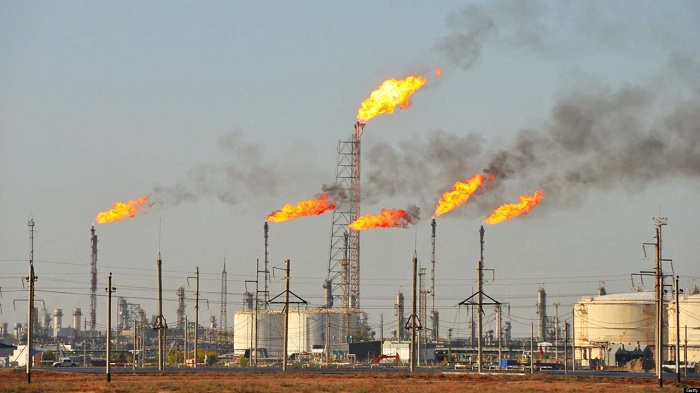
New research by 350.org shows that, on top of soaring energy bills, fossil fuels cost households an additional $12 trillion a year in taxpayer handouts, health impacts and extreme weather damage – equivalent to a $23 million a minute “gift to Big Oil” that costs each person on Earth $1,400 per year. 

In the report “Out of Pocket: How Fossil Fuels are Draining Households and Economies,” the environmental campaign group recalculated IMF estimates on fossil fuel subsidies, uncovering what fossil fuels actually cost society and what governments spend to keep production flowing.

These hidden costs – totalling $12 trillion annually – are “silently siphoning trillions away from household budgets and draining state coffers” while a handful of big corporations make windfall profits from the war in South West Asia. 

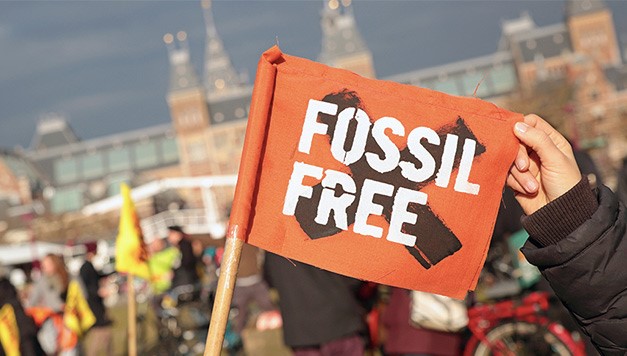
Fossil fuel
Fossil fuel divestment campaign

The report highlights that:

  • Fossil fuels cause $9.3 trillion per year in climate damages and air pollution, higher than IMF estimates. These are social costs that the fossil fuel industry should be charged with but pay nothing for, and which the public shoulders through taxes and out of pocket payments.
  • The $4.1 trillion annual climate undervaluation could finance more than 5,900 gigawatts of new solar capacity – enough to power every home in Africa, South Asia and Latin America combined. 
  • The $12 trillion owed by the fossil fuel industry annually in avoided costs is more than 100 times total global climate finance – or the money the world has committed to help countries respond to the climate crisis.
  • In the first 50 days of the war, over $150 billion has been siphoned from ordinary people to oil and gas companies due to soaring energy prices alone.

As decision-makers from over 50 countries gather for the first international conference on a fossil fuel phase-out in Santa Marta, Colombia this week, 350.org said that leaders have an unprecedented opportunity to put the world on the right path. “Decades of delay have turned every oil price spike into a household emergency and every climate‑fuelled disaster into another withdrawal from the savings of the world’s poorest communities,” the group said. 

350.org is calling on governments to:

  • Tax fossil fuel windfall and corporate excess profits to channel the revenues directly into lowering people’s energy bills.
  • End fossil fuel subsidies and replace them with targeted household support; and invest public money in cheaper, reliable renewables that bring bills down for good.
  • Protect families and businesses from future price shocks by ending fossil fuel expansion and building affordable 100% renewable energy.

Using case studies from Asia, Africa, and the Caribbean, the report also highlights how an alternative energy system is already being shaped. From community‑owned grids, Indigenous‑led wind projects, subnational 100% renewable commitments, and regional subsidy reforms, the great power shift from fossil fuels to people‑centered renewables has already begun.

Bill McKibben, climate activist and 350.org founder, said: “A building El Niño means 2026 and 2027 will set new global temperature records, and that will offer yet more chaos, and yet more reminders that it is the poorest people on earth who must bear most of the cost of this ongoing tragedy.  We have a narrow path out of these crises, and that path has been illuminated by the bombs from this misbegotten war. It would be a waste and a sin not to seize this moment.”

Anne Jellema, 350.org Chief Executive, said: “The economic case for fossil fuels has not just weakened, it has collapsed. Climate chaos and volatile oil prices have pushed ordinary people to a breaking point: unable to afford food, transport, housing or healthcare. Leaders must acknowledge the real costs of fossil fuels and redirect public money where it belongs — into making clean energy a right, not a privilege.” 

Hala Kilani, Head of Energy Diplomacy, REN21, said: “Renewables are not controlled by a few fossil fuel exporting countries. It is abundant, distributed, and affordable. It can stabilize costs and be deployed locally, empowering communities rather than concentrating power. It is a peace, development, and justice solution. It’s high time we transition to reliable, affordable renewable energy.” 

Hilda Flavia Nakabuye, Founder of Fridays for Future Uganda, said: “African families are paying for fossil fuels three times over: through taxes, through rising living costs, and through worsening climate disasters. The fossil fuel system is not a distant global issue; it is something people experience in their daily lives. Public resources are being drained to support this system, while wealth is extracted and exported.

“We must ensure that polluters pay for the damage they have caused to our communities over generations.  We must shift investment towards a system that reduces costs for households, strengthens resilience, and prioritises the people.”

Muhammad Mustafa Amjad, Programme Manager for Renewables First Pakistan, said: “The system is structured in such a way that fossil fuels continue to benefit, even as cleaner and cheaper alternatives become available. Pakistan has imported less fossil fuel but ended up paying more, which shows how deeply flawed the system is.

“We learned how to build an energy system around fossil fuels, and now we must learn how to build one around renewables. This transition is no longer just about economic growth; it is about human survival.Solar energy is not only a source of clean power, but also a driver of economic stability.”

Don urges geographers to deploy maps, data to save Nigeria’s forests

Prof. Adesola Ogidiolu has urged geographers to deploy mapping tools and data-driven approaches to address Nigeria’s worsening forest crisis, stressing that foresters alone cannot tackle the challenge.

Ogidiolu made the call on Tuesday, April 21, 2026, while delivering the 18th inaugural lecture of Prince Abubakar Audu University, Anyigba, Kogi State.

In his lecture titled “Geographer in the Forest: Issues, Concerns and Tasks,” the professor emphasised the urgency of safeguarding forest ecosystems, noting their critical role in sustaining human health and livelihoods.

Prof. Adesola Ogidiolu
Prof. Adesola Ogidiolu delivering the inaugural lecture at the Prince Abubakar Audu University

According to him, forests provide essential services, including water storage, energy supply, income generation and environmental security.

He described a healthy forest as one relatively free of pests, invasive species and pollution, with the capacity to sustain biodiversity and withstand environmental stress.

“A forest may be healthy and still contain unhealthy trees,” he noted.

Ogidiolu identified key threats to Nigeria’s forests, including wildfires, pests and diseases, over-exploitation, poor harvesting practices, weak management systems, uncontrolled grazing, agricultural expansion, urbanisation, invasive species, air pollution, extreme climate events and poverty.

He noted that biotic agents such as insects and diseases account for major annual timber losses, especially in areas where silvicultural practices are weak.

In spite of these challenges, he said forests also present viable solutions.

“Nigerian forests can support second-generation biofuels if sustainably managed, while providing between 20 and 25 per cent of household income for nearby communities as subsistence and safety nets,” he said.

Ogidiolu, however, warned that dense forests in parts of Zamfara, Katsina, Benue, Niger and the South-East have also become hideouts for criminal activities, including banditry and kidnapping.

He stressed that geographers have a critical role to play through the use of geospatial technologies and community-led mapping to identify and monitor hotspots.

The don urged professionals to engage in resource mapping, forest health monitoring, environmental modelling, and the use of Geographic Information Systems (GIS) for surveillance, planning and ecotourism development, as well as policy advisory.

He recommended expanding forest landscapes, restoring degraded areas, achieving zero-net deforestation and strengthening community participation through Forest Protection Communities, while removing administrative bottlenecks.

Ogidiolu also called on policymakers to make Geography a core and compulsory subject from primary to secondary education.

Earlier, the Vice-Chancellor of the university, Prof. Salisu Usman, outlined the inaugural lecture as a major milestone in the institution’s intellectual tradition and the first under his administration.

Usman said the university senate had, on March 25, approved a schedule for 13 additional inaugural lectures within two years, raising the total from 17 to 30 by Oct. 5, 2027.

“Inaugural lectures are defining moments of scholarship, institutional prestige and a meeting point of town and gown,” he said.

The vice-chancellor commended Prof. Sunday Arogba, the first inaugural lecturer and current chairman of the lecture committee, for driving the renewed agenda.

To encourage wider participation, he announced an increase in the lecturer’s stipend from N250,000 to N500,000, describing it as a demonstration of the university’s commitment to rewarding scholarship.

He also praised Ogidiolu as “a living legend” for setting the pace and urged eligible professors to submit proposals to extend the lecture timetable beyond 2027, even if it requires hosting sessions twice monthly.

Usman emphasised the need for innovation, noting that inaugural lectures should evolve into celebrated intellectual events that reflect the nobility of scholarship and enhance the university’s global relevance.

By Stephen Adeleye

Feminist voices demand inclusion, power in critical minerals boom

0

As global demand for critical minerals surges to power the clean energy transition, feminist advocates are raising urgent concerns about who truly benefits from the boom – and who is left behind.

Across mineral-rich regions in Africa, women are calling for a radical shift in how extractive industries operate, demanding justice, equity, and meaningful participation in decision-making.

Dr Mela Chiponda
Dr Mela Chiponda (with dark spects) talks to women during the presentation of a solar cooker to women groups in Bikita, Zimbabwe

At the forefront of this conversation is Dr Mela Chiponda, a prominent eco-feminist scholar and activist who has been vocal about the gendered impacts of mining and energy transitions. She argues that while the world celebrates a “green future,” the realities on the ground for many African women remain deeply unequal.

“The transition to clean energy cannot be built on the same extractive logic that has historically marginalised women,” said Dr Chiponda. “If anything, this moment demands that we rethink power – who holds it, who benefits from it, and how women, particularly at the grassroots, can shape these systems.”

Drawing learning lessons from a renewable energy project in Bikita, Zimbabwe, Dr Chiponda noted the central role women play in driving renewable energy adoption at the grassroots level,

However, across countries in the Southern African Development Community (SADC) and the Great Lakes region, women living in mineral-rich communities continue to face displacement, environmental degradation, and loss of livelihoods. Despite being central to local economies and natural resource management, they are often excluded from negotiations, compensation frameworks, and ownership structures.

Feminist groups argue that the current model of mineral extraction replicates colonial patterns – where resources are extracted for global markets while local communities, especially women, bear the social and environmental costs. Issues such as land rights, unpaid care work, and gender-based violence are often exacerbated in mining zones.

Dr Chiponda emphasised that a just transition must go beyond technical solutions and economic gains to address structural inequalities.

“We cannot talk about sustainability without justice,” she noted. “Women are not just victims of these systems – they are leaders, innovators, and knowledge holders. But their voices must be recognised, resourced, and respected.”

Civil society organisations, including eco-feminist networks, are now pushing for policies that centre women in critical mineral value chains. Their demands include gender-responsive budgeting, community ownership models, protection of land rights, and investment in women-led enterprises. They will be taking the debate at the Women Deliver 2026 conference set to take place from April 24-28 in Melbourne Australia.

There is also growing pressure on governments, multilateral development banks, and private sector actors to adopt feminist principles in their climate and energy strategies. This includes ensuring transparency, accountability, and inclusive participation in all stages of mineral extraction and processing.

While global powers compete for access to Africa’s critical minerals—essential for technologies such as electric vehicles, solar panels, and batteries—the question of justice is becoming impossible to ignore.

Evidence from mineral-rich contexts such as the Democratic Republic of the Congo shows mining is linked to pollution, displacement, child labour, and sexual violence, disproportionately affecting women and children.

For many advocates, the path forward is clear: a transition that is not only green, but also feminist.

“A truly just transition is one where African woman are not an afterthought,” Dr Chiponda said. “They must be at the centre – shaping the future, not surviving its consequences.”

Africa Water Vision: West Africa charts path for water, sanitation reforms

Stakeholders across West Africa have commenced deliberations in Abuja on a new implementation plan to drive water security and sanitation under the Africa Water Vision 2063.

The meeting is convened under the framework of the African Ministers’ Council on Water (AMCOW) in collaboration with the Federal Government of Nigeria, with the aim of aligning regional priorities with Agenda 2063.

The consultation is focused on developing the first implementation plan covering 2026 to 2033 under the Africa Water Vision 2063 and Policy.

Prof. Joseph Utsev
Prof. Joseph Utsev, Minister of Water Resources and Sanitation

It is also expected to define actionable priorities, financing frameworks, and institutional mechanisms for accelerating water and sanitation delivery across West Africa.

Declaring the session open on Tuesday, April 21, 2026, Nigeria’s Minister of Water Resources and Sanitation, Prof. Joseph Utsev, said Africa was at a defining moment in its water and development journey.

“It is with great honour and a deep sense of responsibility that I join you this morning at this opening session of the Western Africa Sub-Regional Ministerial and Technical Advisory Committee consultation,” Utsev said.

He noted that Nigeria was privileged to host the consultation as host of the AMCOW Secretariat and a key partner in Africa’s water agenda.

Utsev said the Africa Water Vision 2063, launched at the 39th AU Summit in Addis Ababa, provides “a bold, transformative and forward-looking framework” for the continent.

He warned that Africa was facing increasing pressure on water resources due to rapid urbanisation and climate variability.

“Yet Africa remains richly endowed with water assets, human capacity and innovative potential capable of driving inclusive growth and sustainable development,” he said.

The minister stressed that the next implementation phase would focus on measurable results between 2026 and 2033.

“This consultation provides West Africa a unique opportunity to articulate its priorities and contribute meaningfully to shaping the first implementation plan,” Utsev added.

He said the plan would strengthen water supply, sanitation services and climate resilience across the region.

“We remain resolute in our commitment to advancing water security, sanitation and climate resilience in line with the Renewed Hope Agenda,” he said.

Earlier, Dr Mukaila Babarinde, the Chairman of the Technical Advisory Committee (TAC), said the meeting marked a critical step in translating policy into action.

“This consultation is a significant milestone in our collective efforts to advance water security and climate-resilient water resources management,” Babarinde said.

He urged delegates to ensure that the implementation plan is practical, inclusive and evidence-based.

“Our technical expertise must guide the development of a roadmap that is responsive to national and regional realities,” he added.

Also speaking, AMCOW official, Mr. Nelson Gomonda, described the adoption of the Africa Water Vision 2063 as a historic achievement.

“This is the first time since 2008 that water and sanitation have been elevated to such a high level on the continental agenda,” Gomonda said.

He said the framework would help Africa speak with one voice ahead of global events such as the 2026 UN Water Conference.

“We believe this is the moment to roll up our sleeves and intensify implementation efforts across the continent,” he said.

Gomonda also urged member states to develop national implementation plans to ensure ownership and accountability.

In his remarks, Mr Kouassi Alexis, Director, Water Resources Management Centre, Economic Community of West African States (ECOWAS) said the region was committed to supporting the vision.

“ECOWAS will spare no effort in supporting the implementation of this vision and its associated policies,” he said.

He noted that the regional body was reviewing its 2008 water policy to address emerging challenges.

“We are currently undertaking a review of this strategic instrument to deliver a more responsive tool by 2027,” he added.

Alexis also announced that ECOWAS would host a regional water forum in Abidjan ahead of the global water conference.

From the African Union Commission, Dr Nyambe Nyambe said the consultation was critical for shaping Africa’s water future.

“We convene at a critical juncture in Africa’s development trajectory,” he said.

Nyambe warned that informal settlements and fast-growing cities were facing severe water and sanitation deficits.

“Access to clean water and sanitation remains uneven and insufficient across many urban areas,” he said.

He stressed that water was essential for industrialisation, agriculture and food production.

“If Africa is to industrialise, we need water. If we are going for agricultural revolution, we need water,” he said.

He also raised concerns over pollution and the need to protect groundwater resources.

“We must ensure that water resources are protected from pollution and properly managed to avoid conflicts,” Nyambe added.

Stakeholders at the meeting emphasised that climate change, population growth and infrastructure gaps remain major constraints to water access.

They called for stronger financing mechanisms, improved governance structures and increased private sector participation.

Delegates also stressed the need for transboundary cooperation in managing shared water resources across West Africa.

The consultation is expected to produce a draft implementation plan for submission to AU policy organs later in the year.

The Africa Water Vision 2063 is a strategic framework guiding continental water policy under the African Union (AU).

It builds on the earlier Africa Water Vision 2025, expanding the horizon to 2063 to align with the AU’s Agenda 2063.

The vision promotes equitable, sustainable management of Africa’s water resources to drive development, peace, and resilience.

By Tosin Kolade

War in Iran causing biggest energy crisis in history – IEA

The conflict between Iran and the United States and Israel is creating the ​worst energy crisis ever faced by the ‌world, the head of the International Energy Agency (IEA) said on Tuesday, April 21, 2026.

“This is indeed the biggest crisis ​in history,” Fatih Birol told France Inter ​radio in an interview broadcast on Tuesday.

“The ⁠crisis is already huge, if you combine ​the effects of the petrol crisis and the ​gas crisis with Russia,” he added.

Fatih Birol
Fatih Birol, Executive Director of the International Energy Agency (IEA)

The war in the Middle East has choked up maritime traffic in ​the Strait of Hormuz, which is a ​conduit for a fifth of global oil and liquefied ‌natural ⁠gas flows.

It has also come on top of the effects of Russia’s war with Ukraine, which had already severed Russian gas supplies to ​Europe.

Birol had ​said earlier ⁠this month that he viewed the current situation in global energy ​markets as worse than previous crises in ​1973, ⁠1979, and 2022 combined.

In March, the IEA agreed to release a record 400 million barrels of ⁠oil ​from strategic stockpiles to ​combat rising oil prices caused by the U.S.-Israeli war with ​Iran.

Africa needs $30bn to tackle water crisis by 2030 – AU official

0

The African Union (AU) says the continent needs at least $30 billion by 2030 to close its water and sanitation gap and accelerate progress towards Sustainable Development Goal 6 on universal access to clean water and sanitation.

Mr. Francis Mtitu, Advisor on Transboundary Water Management and Investment at the AU, said this at the ongoing Western Africa Sub-Regional Ministerial and Technical Advisory Committee consultation in Abuja on Tuesday, April 21, 2026.

He said the continent remained significantly off track in meeting its water and sanitation targets, noting that disparities in access persisted across regions.

AU
Participants at the Western Africa Sub-Regional Ministerial and Technical Advisory Committee consultation in Abuja

According to him, more than 400 million people in Africa still lack access to safely managed drinking water services, while nearly 700 million people do not have access to basic sanitation facilities.

He said those gaps continued to undermine public health, education outcomes, labour productivity and broader economic development across the continent.

“The African continent remains significantly off track in achieving the Sustainable Development Goals, particularly Goal 6,” Mtitu said.

He identified persistent infrastructure deficits in the Water, Sanitation and Hygiene (WASH) sector as one of the major constraints, adding that many communities still lacked functional water supply systems and adequate sanitation facilities.

Mtitu stressed that closing the gap would require not only substantial financial investment but also stronger governance systems, policy reforms and improved coordination mechanisms.

“It is estimated that at least 30 billion dollars is needed annually across the region to transform the sector and change the current narrative,” he said.

He added that effective delivery of water and sanitation services would depend on enabling legislation, regulatory frameworks, accountability systems and stronger institutional coordination to ensure investments translate into sustainable outcomes.

Mtitu also highlighted the central role of water in Africa’s long-term development agenda under Agenda 2063, noting that it underpined agriculture, energy, industrialisation and job creation.

“Water is the foundation of prosperity, sustainability and economic growth,” he said, adding that the African Union was increasingly elevating water and sanitation to the highest political level, with Heads of State now taking greater ownership of the agenda.

He further pointed to ongoing efforts to mobilise investment and develop bankable projects, noting that many countries still faced challenges in preparing viable project pipelines that met investor requirements.

Speaking on the Africa Water Vision 2063 and Policy Framework, AMCOW representative, Mr. Nelson Gomondo, said the continent was working towards a “water-secure and resilient Africa with safe sanitation for all”.

He said the framework was built around four interconnected pillars: economic and social transformation; political cooperation and security; climate resilience; and innovation, capacity development and technology.

Gomondo explained that the first pillar focused on leveraging water and energy infrastructure to support agriculture, industrial development and urbanisation, while also promoting investment in resilient infrastructure and sustainable resource management.

He said the second pillar emphasised regional integration and water governance as a tool for peace, cooperation and stability among African states.

According to him, the third pillar addresses climate-related challenges such as droughts and floods, with emphasis on adaptation strategies including improved water storage, groundwater management and water quality protection.

He added that the fourth pillar focused on strengthening institutions, expanding skills development and promoting appropriate technologies to improve water management across member states.

Gomondo said that unequal access to technology and limited digital penetration in rural areas remained key challenges, calling for increased awareness and behavioural change in water use practices.

He said simple actions, such as reducing water wastage at household and community levels, could collectively improve water efficiency across the continent.

He also emphasised inclusion and equity, noting that the framework sought to strengthen grassroots participation while empowering women, youth and marginalised groups in water governance.

Gomondo said the vision also highlighted the need to build resilience in small island developing states, which faced heightened risks from sea-level rise and other climate impacts.

He added that achieving water security in Africa would require stronger political commitment, sustained investment, innovation and deeper collaboration between governments, development partners and the private sector.

“The success of Africa Water Vision 2063 will depend on collective action to ensure that no one is left behind,” he said.

The Africa Water Vision 2063 is a strategic framework guiding continental water policy under the AU.

It builds on the earlier Africa Water Vision 2025, expanding the horizon to 2063 to align with the AU’s Agenda 2063.

The vision promotes equitable, sustainable management of Africa’s water resources to drive development, peace, and resilience.

By Tosin Kolade

Rangelands in focus as Kenya prepares for Desertification and Drought Day

Kenya will host this year’s Desertification and Drought Day two months from now, on June 17, 2026, as droughts and land degradation intensify worldwide, increasing pressure on rangelands and communities that depend on them. 

Held under the theme “Rangelands: Recognise. Respect. Restore,” Desertification and Drought Day 2026 will focus on the role of rangelands in sustaining livelihoods, strengthening resilience to drought and supporting food systems.

Deborah M. Barasa
Kenya’s Cabinet Secretary for Environment, Climate Change and Forestry, Deborah M. Barasa

Activities will unfold across Kenya in the week leading up to June 17, culminating at Vipingo Central Primary School in Kilifi County. The day will see participation from high-level officials, community leaders, youth, pastoralists and partners, beginning with a ceremonial tree planting and a tour of exhibitions showcasing land restoration initiatives, followed by cultural performances led by local schools and community groups.

As host, Kenya is placing a spotlight on both the realities facing dryland communities and the solutions already taking shape on the ground. Rangelands cover around 80 per cent of the country and sustain millions of people, supporting livelihoods largely through pastoralism and livestock. Their productivity is increasingly affected by climate variability and land degradation.

Kenya’s Cabinet Secretary for Environment, Climate Change and Forestry, Deborah M. Barasa, said: “Kenya is honoured to host the global Desertification and Drought Day 2026. This is an opportunity to bring the world’s attention to the realities facing dryland communities, but also to the solutions that are already taking shape on the ground. We look forward to welcoming partners from across the world to advance a shared agenda on land restoration and drought resilience.” 

United Nations Convention to Combat Desertification (UNCCD) Executive Secretary, Yasmine Fouad, added that the event reflects a broader shift in how land and drought are being addressed.

“Rangelands are often treated as marginal land, but they are central to how economies, food systems and communities’ function under pressure. They are central to global stability yet in some places they are degrading faster than rainforests. This year we are shifting into practical solutions on the ground where rangelands would be at the heart of land, biodiversity and climatediscussion with the new angle of investment for the people and by the people,” she stated.  

Why rangelands matter

Rangelands cover more than half of the Earth’s land surface and support around two billion people worldwide. They also provide almost 70 per cent of livestock feed globally, making them critical to food systems.

Up to half of the world’s rangelands are degraded or at risk, with direct consequences for food security, water availability and livelihoods.

The economic impact is already substantial. Land degradation is costing the global economy close to $900 billion each year, while droughts are becoming more frequent and more costly, with losses of at least $300 billion annually.

Yet viable pathways for action already exist. Investing in land restoration and drought resilience reduces long-term risk and brings strong returns, making it one of the most effective ways to support sustainable development.

This year’s Desertification and Drought Day puts rangelands at the centre of efforts to strengthen resilience and sustain livelihoods, highlighting their role in scaling solutions on the ground.

Taking place during the International Year of Rangelands and Pastoralists, the observance will also highlight the role of pastoralist communities and local knowledge in managing and restoring these landscapes.

These priorities will continue at the seventeenth session of the Conference of the Parties (COP17), to be held in Ulaanbaatar from August 17 to 28, 2026, where governments and partners will advance efforts to address desertification, land degradation and drought. 

Foundation advocates joint action against climate change in Africa

A non-governmental organisation (NGO), People, Planet and Peace Foundation, has advocated a joint action among Africa countries to curb climate change within the continent.

Mr. Olatunji Francisco, the Lead, Climate Beyond Borders Caravan, an initiative of the Foundation, made the call in an interview on Tuesday, April 21, 2026, in Abuja.

Francisco said that a unified African voice in global climate action was achievable and essential for climate justice, equity, and the sustainability of the continent.

Balarabe Lawal
Malam Balarabe Lawal, the Minister of Environment

He said that although Africa is on the frontline of climate change, yet its voice in global climate decision making remains fragmented across regions and sectors.

He said that African countries shared common climate challenges ranging from drought, floods, food insecurity, health crises, desertification, and forced displacement or migration.

Francisco also observed that the continent often engaged in global climate platforms through isolated national or regional perspectives.

“Climate Beyond Borders Caravan, an initiative of People, Planet and Peace Foundation is positioned to transform Africa’s climate advocacy into a shared journey, unite regions, and amplify live realities.

“Africa can speak with clarity, strength, and purpose on the global climate stage by physically connecting communities and symbolically uniting voices.

“The African transnational advocacy initiative is designed to connect African regions physically and symbolically through an overland journey that unites voices from the West, Central, South, East, and North Africa,” he said.

According to Francisco, the initiative will transform advocacy from conference rooms to live-people-centered engagements by moving across borders and communities.

“This journey will serve as a youth mobile platform for dialogue, evidence gathering, solidarity building, and continental messaging.

“It will culminate in a unified African climate position presented at global platforms such as Conference of Parties (COPs), African Union forums, and International Climate Dialogues.

“The aim is to build and project a coordinated, inclusive, and youth-driven African voice on climate action through a Pan-African advocacy journey that connects grassroots realities with global climate policy processes,’’ he said.

Also speaking, Miss Olabisi Kumuyi, the Secretary of Climate Beyond Borders Caravan, Nigeria, reiterated the foundation’s readiness to connect climate affected communities across African regions through a shared advocacy road journey.

She said that the initiative would document and amplify local climate realities, solutions, and indigenous knowledge along the route.

“The initiative will strengthen continental solidarity among youths, Civil Society Organisations, faith actors, scientists, and policymakers to harmonise regional climate priorities into a unified African Climate Advocacy Statement.

“It will also influence global climate negotiations by presenting Africa’s collective demands on adaptation, finance, loss and damage.

 “The journey will culminate in a continental convergence point at the African Union Headquarters, Addis Ababa, Ethiopia, where the unified African message will be presented formally,” she said.

Kumuyi identified the theme of the initiative as “Unified African Voice in Global Climate Action- African Advocacy Initiative.’’

By Gabriel Agbeja

Nasarawa develops comprehensive strategic framework to tackle climate change

The Nasarawa State Government has developed a comprehensive strategic framework to combat climate change.

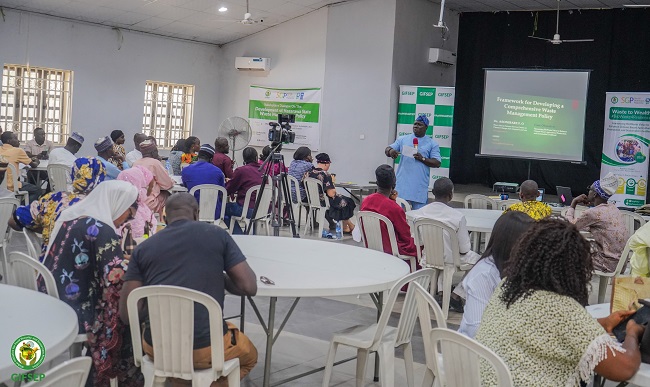
Dr Margaret Elayo, the state Commissioner for Environment and Water Resources, made this known at a stakeholders dialogue on the Development of Nasarawa State Waste Management Policy on Tuesday, April 21, 2026.

“The state government developed a strategic framework to tackle climate change through the Nasarawa State Policy on Climate Change (NASPOCC).

Margaret Elayo
Dr Margaret Elayo, Nasarawa State Commissioner for Environment and Water Resources

“This policy aims to mainstream climate action, create a Climate Change Agency, and establish an advisory committee chaired by Gov. Abdullahi Sule,” she said.

She said that without decisive intervention, climate change challenges could undermine the State’s aspirations for sustainable development and improved quality of life.

“This policy was carefully developed through a collaborative and consultative process involving key stakeholders and partners, including the Global Initiative for Food Security and Ecosystem Preservation (GIFSEP).

“The policy outlines clear measures for mitigation and adaptation across short, medium, and long-term horizons, with the aim of strengthening resilience, reducing vulnerability, and ensuring that climate considerations are integrated into development planning.

Elayo assured that the implementation of this policy is expected to drive progress in critical areas such as energy efficiency, food security.

Nasarawa, she said, is currently confronted with the growing challenge of climate change, which poses significant risks to its environment, economy, and public health.

“Addressing this threat requires a comprehensive approach that combines both mitigation and adaptation strategies.

“The impacts, ranging from irregular rainfall patterns to increased flooding and environmental degradation – demand urgent and coordinated action at all levels of governance,” Elayo said.

Mr. Ibrahim Abubakar, a representative from the Nasarawa State Ministry of Justice, said that effective waste management is not merely a matter of cleanliness but a fundamental requirement for disease prevention, urban resilience, and sustainable development.

“As we prepare for increased rainfall, it is imperative that all relevant authorities and stakeholders intensify their efforts to maintain a clean and healthy environment across the state.

“It is important to recognise that human wellbeing is anchored on three essential pillars of hygiene: food, personal and environmental hygiene. Among these, environmental hygiene stands out as the foundation upon which the others depend.

“In line with this objective, the establishment of the Nasarawa State Waste Management and Sanitation Authority (NASWAMSA) under Legal Notice No. 18 of 2021 represents a significant step forward.”

Abubakar added that the authority has been empowered to perform critical functions, including waste collection and disposal, regulation of sanitation practices, removal of environmental hazards, and collaboration with both public and private stakeholders.

“Together, we can transform waste management in Nasarawa State into a model of efficiency and sustainability, ultimately turning waste into wealth and securing a healthier future for all,” he assured.

Ms. Dorcas Nicanor, a representative of GIFSEP, said that stakeholders expertise is critical to ensure the policy is inclusive, actionable, and impactful for Nasarawa state.

“This policy must go beyond collection and disposal to address waste reduction, recycling, sustainable financing, and importantly, the inclusion of biowaste management.

“Organic waste makes up a significant portion of our waste stream, and with the right framework, it can be converted into valuable resources such as compost and biogas while reducing environmental and health risks.

Mr. Envoh Okolo, State Coordinator, Nasarawa State Network on Environment and Climate Justice, said that the group would ensure that waste management is managed properly to bring wealth to the state.

By Abigael Joshua

Fossil fuel dependence, conflicts driving global economic instability – UN climate chief

The Executive Secretary of UN Climate Change, Simon Stiell, has warned that escalating global conflicts and continued reliance on fossil fuels are fueling inflation, slowing economic growth, and increasing debt burdens worldwide.

Stiell made this known on Tuesday, April 21, 2026, at the Petersberg Climate Dialogue in Berlin, Germany.

He noted that the global energy landscape had become increasingly unstable due to geopolitical tensions, with significant consequences on nations and households.

Simon Stiell
Executive Secretary of UN Climate Change, Simon Stiell. Photo credit: BMUKN | Sascha Hilgers

He said: “Fossil-fuel driven stagflation is now stalking economies, driving up prices, driving down growth, pushing budgets deeper into quagmires of debt and stripping away governments’ policy options.”

The UN climate chief added that international climate cooperation remained the most effective path to stabilising economies and ensuring energy security, stressing that “climate cooperation is key to fending off the twin-reapers of global heating and fossil fuel cost chaos.”

Stiell noted that clean energy offered a route to affordability, resilience and national sovereignty.

He further emphasised the need to move beyond commitments under the Paris Agreement to concrete implementation.

He said “in this era of implementation, we must turn commitments into projects on the ground, by breaking down global targets into achievable actions and delivering results.”

According to him, while global climate negotiations have yielded landmark agreements, including outcomes from COP28, the focus must now shift to scaling real-world actions and financing, especially in developing countries.

Stiell identified key priority areas such as clean energy transition, grid modernisation, methane reduction and climate-resilient food systems as critical to reducing emissions and strengthening economic stability.

“The need to accelerate action has never been clearer,” he said.

He called on governments and stakeholders to deepen collaboration and investment ahead of future global climate assessments.

The Petersberg Climate Dialogue brought together ministers from more than 40 countries, expected to build momentum for enhanced climate action and implementation ahead of upcoming global climate summits.

By Usman Aliyu